
What on Earth Wednesday's back!
What spends its time, surrounded by the sea, Is like fingernails and hair, But is not? Belonging to a creature, Bigger than you and me, And once smelt Is not easily forgot? What on earth am I?


What spends its time,
surrounded by the sea
Is like fingernails and hair
But is not?
Belonging to a creature
Bigger than you and me
And once smelt
Is not easily forgot?
What on earth am I?
Just a short little rhyme for this one as I suspect some of you may either know what this is or be able to give it a pretty good shot in the dark. This find isn’t mine, unfortunately. And it’s one of those times that I’ve really kicked myself for not having gone out on that particular day for a beach wander. The lovely Dr Elyssa De Carli from Coal Coast Discovery Days made this find and let me share it with you all.
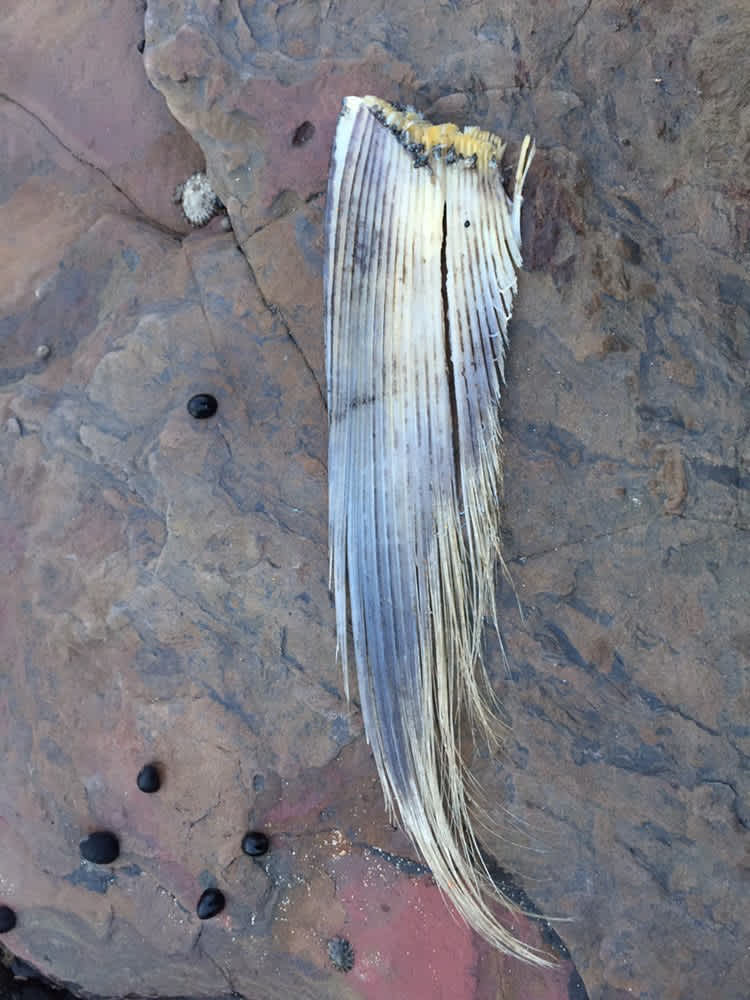
So what on earth is this thing that was not only pretty big but apparently very, very smelly? It’s a baleen plate from a whale! Honestly, I’m so jealous that I didn’t find this. I love all things whale, probably not the greatest when it comes from a dead whale, but they are fascinating animals and being able to get close to one, even just a piece of one, is a real privilege. When we were lucky enough to have a couple of Southern Right Whales hanging around off McCauley’s Beach Thirroul last year, I ran and touched the water just to feel close to them, so real whale tragic right here. I reckon I’m not alone on that one either.
There are two suborders of whales: the toothed whales and the baleen whales. Humpbacks and Southern Right Whales are both baleen whales and this is what they have inside their mouths instead of teeth. Basically these plates that are made of keratin (like our fingernails and hair) hang from the whale’s upper gum line and end with those super distinctive bristles; kind of like a hairy curtain.
The whales swim through the water with their mouths open, taking in huge amounts of water and food such as krill, plankton and small fish. Now they’re not going to want to swallow loads of water when they’re really after a meal, so they then use their tongue to push the water up and out through the baleen which acts like a sieve, leaving all the small fish and teeny ocean critters behind. Then, they essentially lick the baleen clean, swallowing all that fishy goodness in the process. Yummy.
We usually don’t see feeding behaviours up this way as the whales are more focused on getting up north to their breeding grounds although it has been reported occasionally off Sydney, Shellharbour and Jervis Bay. Keep your eyes peeled because if you do get to see them lifting their massive heads up and out of the water, their baleen on display, masses of water gushing out of their huge mouths, I guarantee it’s a sight you won’t forget.


