
Why you should listen to the birds
When is a stick, not a stick? When it’s a Tawny Frogmouth, of course!


By Thirroul naturalist Amanda De George, of Backyard Zoology
When is a stick, not a stick? When it’s a Tawny Frogmouth, of course!
First things first, Tawny Frogmouths are not owls although they do share several similarities. They’re nocturnal like owls, with the huge eyes to match and they’re carnivores too, eating everything from moths and mantids, cockroaches, snails, cicadas, and even frogs and reptiles. They catch their prey with their large, wide beak before swallowing it whole. Owls, on the other hand, have powerful talons perfect for catching and grasping their food before using their small, hooked beaks to rip the food into pieces.
It’s no secret I have a soft spot for tawnies. We have been really lucky to have these lovely birds moving in and out of both our yard and our lives for years now. We’ve watched them building their haphazard nests and suffered weeks of grief when one of the adults and a newly hatched chick were snatched in the night (we believe by a bird of prey). We’ve been woken at dusk by their gentle ‘oom-oom-oom’ call, just outside our window. We love them. And they don’t seem to mind us either.
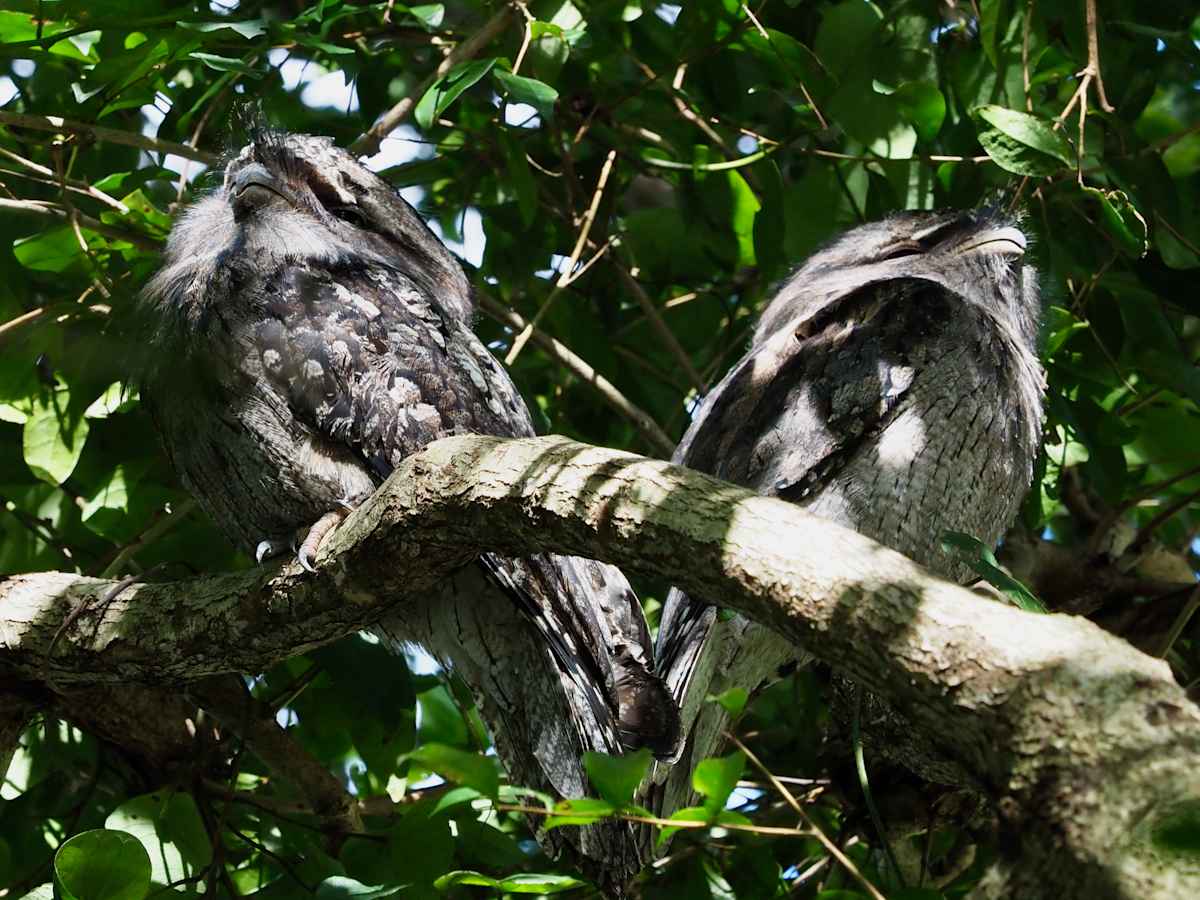
After a few months' absence, I discovered this pair huddled up in the back corner of our yard. Well, I didn’t discover them, not at first. I started to hear a bit of a ruckus in a tree, with lots of very angry Lewin’s Honeyeaters repeatedly calling and flying in and out of the foliage. This isn’t unusual. There’s normally some level of argy bargy going on when it comes to wildlife, whether it be fuelled by love or war. But it was a distinct sound in response that got my attention. A sharp, short ‘click’ or ‘whack’ or ‘clack’; the sound of something shutting quickly, something like a big ol’ wide beak. I pretty much ran out the door, knowing exactly what I’d find, if I could find it.
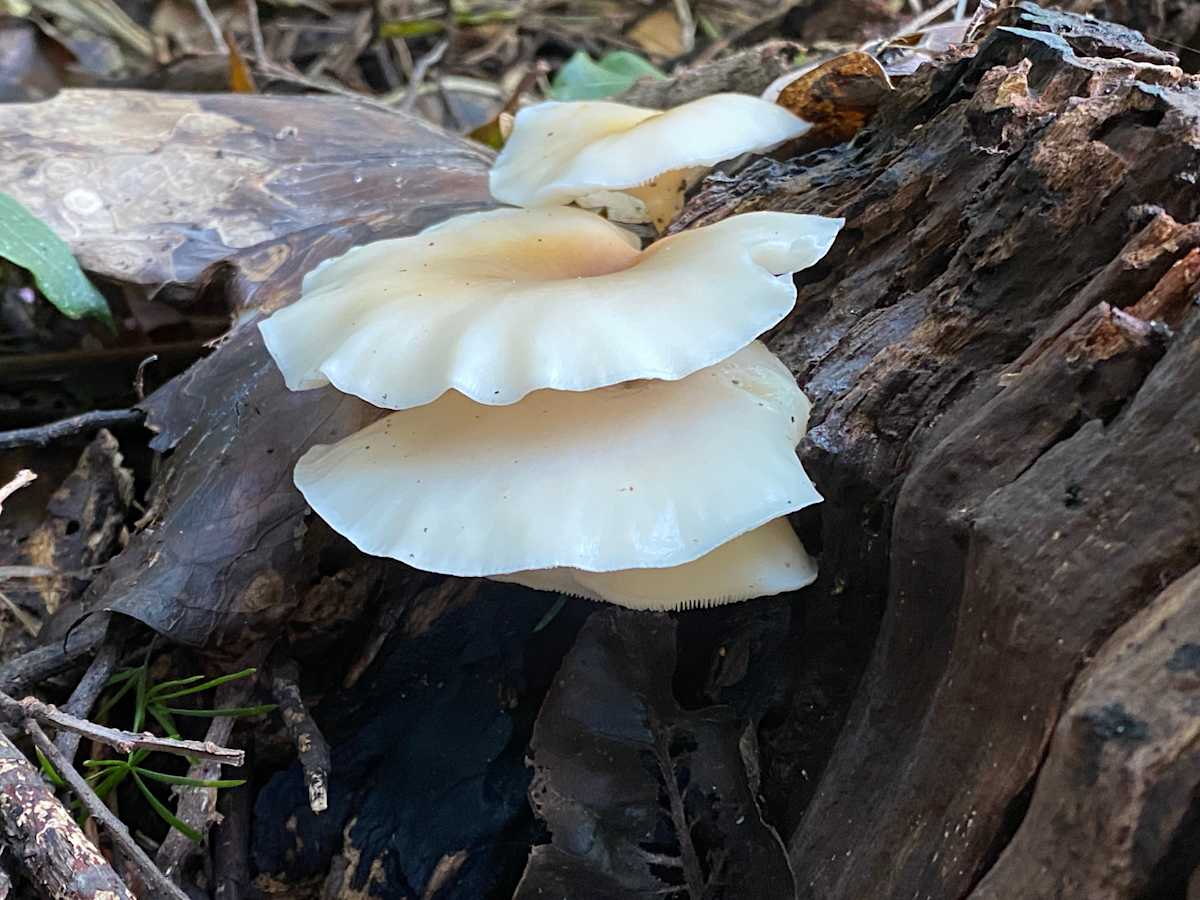
I stood and peered into the dappled shadows, squinting and stretching and twisting, trying to locate the birds. And then finally, first one mottled stick and then the other, partially hidden by the surrounding greenery, opened their eyes. The honeyeaters gave up and flew away, and the tawny frogmouths softened their bodies back into the plump shape that I know and love. These birds mate for life and these two were sitting back to back, basking in the late afternoon sun. I was so thankful that they’d decided to roost so close by again and couldn’t resist inching closer to get a photo. And as I did, tucked away in a corner I rarely venture into, I looked at the ground and there at my feet I found a small crop of something I’ve been searching for forever: ghost mushrooms.
So I guess I have to thank the honeyeaters for alerting me to the tawnies who lead me to the mushies. I’ve said it before and I’ll say it again, listen to the birds, because they always have something useful to say.
Nature Notes, Friday 29th April 2022
Ghost hunters
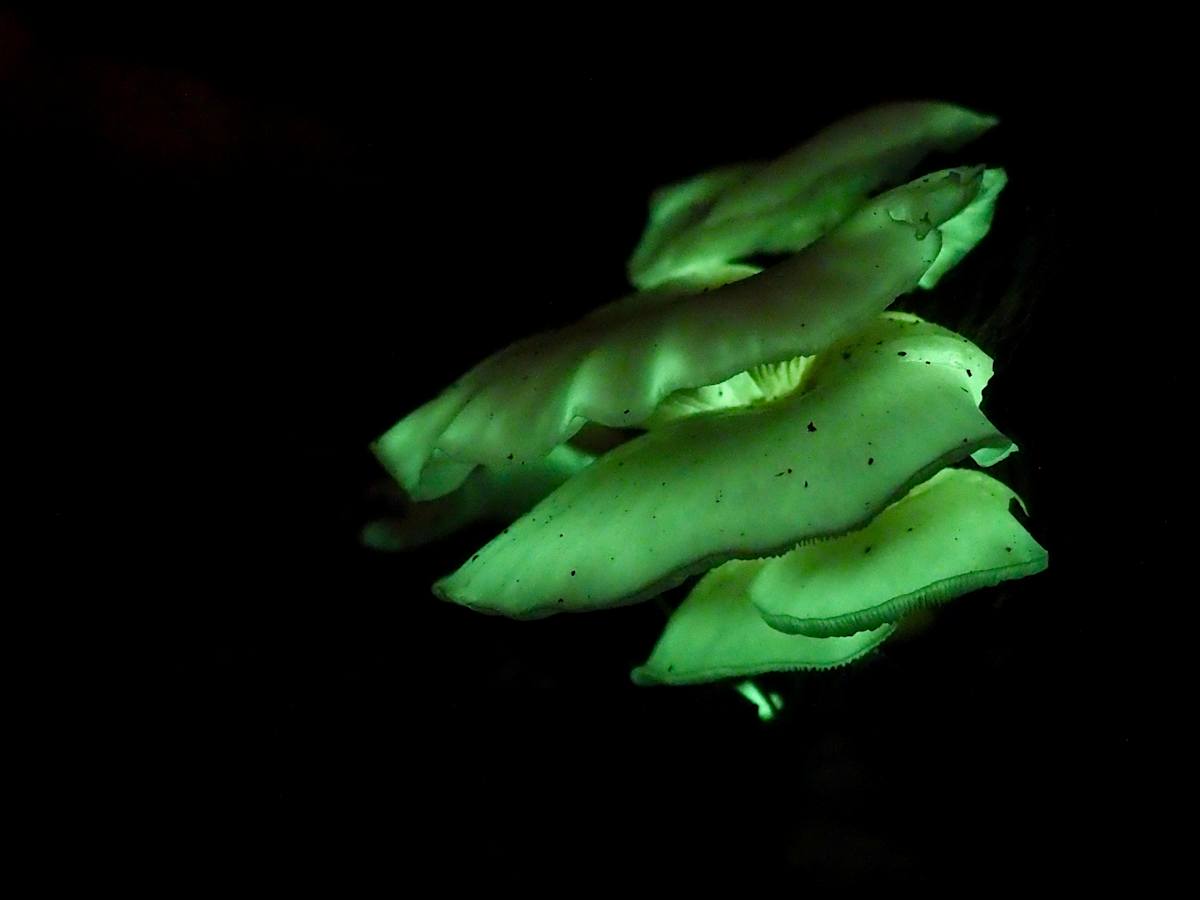
Did you know, there’s a dedicated bunch of folks in the Illawarra, who don the boots and insect spray and head out into the night hunting for ghosts? I should point out that these aren’t just any type of ghost but rather a seriously beautiful, other-worldly looking, bioluminescent mushroom.
These fungi are native to Australia and are usually found in winter growing at the base of dead or diseased trees but thanks to an unseasonably wet summer, they’ve been popping up all over the place, early. Including in my own backyard! To the naked eye, ghost mushrooms emit a soft, white glow, which is super impressive as is. But when using long exposure with a camera, their eerily beautiful, fluorescent green glow is captured.
During the day, they look sort of like oyster mushrooms, growing in clumps but with a brownish looking bruise in the centre. But beware, unlike oyster mushrooms, these fungi are extremely toxic so look but don’t touch. Join the Bioluminescence Australia Facebook page for sightings, photos and tips.
For information on how to photograph this beautiful fungi (and to achieve photos much better than mine!) click here.

Meteor Magic
Okay, this requires dragging yourself out of bed at stupid o’clock, but this is a meteor shower not to miss. The Eta Aquariid Meteor Shower is one of the best of the year for us in the Southern Hemisphere. The meteors are actually debris from Halley’s Comet. I have such amazing memories as an 11-year-old, kneeling at my parent’s bedroom window staring in absolute dumbstruck awe at that comet. I knew it was a special thing to see back then but now I understand just how amazing it was.
The meteor shower peaks around the 4th, 5th and 6th of May with up to 85 meteors an hour! You’ll need really dark skies for that sort of number, but even with light pollution, it’s still totally worth getting up before dawn, wrapping yourself warmly and spending sometime looking skyward! And as an added bonus, you’ll be able to see Venus, Jupiter, Mars and Saturn in alignment too.
Read more here.
The whales are coming!
It’s official, the best time of year has arrived; Humpback Whales have been spotted in Jervis Bay on their way north. These whales head up from Antartica to their breeding grounds in Queensland and usually we’d expect to start seeing them mid to late May. But as numbers of these incredible creatures increase, so will the length of the breeding season. It’s a win for whales and a win for us whale watchers.
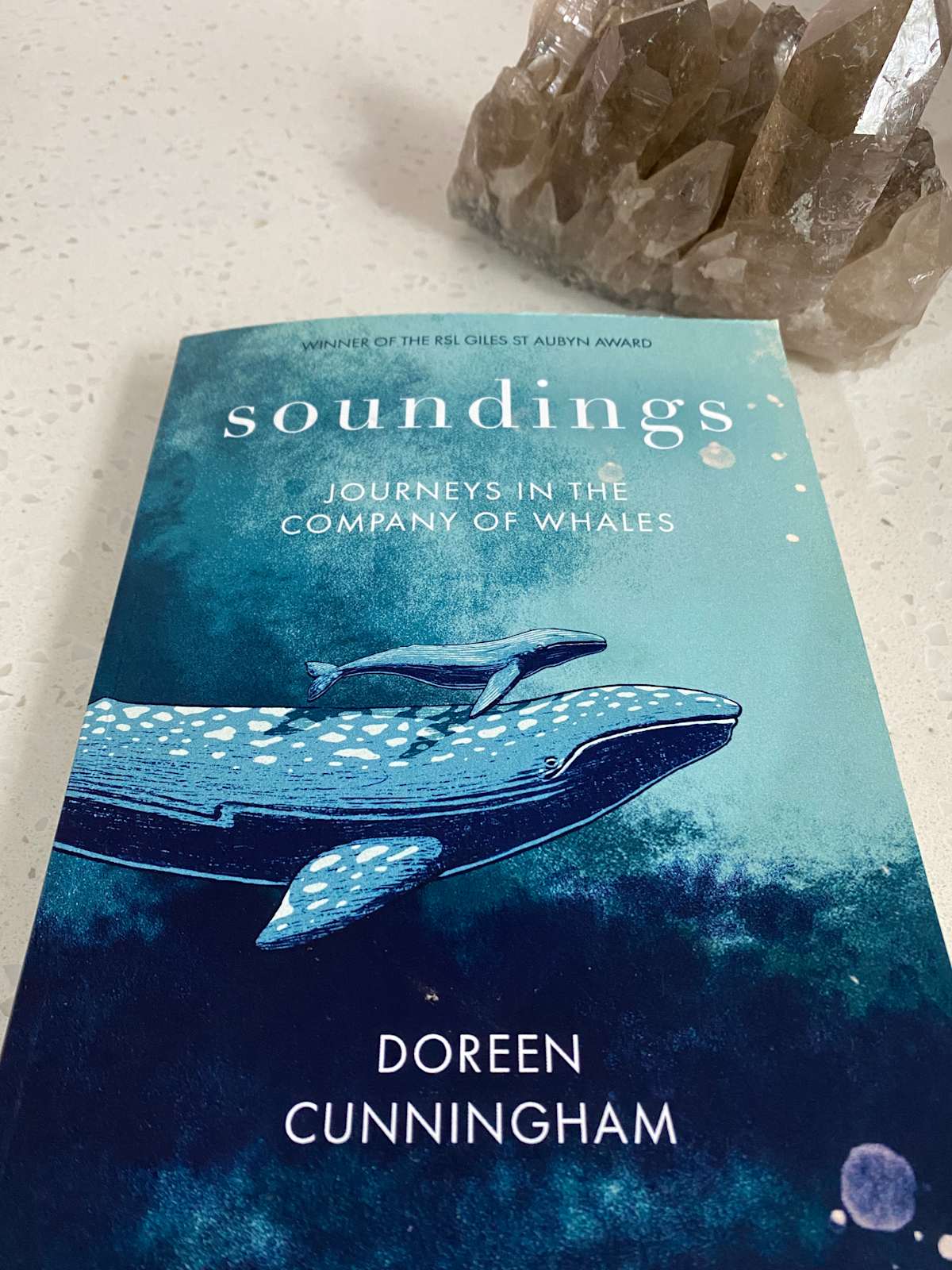
To get in the spirit of the season, I picked up Soundings: Journeys in the company of Whales by Doreen Cunningham. People who know me, know that I love when personal stories are wrapped up in those of the environment and animals around us, and this book promises to deliver just that. And for those of you who have whale watched before, you’ll know that there’s plenty of spare time to fill in, while you’re perched on a headland waiting to see that first blow!
So books and coffee it is. I’ll post more over the coming weeks, but for now you’ll find me perched at Bulli Beach Cafe, eyes fixed on the horizon or up at Providential Point, Wattamolla in the Royal National Park.
There is a $12 entry fee if you don’t have the National Parks Pass but Wattamolla is next level beautiful. And the walk to the lookout at Providential Point is quick and easy and worth every step with knockout views in every direction. Let me know if you have a ‘must visit’ whale watching spot.


