

'Ghost service': Poor transport options enable Illawarra's car dependency
In the first of a series, Austinmer architect Matt Dickson outlines his personal experience of public transport and pinpoints what is wrong with ours

Most people who have used public transport in the Illawarra will agree that it can be difficult, and for most local trips, it's generally easier to just get in the car and drive. So what’s the issue with public transport in the Illawarra, and why is it so challenging?
My name is Matt Dickson, and I will be exploring this question in a series of articles over the next few months.
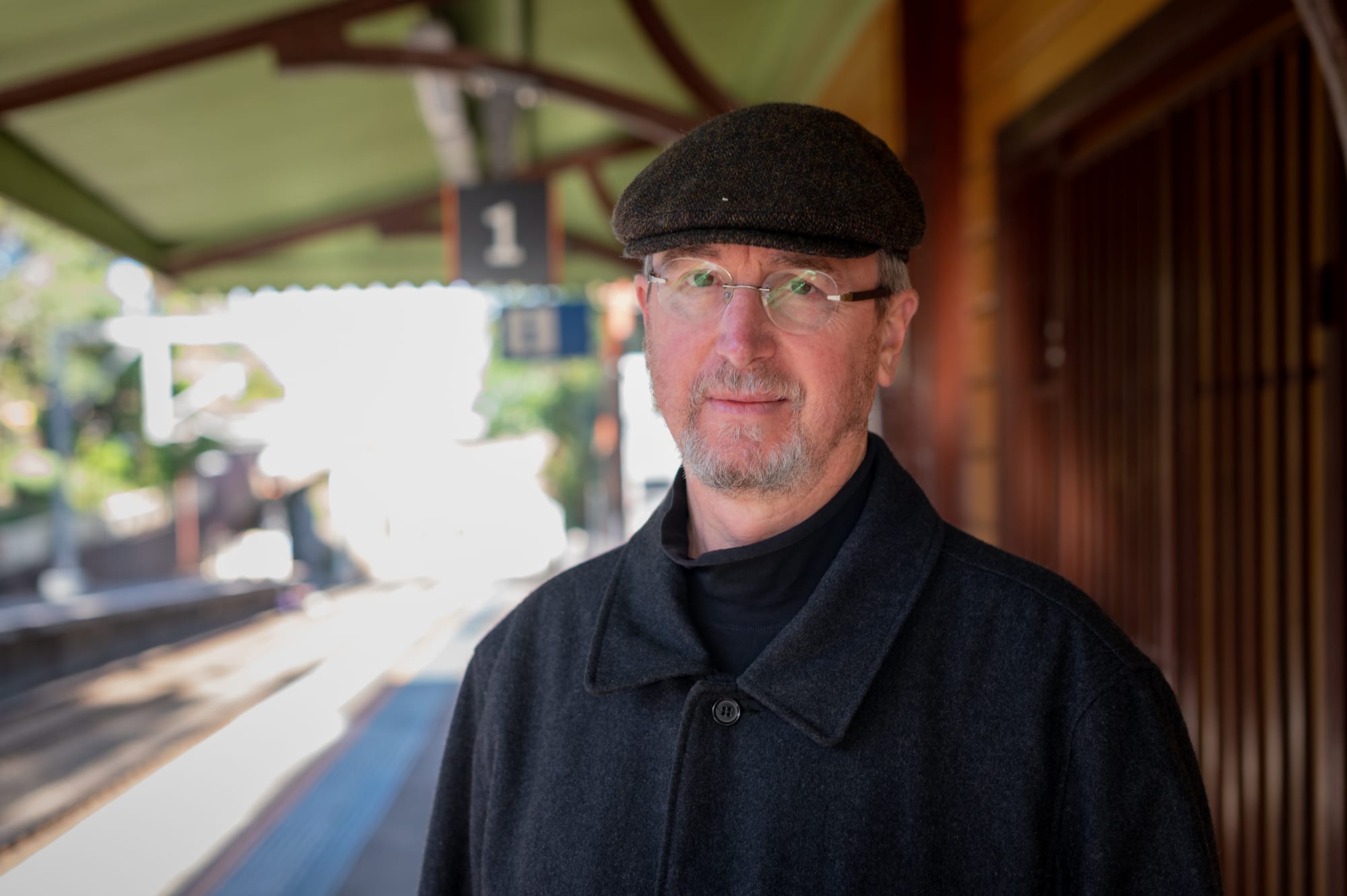
I’ve lived in Austinmer for 25 years but I grew up in Sydney’s lower north shore. Much of my childhood was spent with my Nana, who lived in Waverley, and under her guidance, public transport became an integral part of my early life.
Papa owned a Holden Belmont station wagon with venetian blinds and would sometimes drive us to locations around Sydney’s eastern suburbs, with clouds of cigarette smoke, no seatbelts, and doors occasionally swinging open. Nana didn’t drive, and because Papa spent most of his time avoiding Nana, my two older sisters and I experienced Sydney through a public transport lens.
Travelling by bus around Sydney with Nana taught us how to read the form of the city, its landmarks, harbour and topography as we traversed the unique network of ridge roads that followed the routes of the Eora nation. It's very clear that Nana’s reliance on public transport inadvertently taught us how to utilise the system to safely navigate the urban environment and to be independent.
By the age of 12, I was regularly travelling alone between Willoughby and Waverley, making three bus changes and a walk through Sydney’s Martin Place. Confidently using public transport at this early age gave me a strong sense of autonomy and self-reliance as I navigated my way through the city.
This experience also gave me a very clear sense of belonging to a broader community beyond the reassurance of family, relatives and school friends. Sharing the buses and pushing through the crowded streets established a comfortable familiarity with strangers and a genuine understanding of the collective, and how it felt to be a citizen.
I applied this training to further explore Sydney using its bus, rail and ferry network. As a teenager growing up in Sydney, public transport represented freedom and autonomy and enabled me to get virtually anywhere I wanted to go. I would sometimes have to walk long distances and grew to enjoy the solitude and the time it offered to ponder the simple preoccupations of a teenage boy in the 1980s.
I got my drivers licence around the age of 18 but rarely used it. Some friends worked hard to buy cars, but car ownership seemed to be a big expensive burden with a load of boring administration, stressful maintenance costs and massive responsibility. Like all young people, I wanted freedom, and I felt that owning a car was the opposite.
Public transport took me to work, school, uni, parties, friend’s houses, shops, galleries, museums, cafes, cinemas, pubs – virtually everywhere I wanted to go.
While studying architecture at Sydney Uni, I worked as a casual waiter, and my avoidance of car costs enabled me to save for a tour of Europe in 1991. Towards the end of uni, I linked up with Rhiannon Morgan and we continued to thrive without a car while living in Glebe, Bondi Junction and Woollahra. Sydney’s public transport continued to meet our needs and car ownership continued to seem financially absurd.
Even when Miles was born, we happily continued our reliance on Sydney’s buses and trains with baby in pouch. By rejecting the crippling costs of car ownership while working as lowly paid architecture graduates, we were still able to save a deposit for our home in Austinmer, where we moved in 2001.
We chose the house for its proximity to Austinmer railway station and Route 90 Austinmer-Wollongong bus terminus.
The 90 bus proved to be a reliable arterial service to Wollongong which we continue to use but, apart from the 55 Free City Loop, the rest of the Illawarra’s bus network has remained a confusing mystery that seemed unable to provide the frequency, proximity, directness or connectivity that made Sydney’s bus system so reliable.
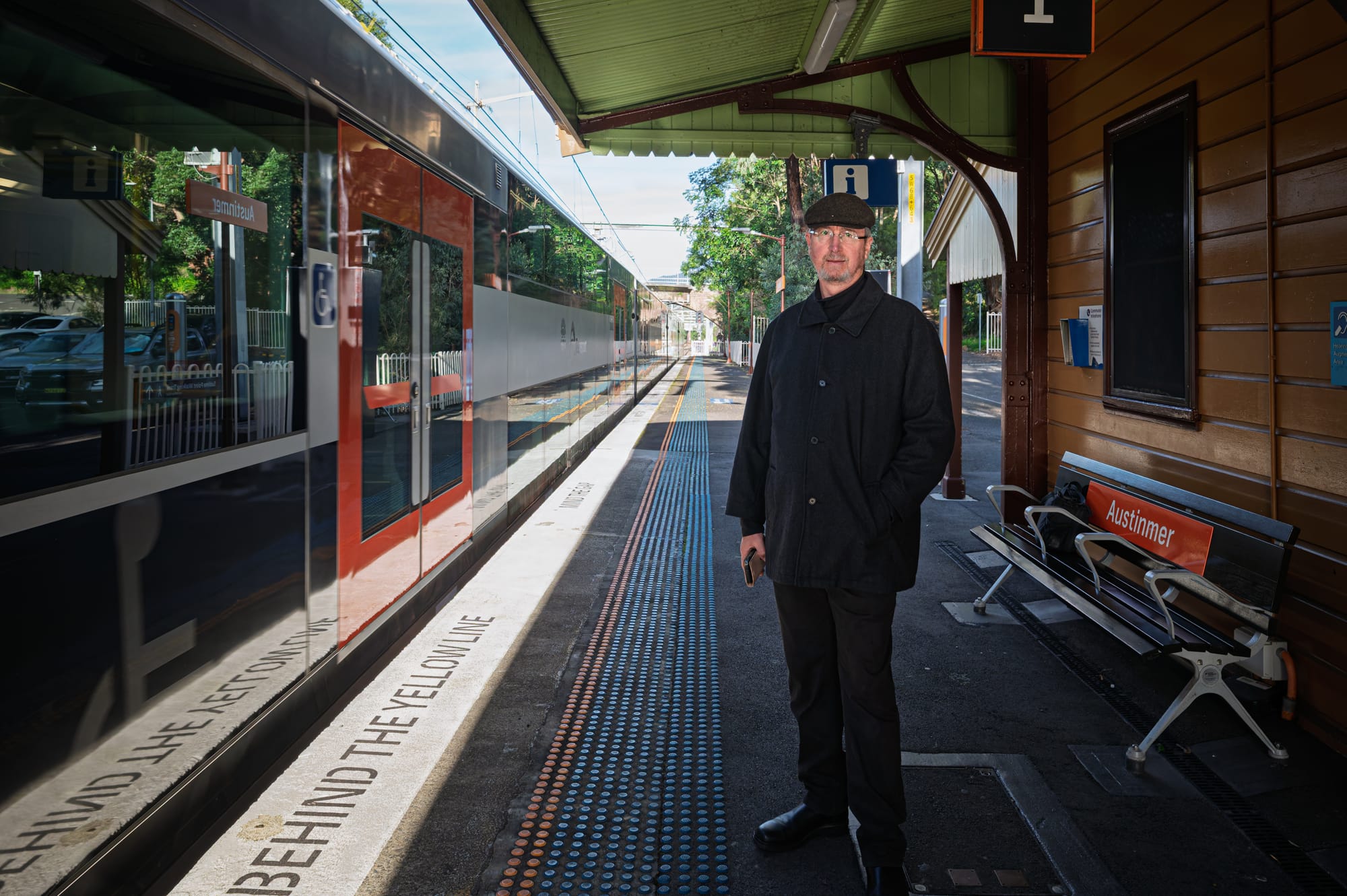
It also became clear that the South Coast rail corridor was focused on moving workers between Wollongong and Sydney, with trains running reasonably frequently during morning and evening peak periods. Outside of weekday peak periods, the railway was a ghost service that proved so unreliable that we were soon forced to embrace car ownership.
Despite the proximity of a railway station and bus terminus, both our children got their drivers licences as early as possible and joined the Illawarra’s established pattern of car dependency. This was primarily due to their own experiences with the inadequacy of the region’s public transport network, and this is what really initiated my focus on the issue.
Nana continued to use Sydney’s public transport network until she was 103 years of age, and died of old age three years later in 2017, still in her own home, fully dressed and ready for business. She definitely left me with high expectations of a city’s obligation to provide quality public transport for its citizens, and I’m very confident that we can achieve real change if we all share and express the same expectations of Wollongong.
If you want to get involved in Illawarra Public Transport Action, email us at serveorganiselearn@gmail.com.


