
Greater crested tern tests positive for bird flu at Windang
The Illawarra has its first confirmed case of H5 bird flu, with one greater crested tern at Windang testing positive, the NSW Government reported today

The Illawarra has its first confirmed case of H5 bird flu, with one greater crested tern at Windang testing positive, the NSW Government reported today.
The bird is one of 14 confirmed cases in NSW, including 10 greater crested terns in Eden, Narooma, Merimbula, and Wentworth.
"It indicates the virus is moving long distances, likely in greater crested terns, given similar detections in Narooma, Merimbula and Eden," said Dr Bethany Hoye, a senior lecturer studying wildlife-microbe interactions at the University of Wollongong.
"In all of those places we haven’t yet seen mass mortalities (few to several birds so far), which might not be surprising considering these birds don’t tend to settle in their colonies (at least the one on Big Island) until about mid September."
A spokesperson at the NSW Department of Primary Industries and Regional Development (DPIRD) confirmed the government is responding to "a new event of H5 high pathogenicity avian influenza".
The greater crested tern was seen near Windang, reported to the Emergency Animal Disease Hotline and sampled by the NSW Government's H5 response program. It tested positive for H5 bird flu at CSIRO’s Australian Centre for Disease Preparedness, the spokesperson said.
"There are no signs of any mass mortality in the area or anywhere else in NSW and surveillance is continuing so we can detect any further cases early."
Breeding season in Five Islands
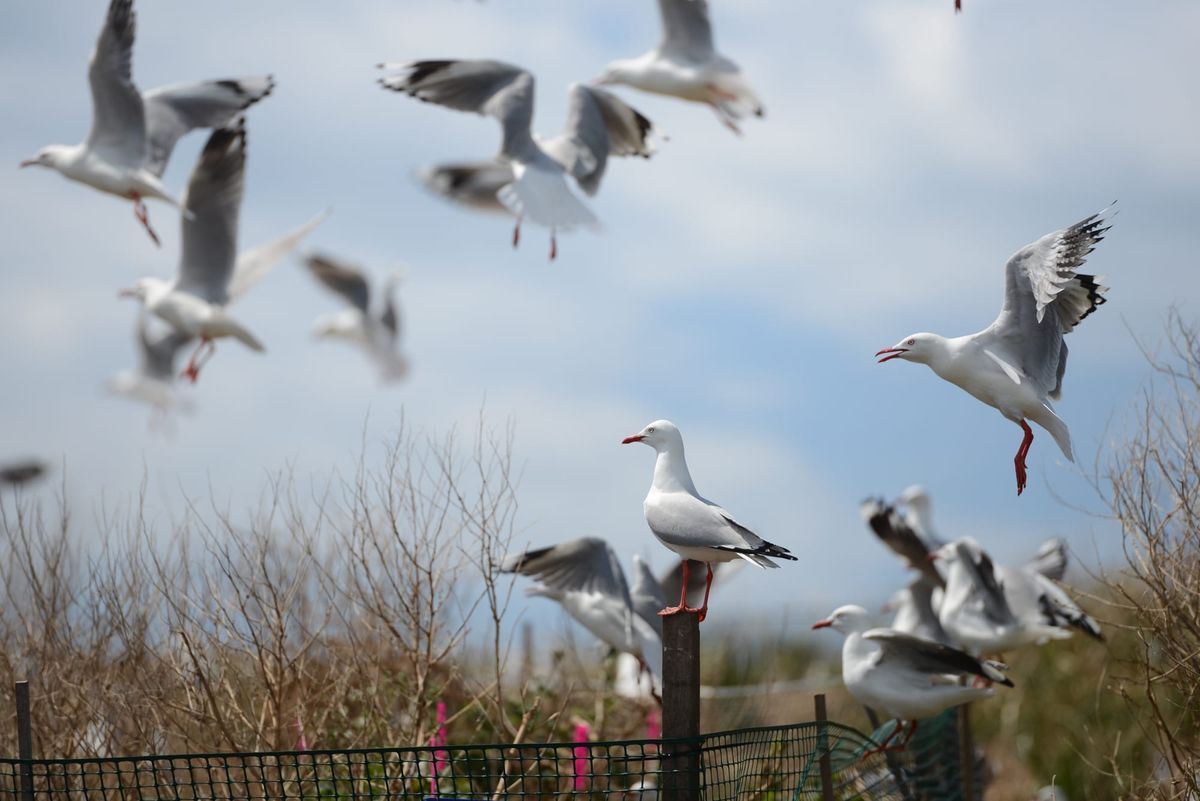
Greater crested terns breed on Wollongong's Five Islands, albeit in smaller numbers than silver gulls, aka seagulls, which may peak at about 50,000.
The risk of bird flu spreading is highest in spring breeding season, said UOW's Dr Bethany Hoye, who has led long-term research on silver gulls at the Five Islands.
For our beloved chip thieves of beachside cafe legend, and many other wild species, vaccination is impractical.
“The numbers are huge, and they're probably not going to form an orderly queue in the old David Jones building for vaccination,” Bethany told the Flame earlier this month.
Thousands phone in
Across Australia since 19 June, there have been 318 positive cases of H5N1 and 27,692 reports to the 24-hour Emergency Animal Disease Hotline. This includes a dead pelican in Mullet Creek, which a member of the Illawarra Canoe Club reported this morning.
Not every report leads to a test.
"DPIRD reviews all reports of sick or dead birds carefully and assesses them based on factors such as the species involved, the number of animals affected, the location and the likelihood of disease risk," the spokesperson said.
"While not every report will result in birds being collected or tested, every report contributes to DPIRD’s understanding of wildlife health across NSW and helps with monitoring for signs of disease. This targeted approach ensures resources are focused where they are needed most…
"If a member of the public finds a sick or dead wild birds they should avoid contact, record by taking photos or video and immediately to the Emergency Animal Disease Hotline on 1800 675 888 or by using the online reporting form."
Council prepares for bird flu
Wollongong City Council has published a Bird Flu information page and begun training frontline staff on PPE and safe disposal procedures.
“Unfortunately, as we head into sea and shore bird migratory season, we expect the spread of H5 to increase," said Lord Mayor of Wollongong Councillor Tania Brown.
As well as reporting sick or dead birds, she urged residents to keep dogs under control at offleash beaches and parks, and help to limit the spread by not feeding birds and other wildlife.
“Feeding wild birds may seem harmless, but it can encourage animals to congregate unnaturally, increasing the risk of diseases such as H5 bird flu spreading. Our wildlife is best left wild."
Risk to humans remains low
The H5 strain is highly contagious and since 2021 it has infected hundreds of species of birds and more than 50 species of mammals, including seals and dolphins, around the world.
Pets, including dogs, cats and pet birds, may be at risk.
"Bird flu has not been detected in commercial poultry flocks, captive birds or any other birds native to NSW and the risk to human health remains low," the DPIRD spokesperson said.
"The Government is continuing to receive many calls to the Emergency Animal Disease hotline and key stakeholders are being briefed regularly on the current situation.
"Public reporting is a critical part of the response, with increased calls to the hotline supporting early detection efforts."
How to make a report
If you see sick or dead wild birds, domestic birds, marine mammals or other wildlife showing signs of H5 bird flu:
- Avoid contact — do not touch them
- Record what you see
- Report it via the online form or the Emergency Animal Disease Hotline,1800 675 888
Read more
 Genevieve Swart