

Drone reveals wealth of wildlife, including rare shark
Using his drone, our "Hello Fish" dive columnist Duncan Leadbitter finds a diversity of marine life off the Illawarra coast

There has been much coverage of a recent decision by the State Government to allocate $34 million to drone surveillance of beaches to help reduce the risk of shark attack. Drone use for this purpose has been extensively studied but rather than dwell further on sharks, I thought I would look at what can be seen.
I have been flying drones over Stanwell Park Beach for about five years now. I enjoy doing surf videography plus the drone is also helpful for understanding changes in the beach, especially major erosion events.
I also see a lot of marine wildlife from the drone. For the period 1 July 2025 to 30 June 2026, I did more than 100 flights over our beach. These were divided into photography missions, wildlife observation missions and general surveys.
I don’t fly every week due to a mix of being away for work, bad weather and more. Some days I fly once, other days up to four times but more commonly twice. Batteries are expensive ($250-$300) and only last about 100 flights.
The types of animals I have recorded include:
• Humpback whales
• Dolphins – probably bottlenose dolphins
• Hammerhead sharks (not sure which species)
• Great White Sharks
• Port Jackson Shark
• Southern eagle ray
• Black sting ray
• Australian salmon
• Large fast swimming surface fish – maybe tunas
• Jellyfish – maybe the jelly blubber Catostylus.
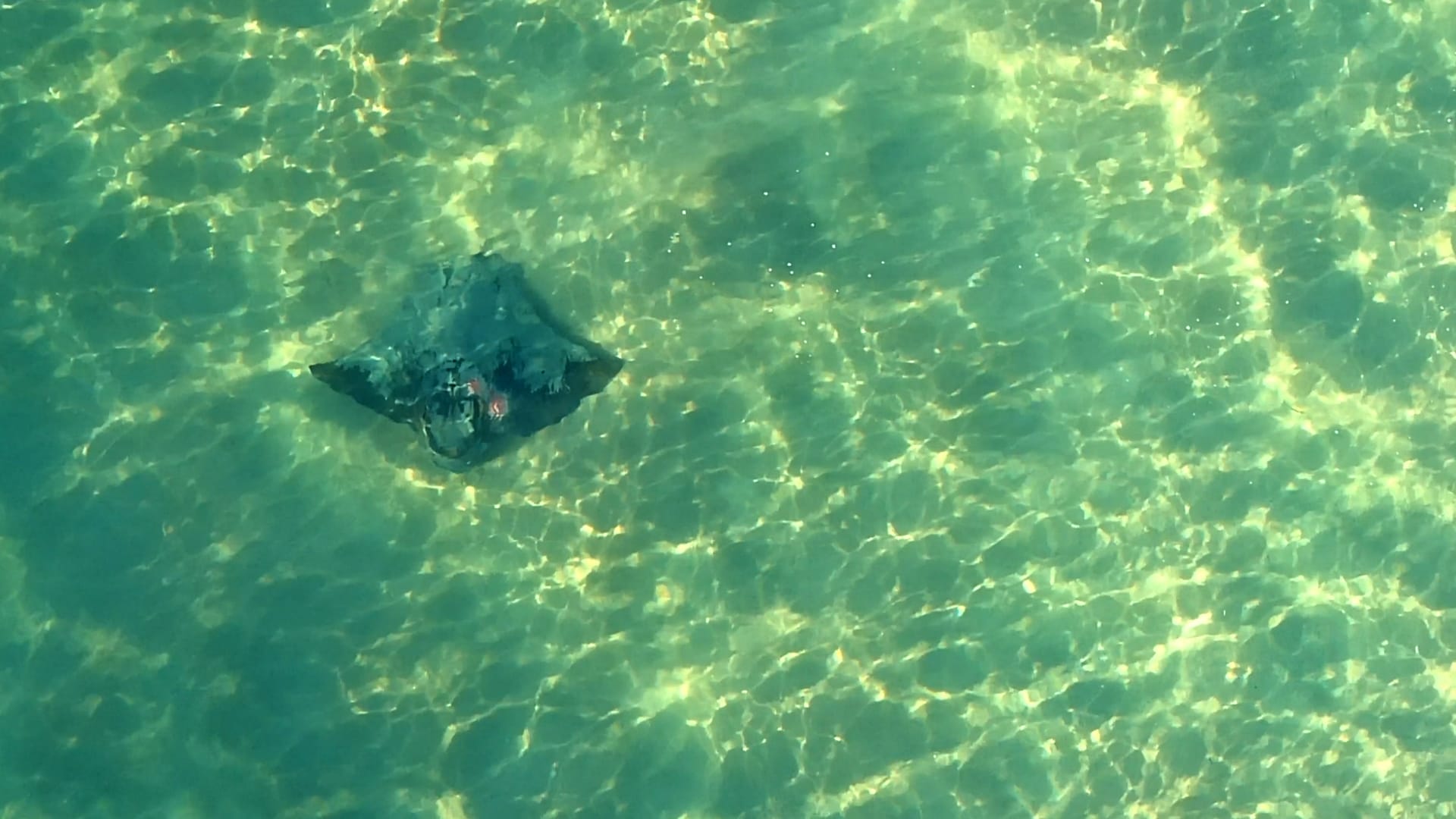
The dolphins can visit at any time of year. The hammerheads were around from November to February and all quite small (<1.8m). It’s not uncommon to see one or two (up to three) different species on a given day.
In a three-year (2017-2020) study involving 17,000 flights over 23 beaches along the entire NSW coast, researchers documented a greater variety of species and also saw turtles. They did not record Port Jackson sharks.
Our Illawarra coast is rich in wildlife. People have taken note from vantage points such as the surrounding hills for thousands of years. Early fishermen would have watched and waited for schools of fish and the hunters waited for whales.
For those who don’t get in and swim with the fishes, a view from the air is one way of appreciating both visitors and local marine residents.


