

Hoot if you love wildlife crossings
Cawleys Road Bridge over the Princes Motorway is the region's first wildlife crossing - and the critters are checking it out

While our endangered koalas are yet to use it, the wildlife crossing at Cawleys Road Bridge is a hit with humans.
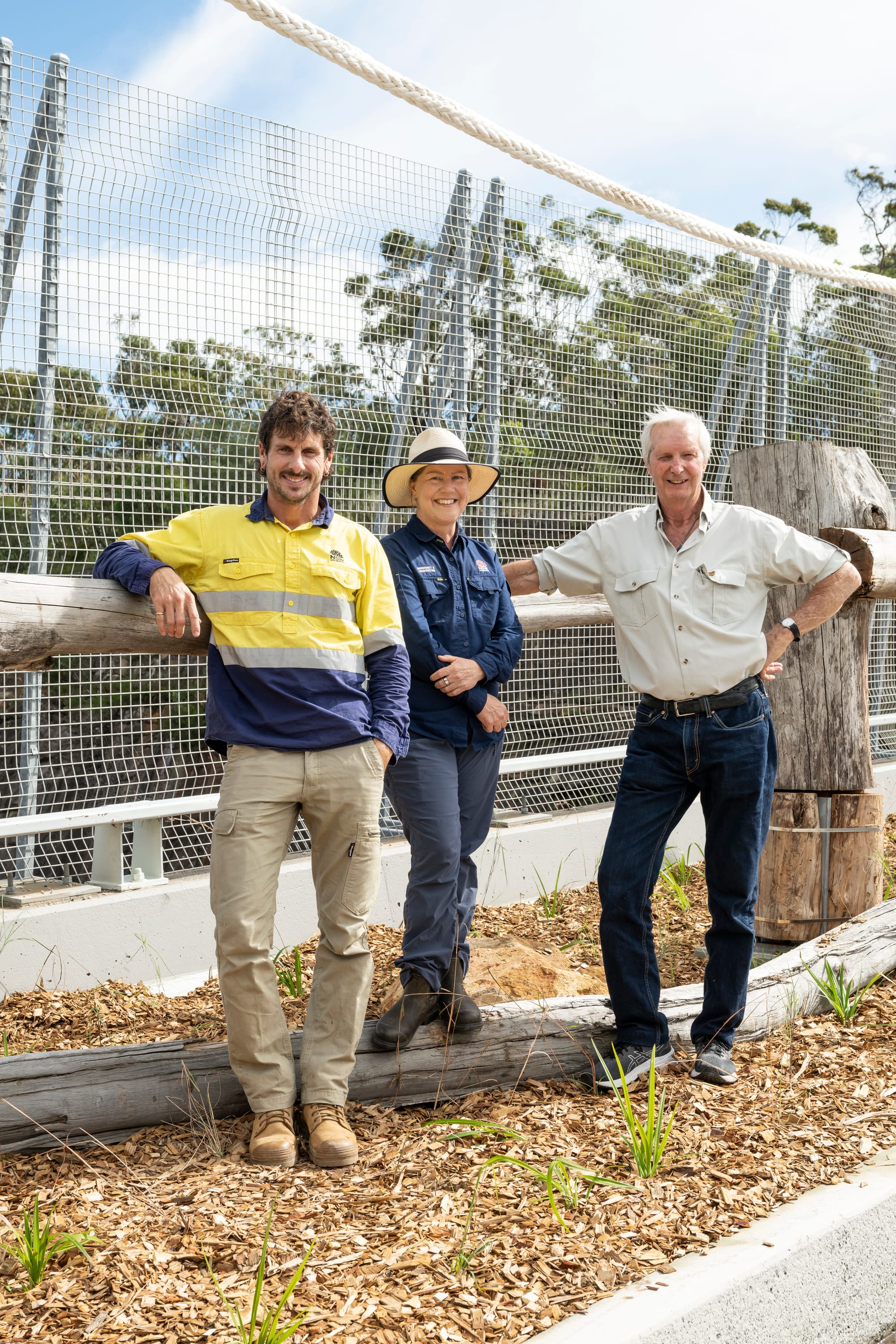
Zipping along in four lanes of traffic between Waterfall and Helensburgh, drivers glimpse government workers on the concrete bridge above and hoot enthusiastically. Up top, the people who’ve made it happen are clearly thrilled their project has had such a positive response.
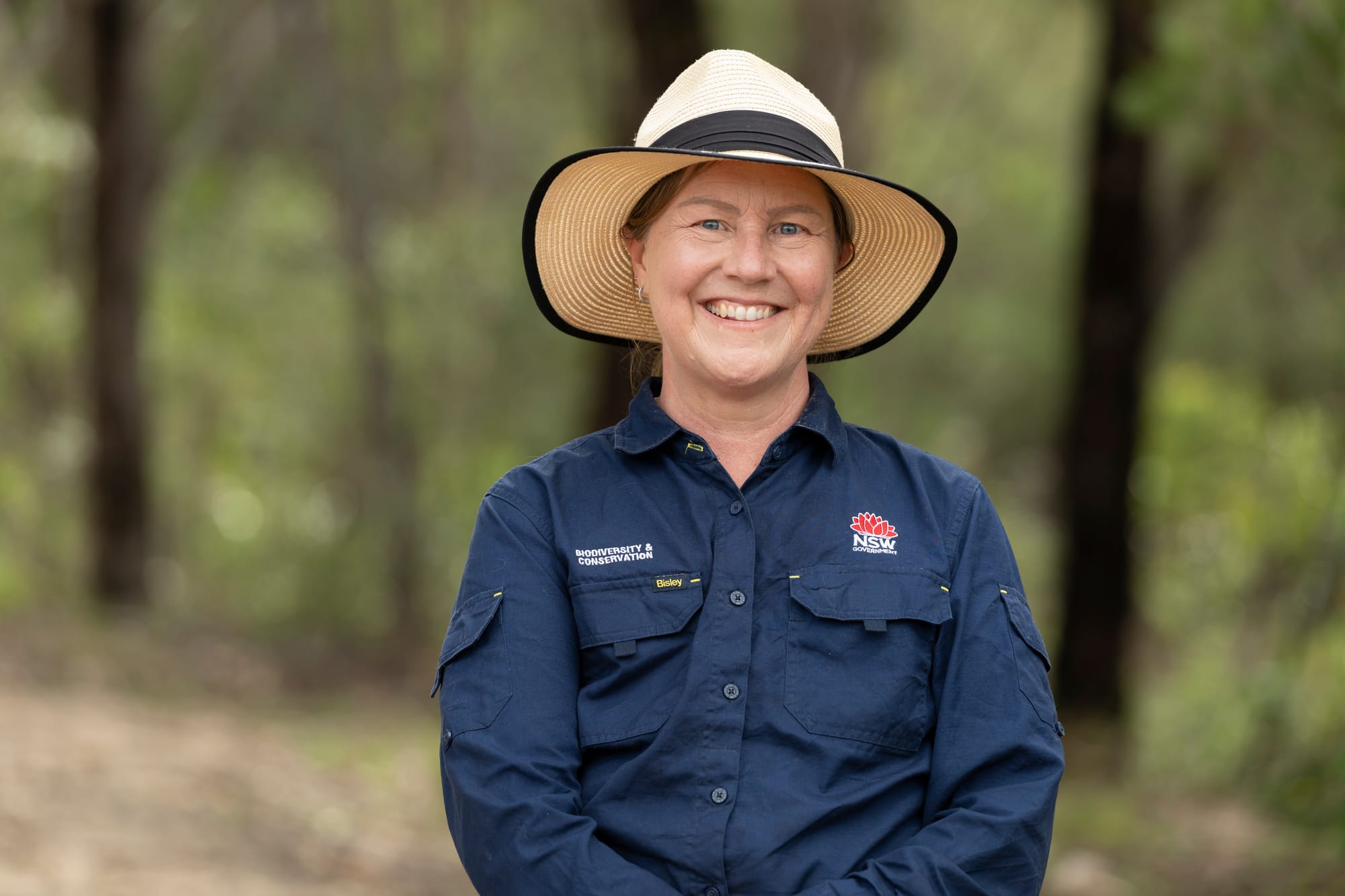
“This has been an absolute highlight of my career, because it's just been the most beautifully collaborative experience,” said project officer Kylie Madden, an ecologist at the Department of Climate Change, Energy, the Environment and Water (DCCEEW).
In 2021, the government was investigating ways to improve wildlife crossings of major roads for koalas when the Cawleys plan – a 50-year-old dream of retired ranger Bob Crombie – resurfaced.
“It first came to my attention when I saw the report that had been written by the Sutherland Shire Environment Centre’s Bob and Catherine Reynolds,” Kylie said on a site visit in April.
“It’s been something that came from community and has become a collaboration between a whole bunch of different government organisations, with Transport for NSW, the Environment Department and National Parks all coming together for a shared goal and a tremendous outcome that everyone loves.”
Cawleys blazes a trail
Today’s roads are designed with animals in mind and TfNSW is trialling technology to reduce car strikes, including using AI to detect animals and alert drivers in real-time via "smart" signage. However, the section of the Princes Motorway below Cawleys bridge – where 40,000 vehicles travel each day – was built in the 1970s, before "fauna-sensitive road design" (FSRD) became a hot topic.
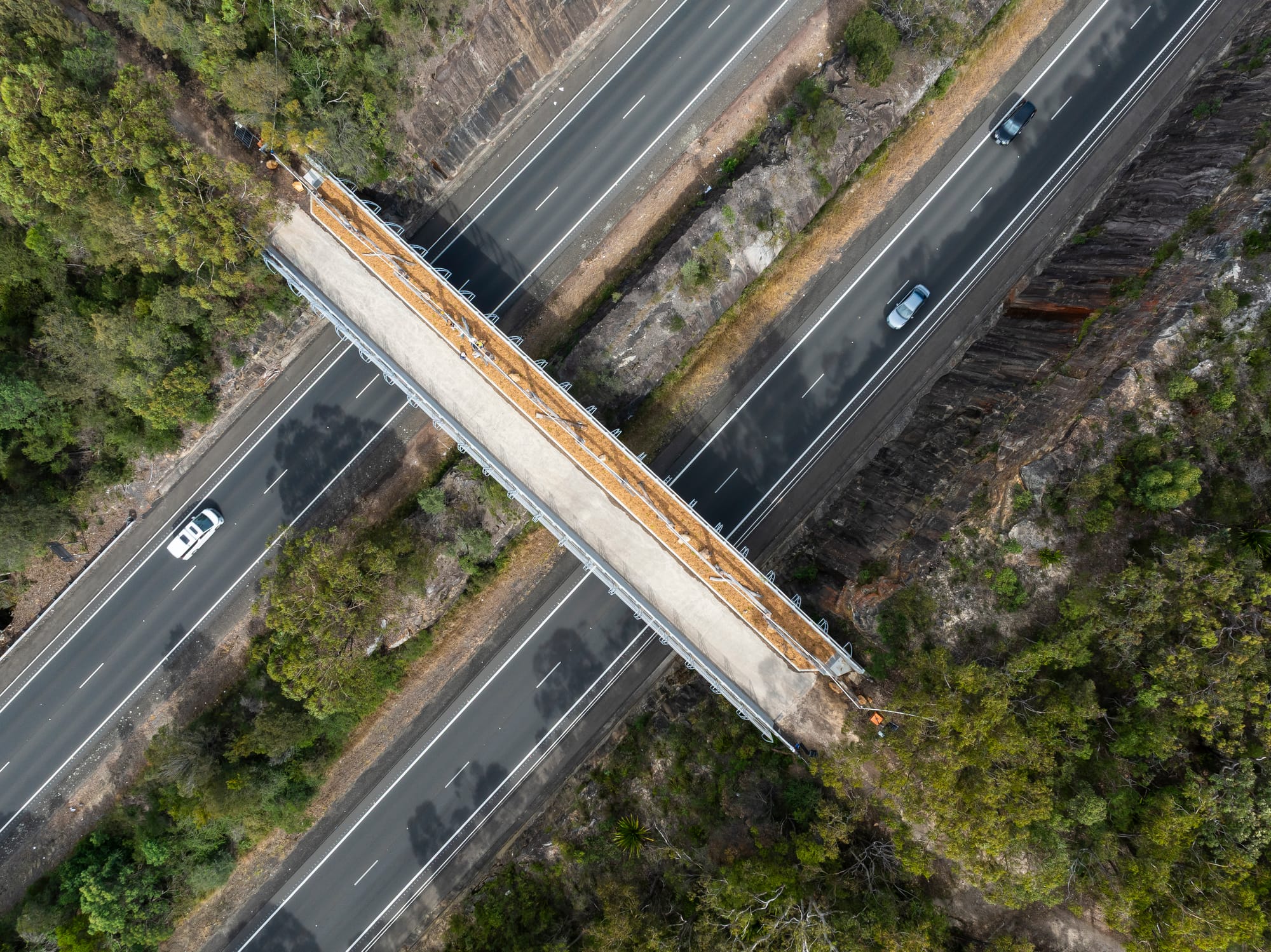
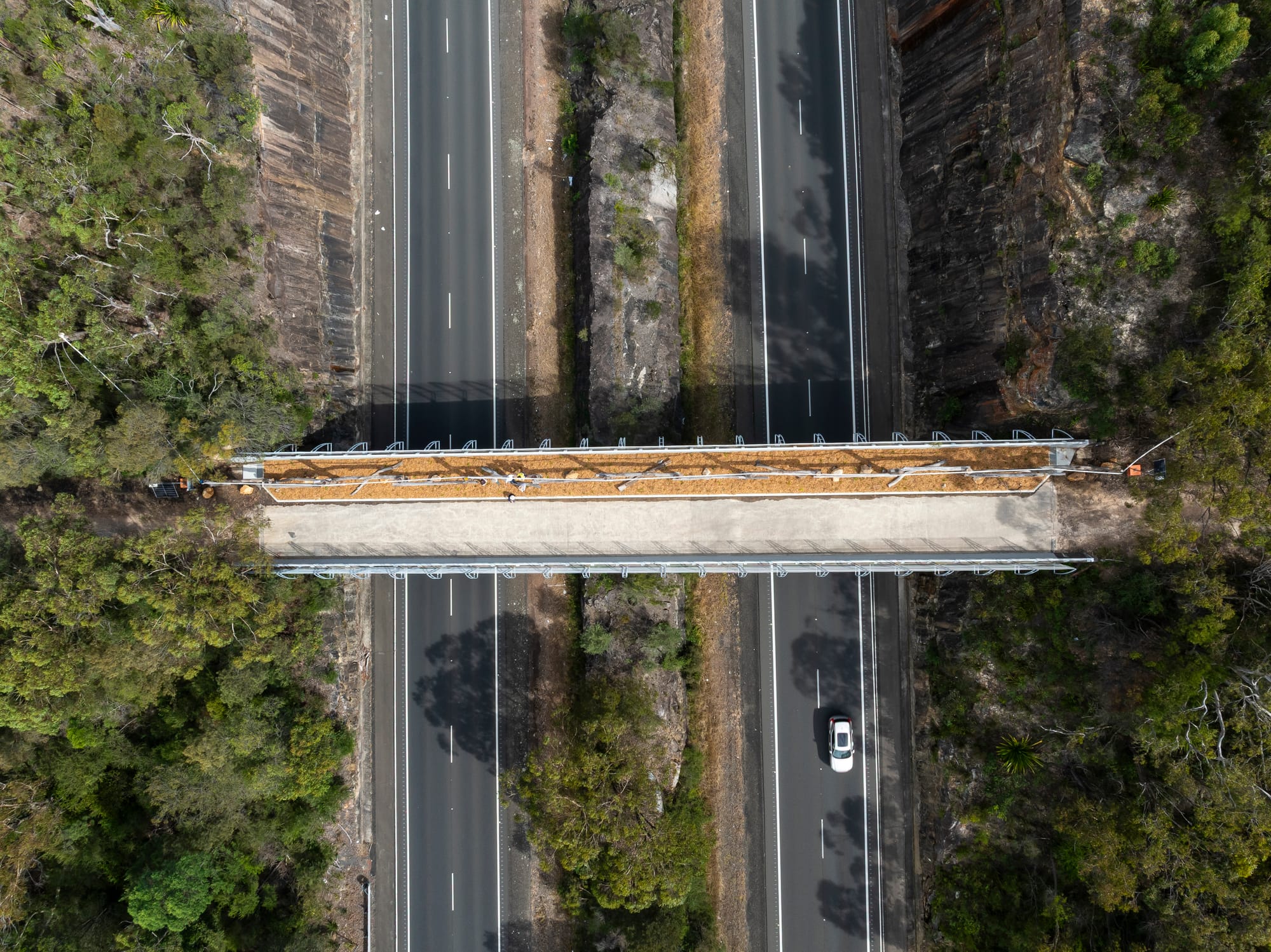
Almost six decades later, Cawleys is our region's first and only safe wildlife crossing connecting Heathcote National Park and the Garawarra State Conservation Area with the Royal National Park.
Sally Webb, deputy secretary of safety, policy, environment and regulation at TfNSW, said: “I'm so proud of the collaboration by DCCEEW and Transport for NSW to bring the vision of the local community – call-out to Bob – to life. We're really looking for nature-positive solutions to protect biodiversity, and just can't wait to see the first koala crossing.
“Repurposing this bridge has been just a tremendous achievement, and it'll be really interesting to see the results in the park. We know that there's koala habitat down there, and it will be really exciting to see what happens as a result of this.
“I think if there are other opportunities to repurpose infrastructure like this across the state, then we should definitely look at it.”
Action to save koalas
The project cost $875,000, with money coming from the NSW Koala Strategy. While the M1 in Wollongong’s northernmost reaches is not a vehicle-strike hotspot, koala deaths were recorded in 2021 and 2022, so the government has acted in the spirit of prevention.
“We were able to make the argument that this would be that dual purpose – of connecting these two iconic reserves for all fauna and also helping koala populations expand,” Kylie said.
“Since I first heard of it, I have been championing this project. The more I thought about it, the more it seemed like a great idea. Once the Transport and DCCEEW biodiversity teams were on board, next thing to do was to come out and inspect the bridge to check it was actually feasible.
"I remember one of the Transport infrastructure blokes saying it seemed like a ‘no brainer’ – and the rest is history.
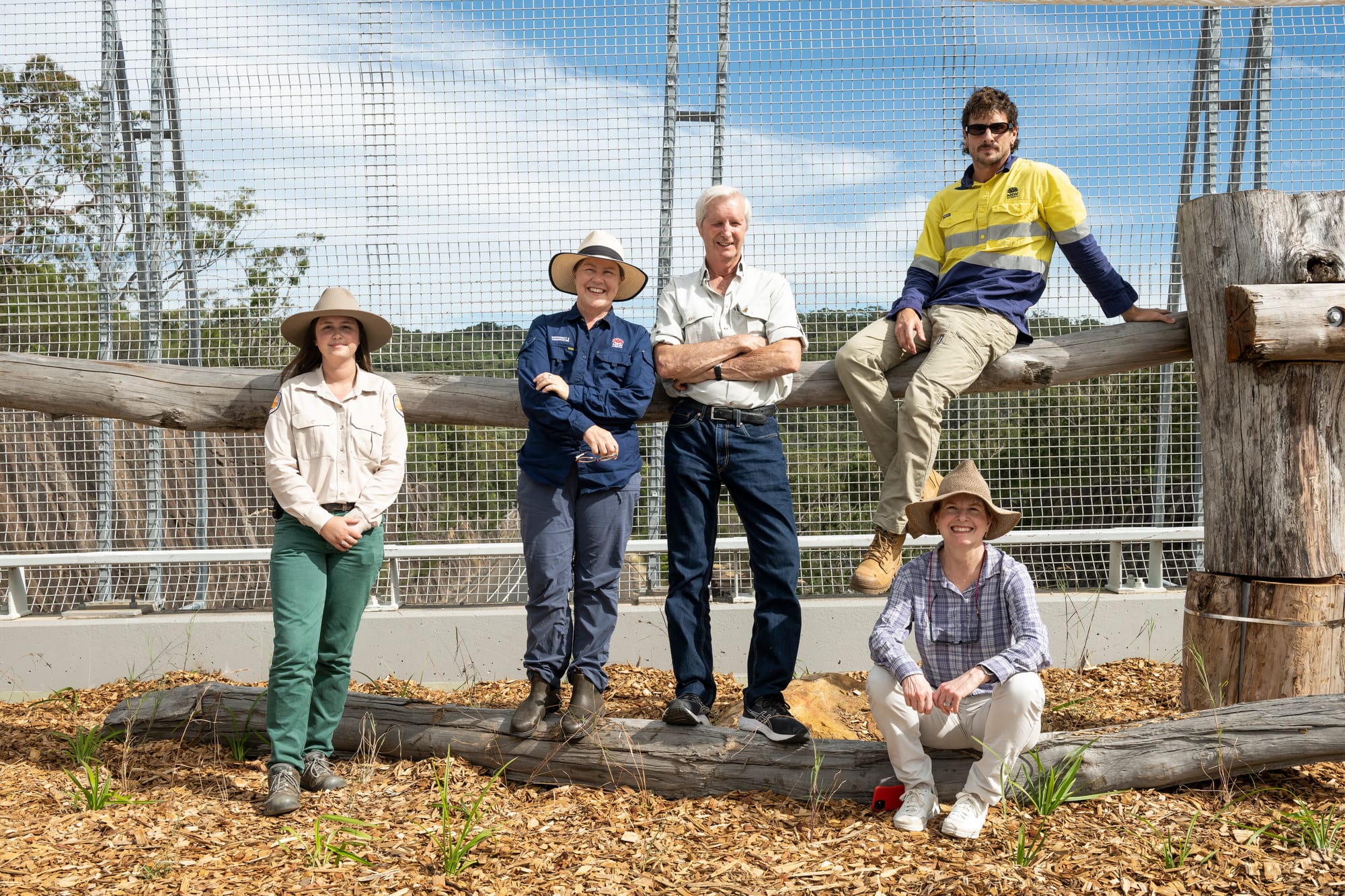
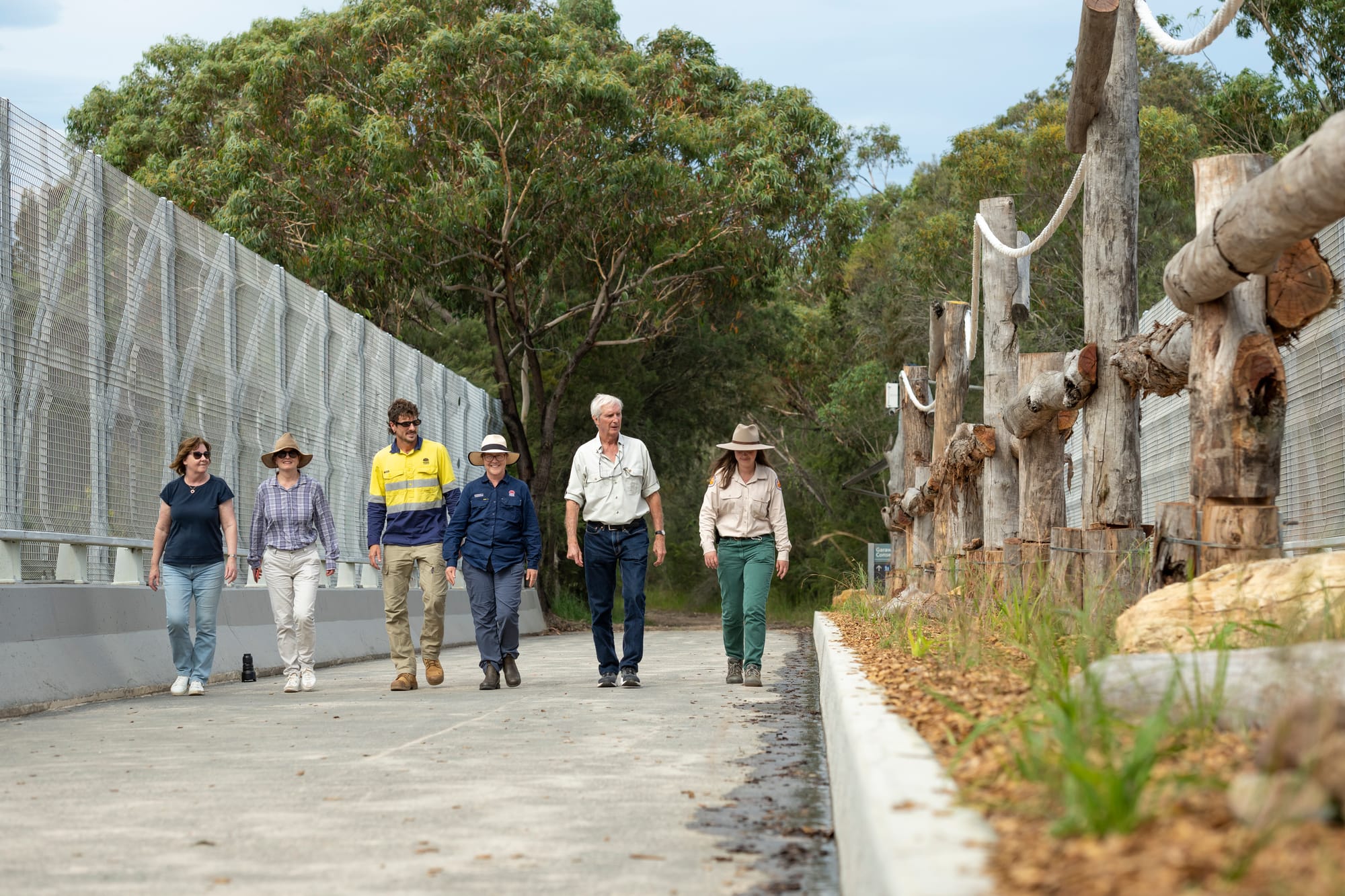
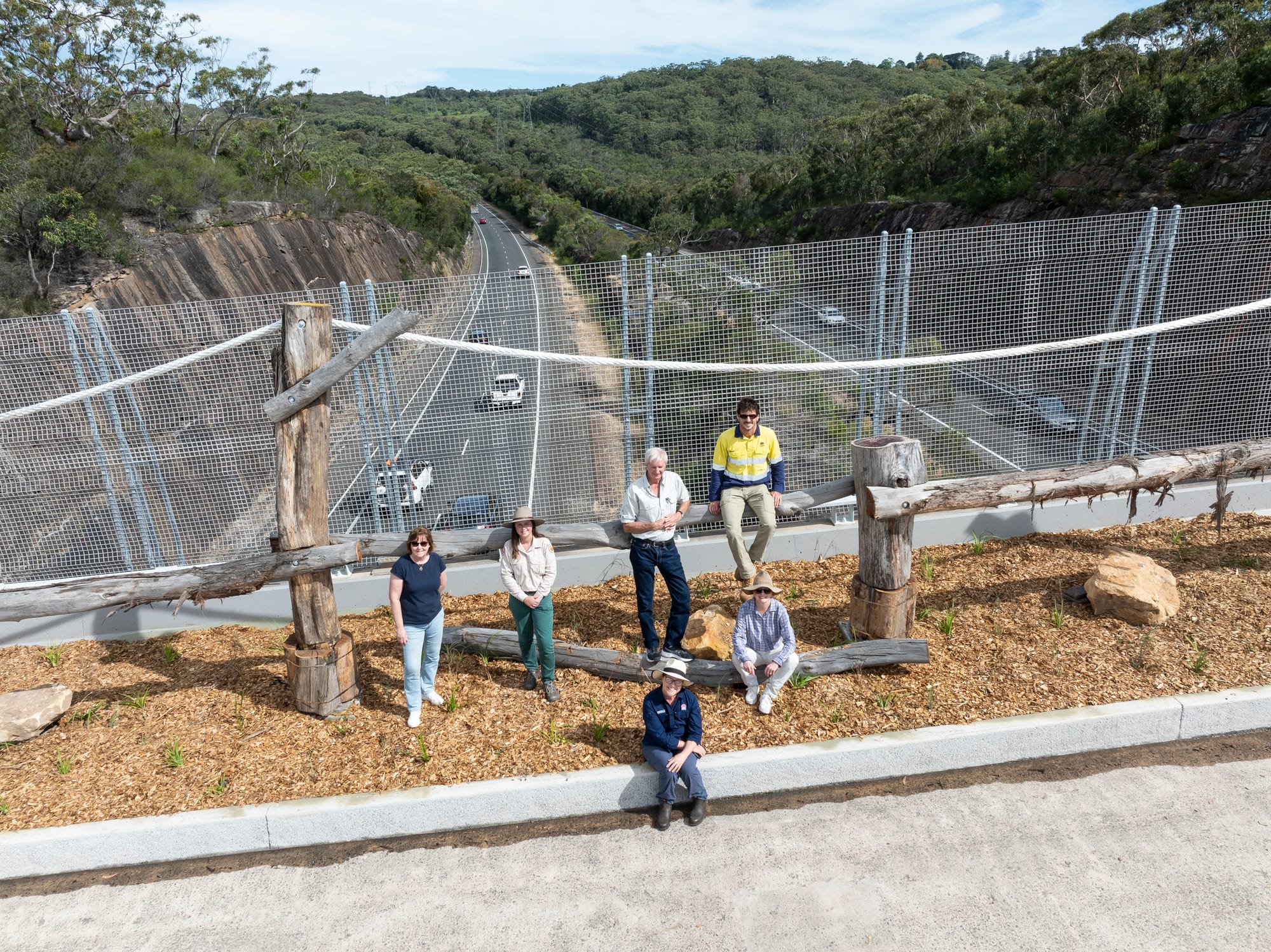
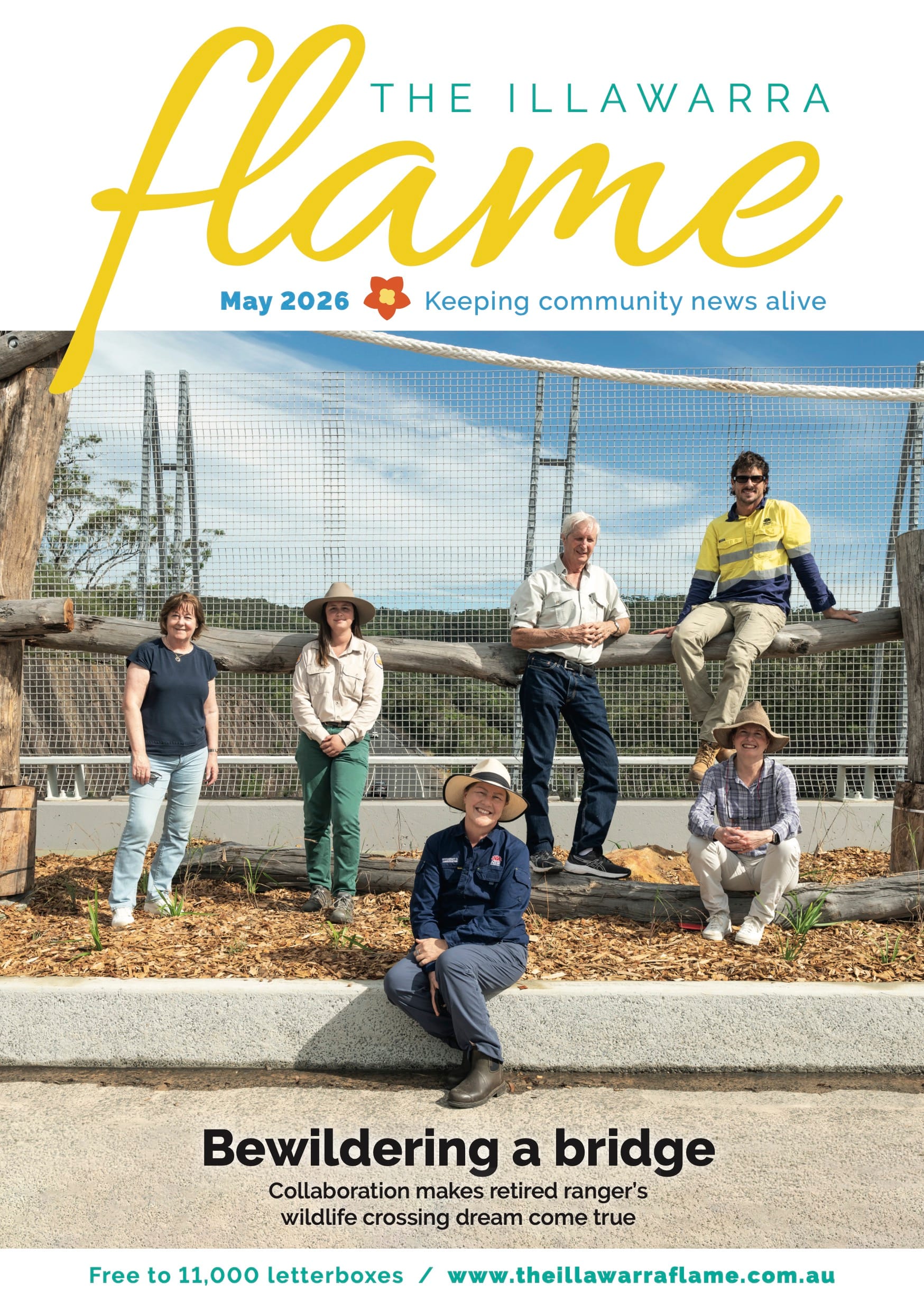
L to R: Lara Hase of NPWS, Kylie Madden of DCCEEW, Bob Crombie, Brenton Hays and Sally Webb of TfNSW.
“So many people have been involved in this project turning Bob's idea into a reality – from Transport’s biodiversity guys, who absolutely drove it, the engineers, project managers and everyone else. I really have to do a massive shout-out to the guys who were actually up here, week after week building it from scratch with their bare hands. I know they got lots of appreciative beeping from passing cars – but they are all legends and it wouldn’t have happened without them."
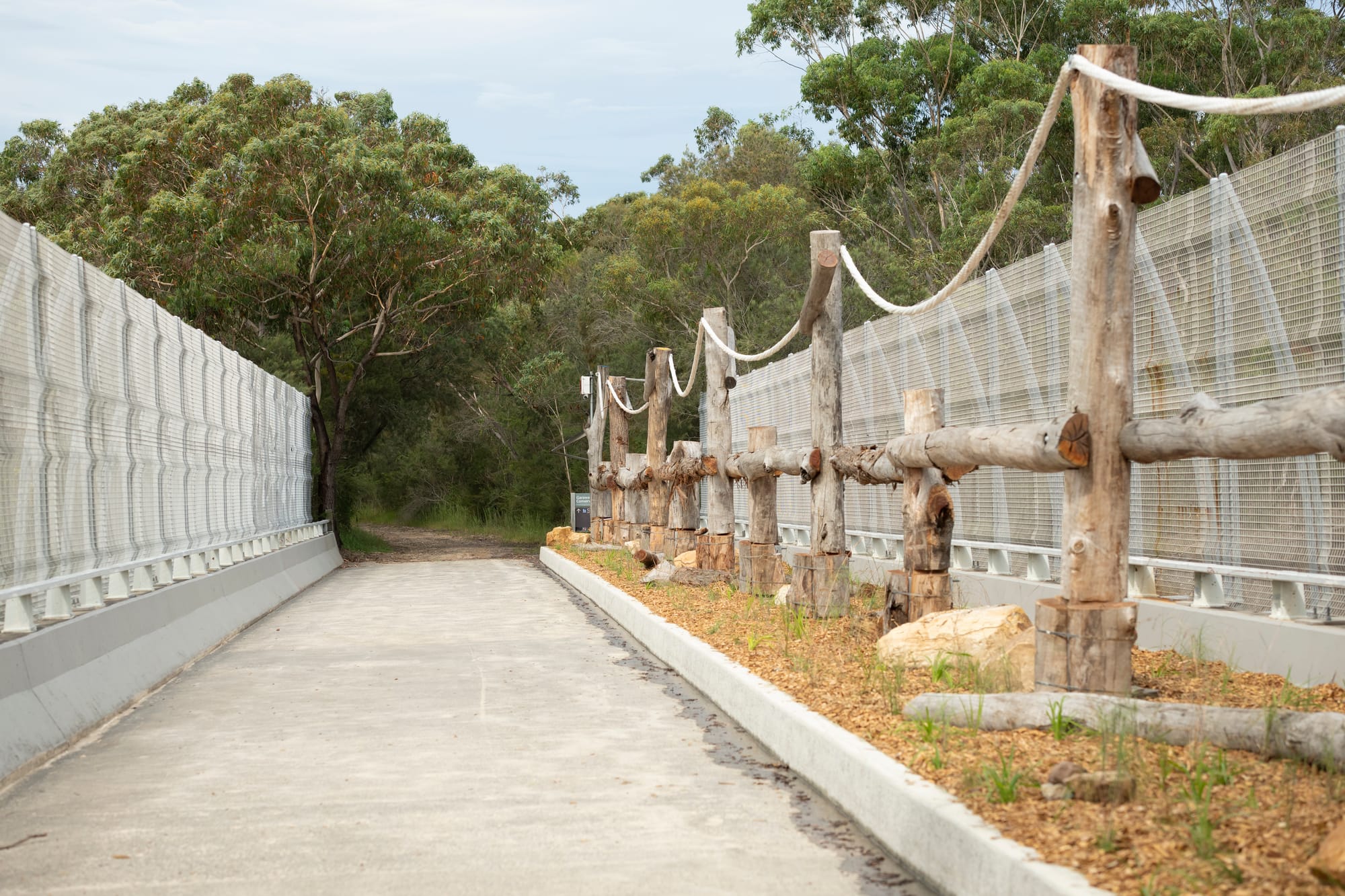
Over the past couple of months, the bare concrete bridge has been transformed, with logs bolted together to form a jungle gym, a sturdy rope hanging overhead and native grasses planted in a soil bed below.
“I’m so proud of how it has turned out," Kylie said. "It looks amazing. We were so lucky to have the skills of Brendan Taylor in designing the bridge. Brendan literally ‘wrote the book’ on wildlife crossings [The Evolution of Wildlife Crossings in Eastern Australia, Cambridge Scholars Publishing, 2023] and the design you see is largely credit to him."
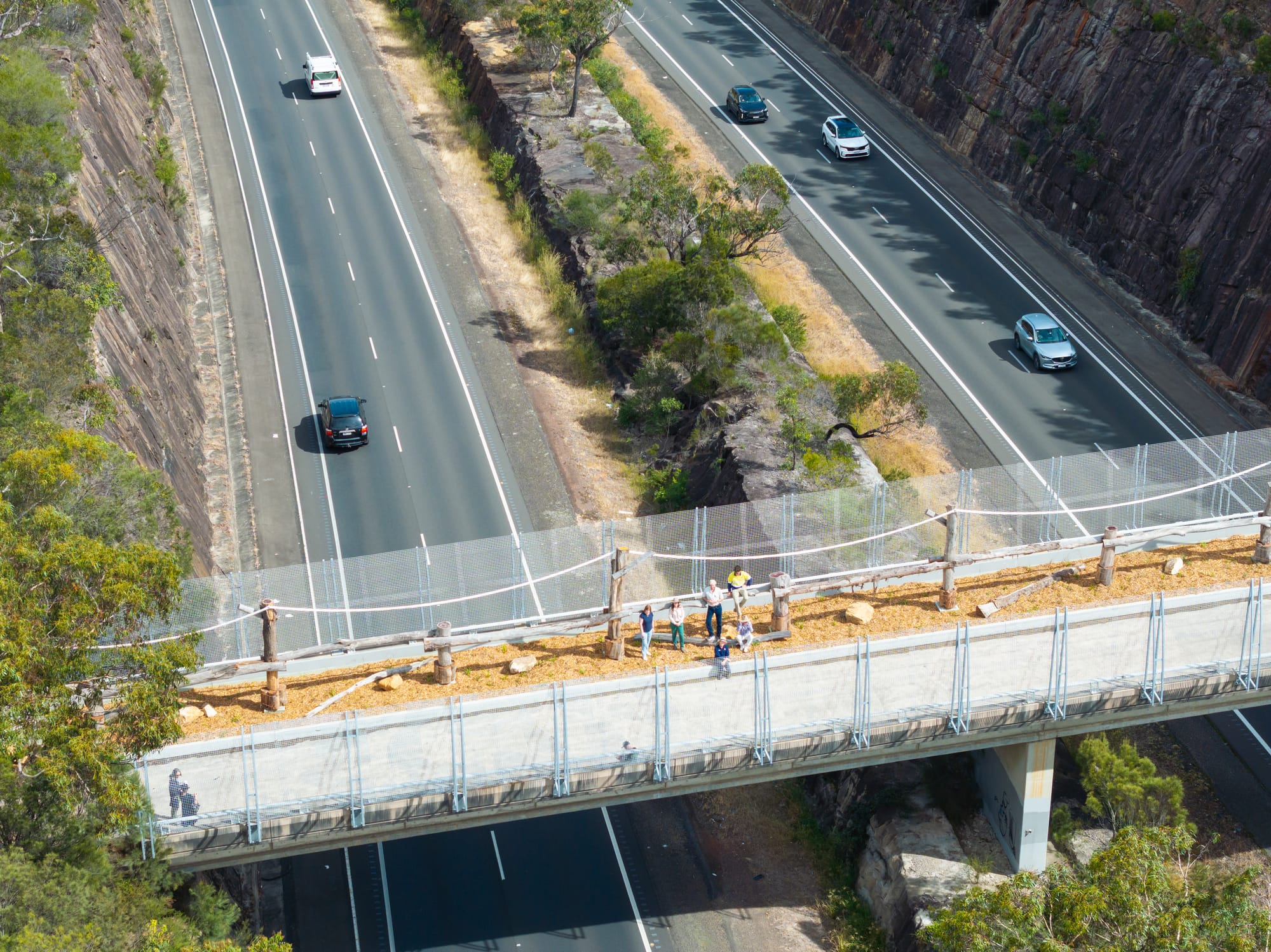
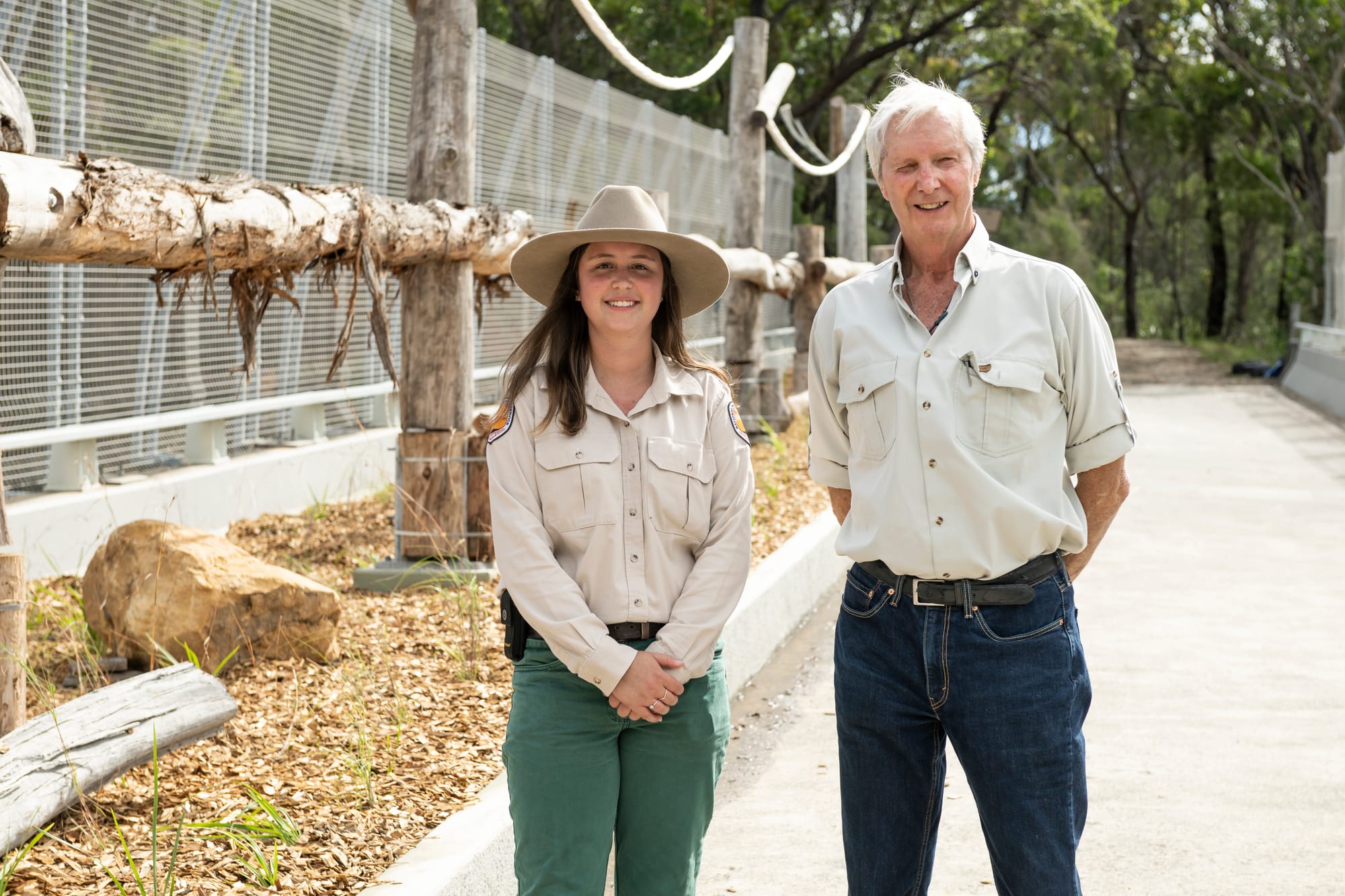
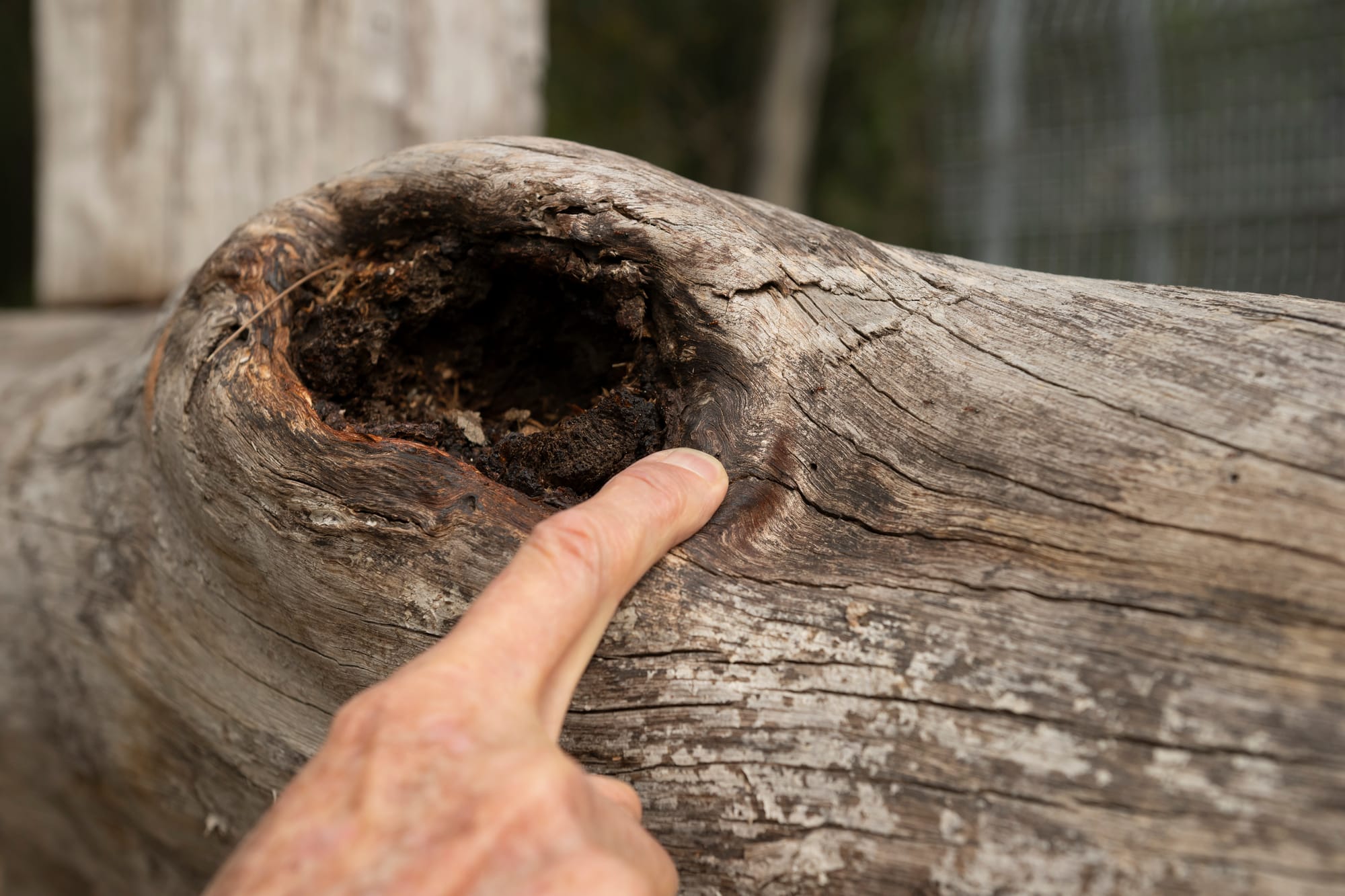
Top right: Retired ranger Bob Crombie with National Parks ranger Lara Hase. At left: Bob points to where ants are building a nest on the crossing.
Wildlife on the move
About six weeks after the Illawarra Flame first visited the site with Bob Crombie, a second ant species has moved in and is busy building a nest. Five kinds of butterfly have flitted over, as well as microbats. A marsh snake and a swamp wallaby have checked it out, but no large creatures have been recorded on the crossing.
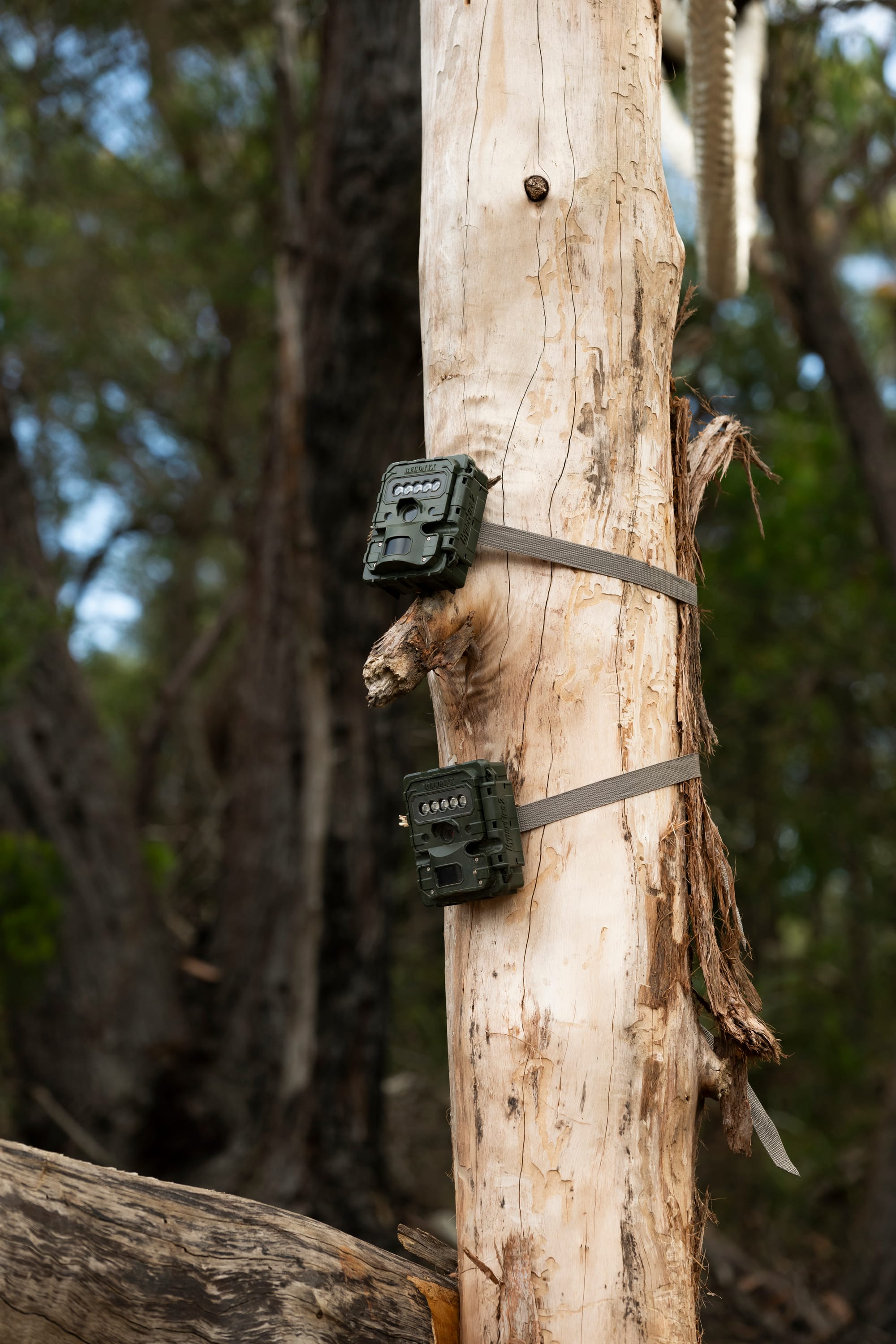
Which is not to say they haven’t used it. In a blow for researchers, several wildlife cameras have been vandalised and stolen.
Bob believes the key to protecting the project could be volunteers, drawn from the Sutherland Shire Environment Centre, Friends of the Royal or a new Landcare group.
“That way you're involving a lot more people,” he said. “You've got ownership of the site as well. You've got community involvement in it, and it brings a lot of connection, a lot of protection.
"People then own the bridge. They become proud of it. It's something that's got to be managed long term.”
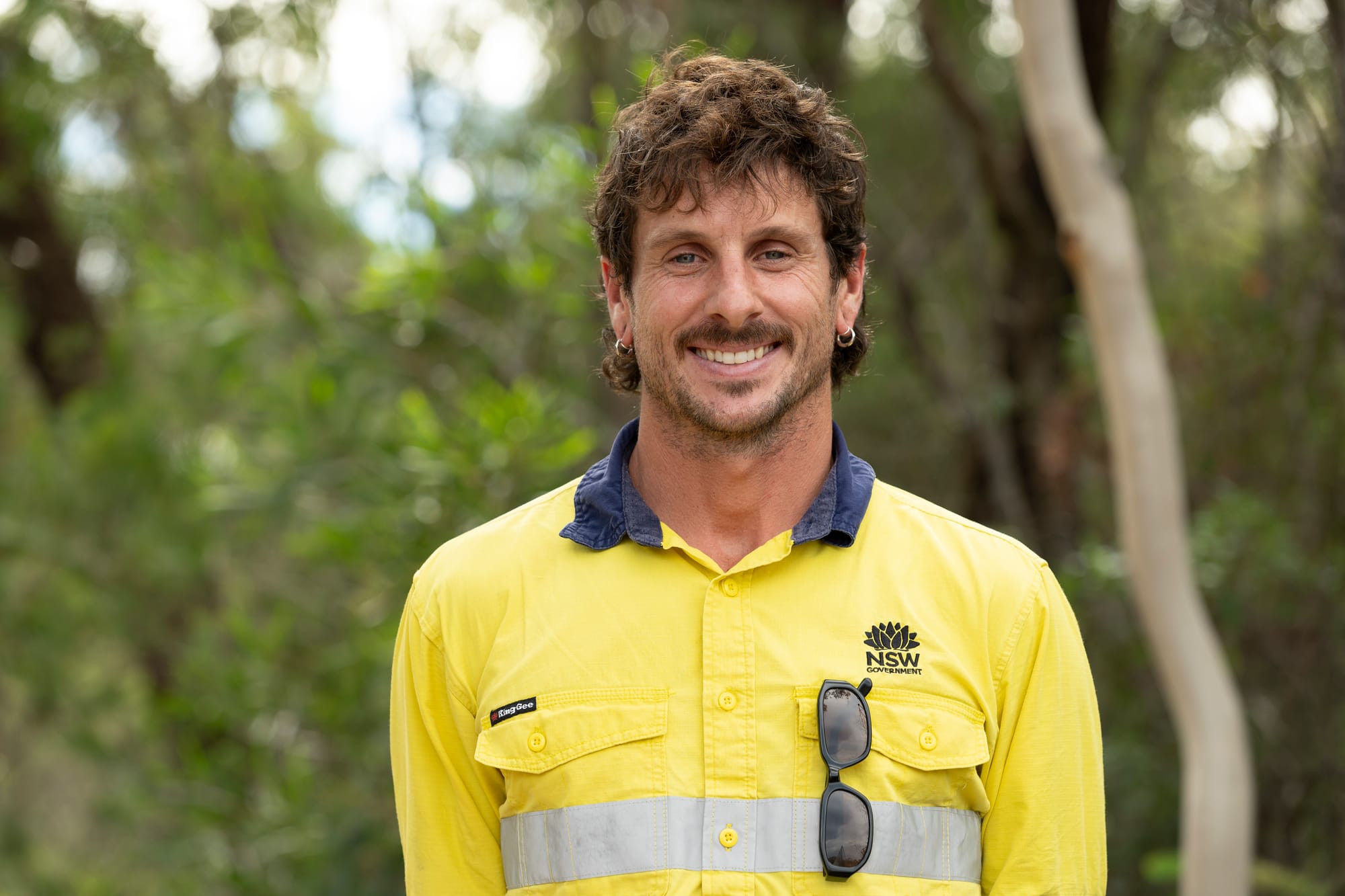
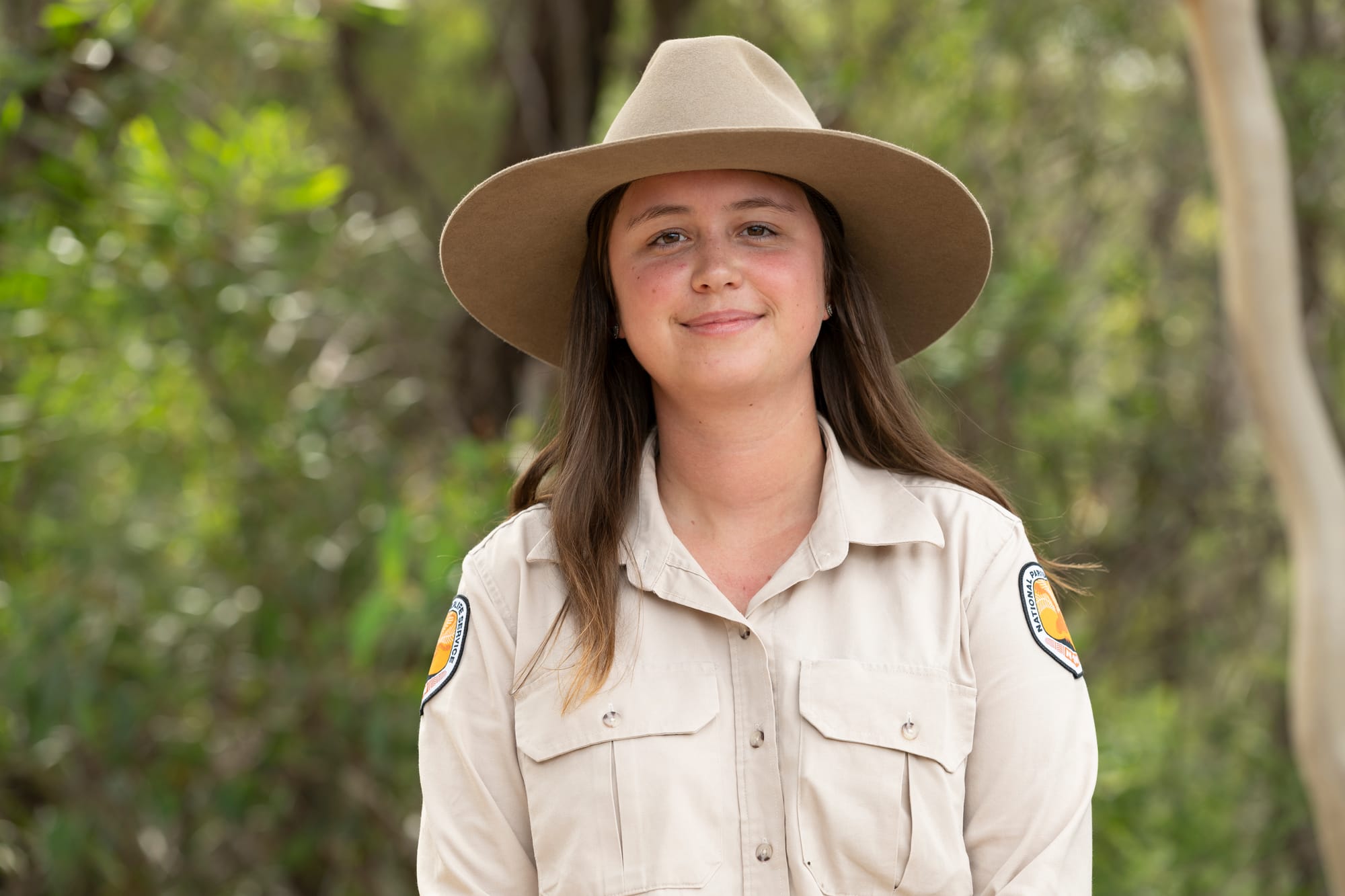
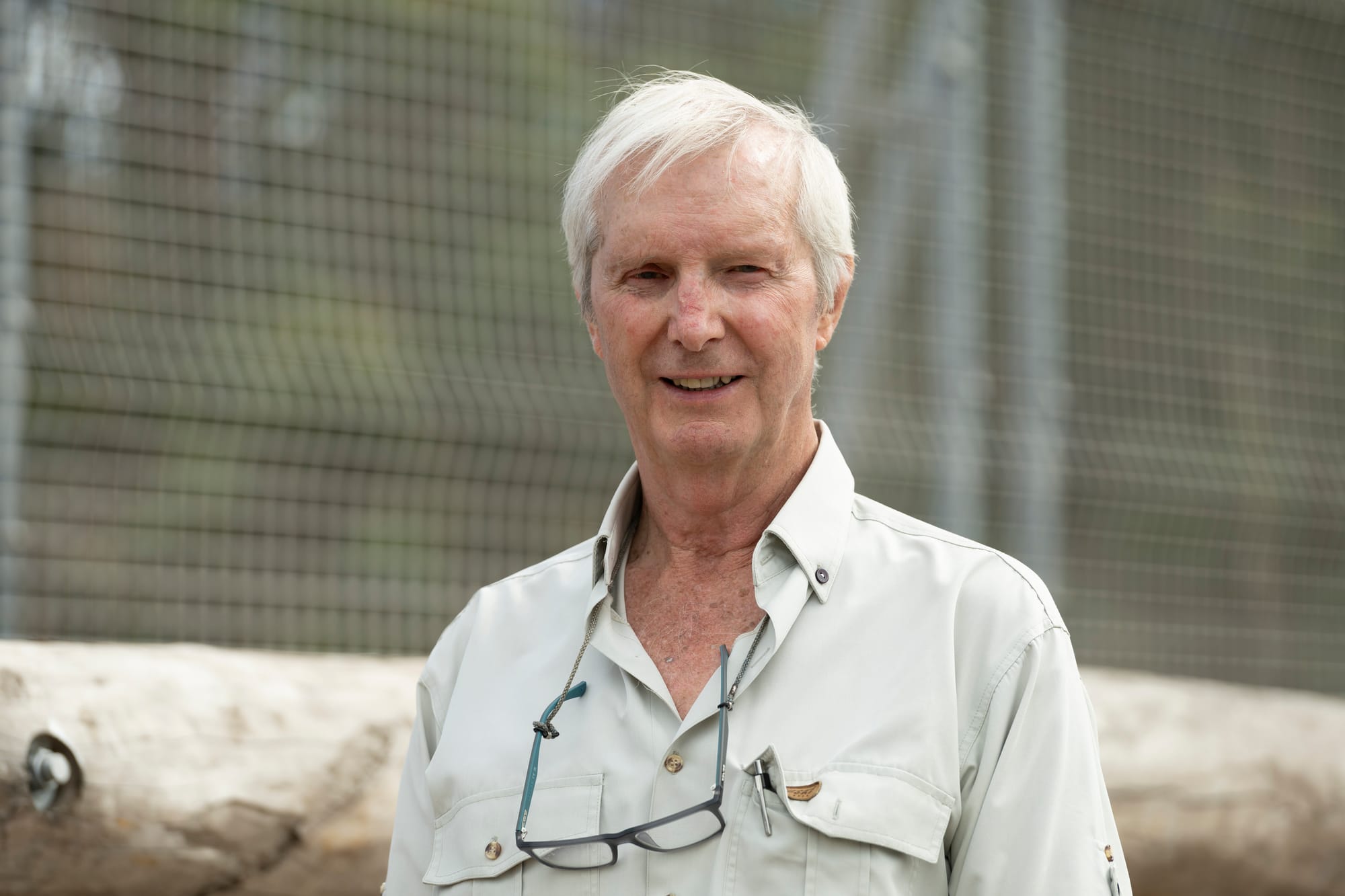
Government and community united for conservation: DCCEEW's Kylie Madden, TfNSW's Brenton Hays, retired ranger Bob Crombie with National Parks ranger Lara Hase.
Creatures that might cross
Near the bridge, dense Banksia ericifolia is good habitat for ringtail possums, who've made dreys – nests of twigs – in the bushland. Kylie also points out the distinctive cuts on a red bloodwood tree left by sugar gliders, which like to chew the bark and drink the sap.
“These animals are living within metres of this huge, busy motorway, and they obviously can't cross it,” she said. “So these are some of the species we expect will use it.
“Some of the ones that will be really, really exciting will be something like a red-crowned toadlet. We know there's red crowned toadlets within 10 metres of the bridge. They're really cute. They're like little meatballs with legs.”
Red-crowned toadlets are less than 3cm long, vulnerable and only found in the Sydney basin. For this little frog, waddling safely across the bridge isn’t just about avoiding becoming roadkill; it's a chance to expand the gene pool by finding a mate on the other side, helping to ensure the survival of the species.
“Something I'm very passionate about is landscape connectivity,” Kylie said. “So I would actually like to see all these iconic landscapes of the Sydney basin connected.”
She's now looking forward to photographic evidence of marsupials and other unique creatures on the move.
“The invertebrates have started using it already. Now we're looking for that first crossing of something bigger – we'll be letting people know, that's for sure.”
All photos: Anthony Warry
Read more
Seen the new wildlife crossing on the M1? It’s 'bewildering'


