

Illawarra challenge to tell a weed from a 'weed', and the simply weedy looking
What's in a name, someone once asked. And my answer is: 'Sometimes a heck of a lot of value judgements!' These judgements really come to the fore when considering the topic of weeds
What's in a name, someone once asked. And my answer is: 'Sometimes a heck of a lot of value judgements!' These judgements really come to the fore when considering the topic of weeds.
The very definition of a 'weed' is a vexed topic.
One of the most widely used definitions of the term is 'A plant in the wrong place,' a definition which assumes that the status of being a weed is defined in relation to human goals, desires or values.
This definition leaves wide open the question of which plants fall into the weed category, and even allows that a plant may be a weed to one person or community and not a weed to another.
Some sources, particularly those focusing on environmental management, define weeds in relation to a range of attributes, such as recent (post-colonial) introduction, though do usually also reference values.
For example, the definition used on the website of the Australian Association of Bush Regenerators is: "A weed is any plant that colonises and persists in an ecosystem in which it did not previously exist. They may affect the economy, the environment, human health and amenity. Many plants introduced into Australia in the last 200 years are now weeds."
One area where I find the term 'weed' particularly interesting is in common names given to indigenous or native plants. These names embody the values of the namers, who must have considered the plants thus named to be problematic in some way or other. And there's quite an extensive list!
Some of these plants are common and widespread, and hard to remove if you wanted to try. Scurvy Weed (Commelina cyanea) is recorded as being used by early European arrivals in Australia to address scurvy (caused by Vitamin C deficiency). Its usefulness did not save this plant from being called a weed by whoever named it!
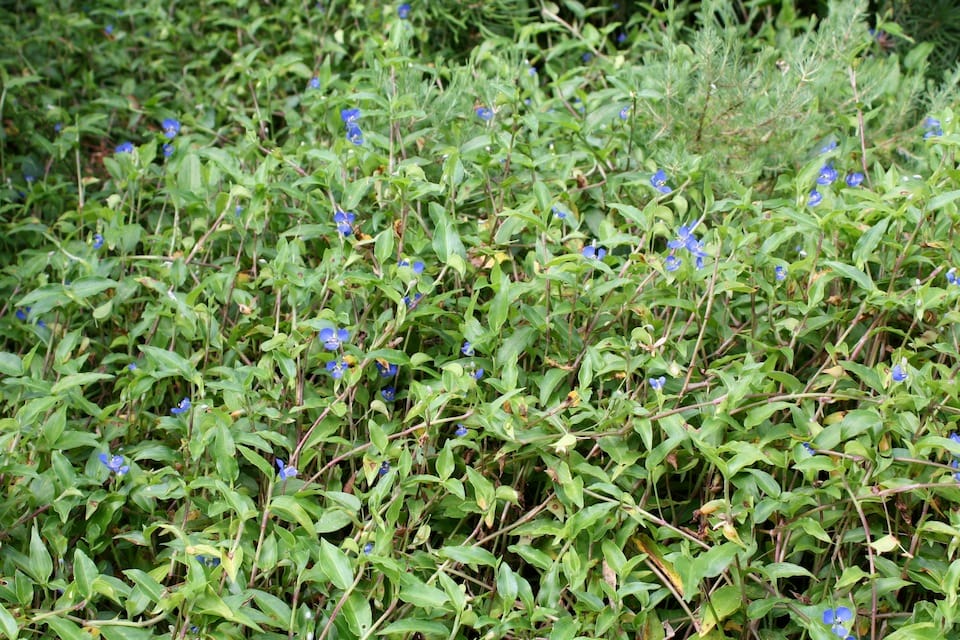
Many other indigenous plants with a 'weedy' common name are, like Scurvy Weed, fast-growing or -spreading and tricky to remove.
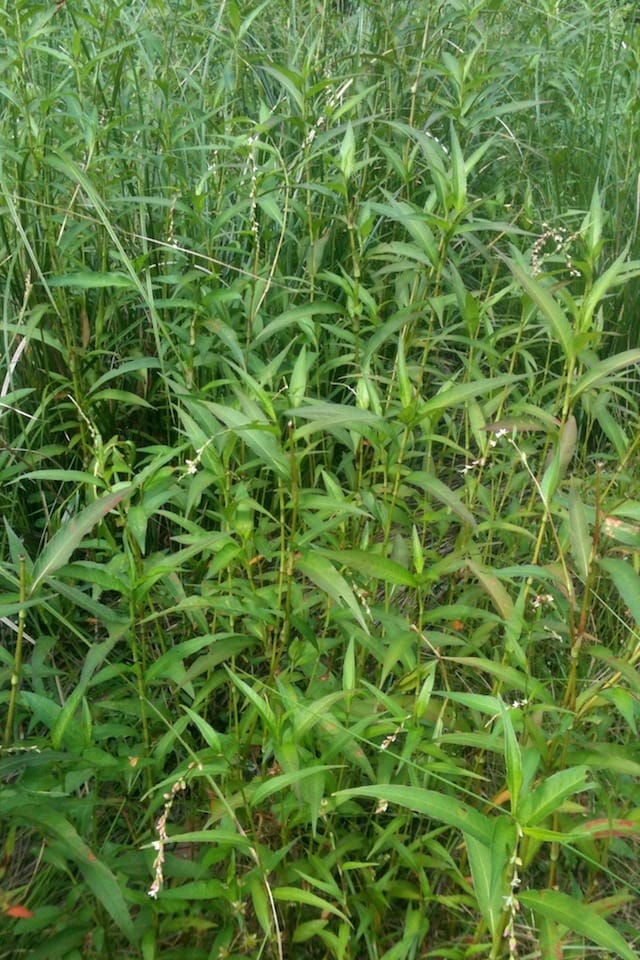
A few other examples are Kidney Weed (Dichondra repens), an absolute staple in the nursery trade; Wallaby Weed (Olearia viscosa), a straggly shrub that has been neglected by gardeners and landscapers everywhere; and Knotweeds (Persicaria sp.) which flourish in intermittently damp areas, and which are really not weeds!
In conclusion, I wanted to flag a plant that is common and widespread in the area, and so typically 'weedy-looking' that many people who love local nature still have no idea it's a local.
This is Indian Weed (Sigesbeckia orientalis). I mean, just look at it! Spready, straggly, often dried-out and miserable, and with seeds all too keen to adhere to shoes, socks and trousers. And yet this plant is a really useful element in ecological restoration, where it can help shelter and protect young shrubs and trees, and may even deter browsing deer.
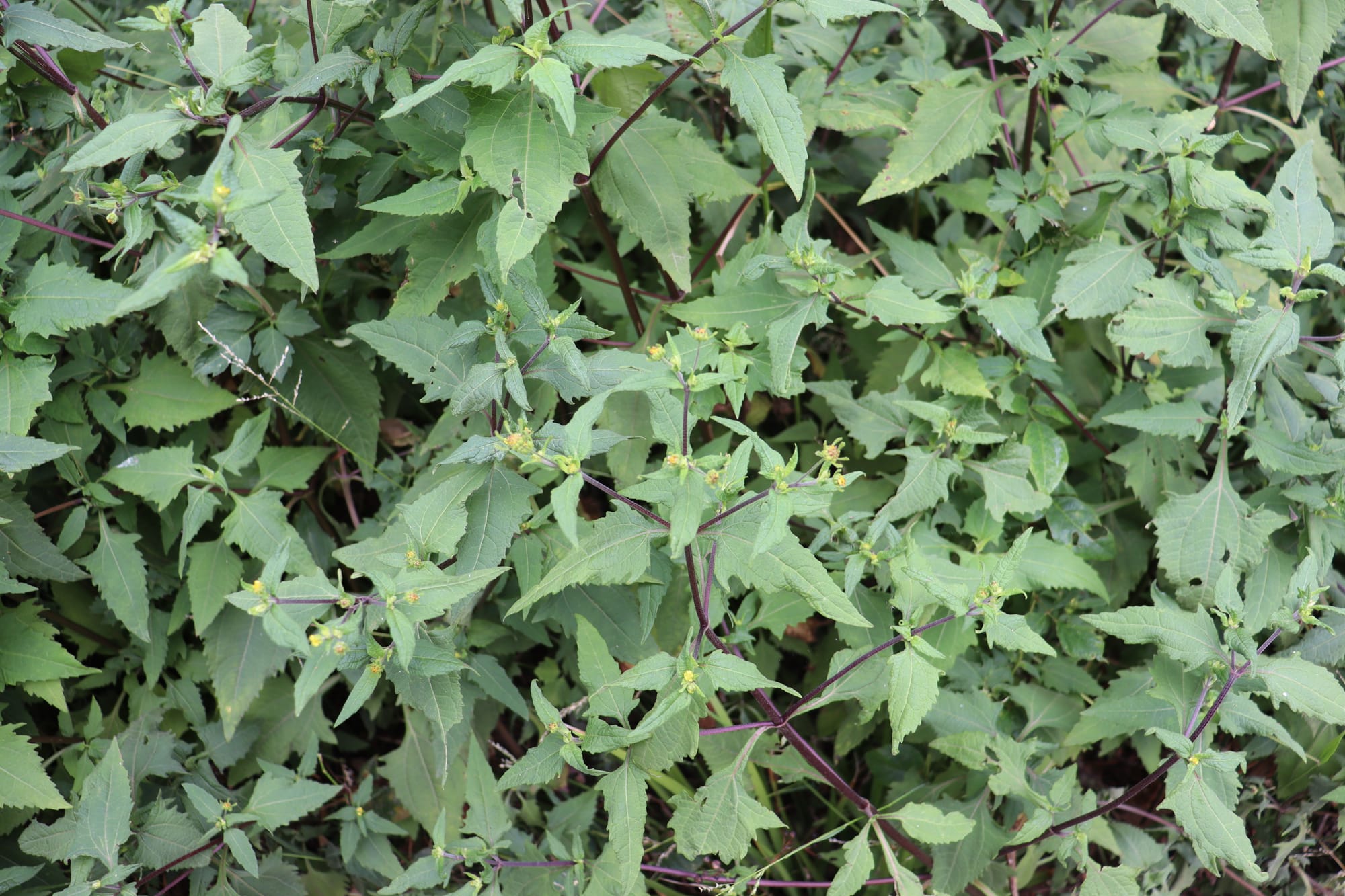
What's in a name? Judgement, that's for sure. But just as we can change our minds, we can also change the names we give to things.
Perhaps some of the above plants merit new, more appreciative titles? And if you want to puzzle some more about terms such as 'native' and 'weed', have a read of Professor Lesley Head's thought-provoking 2011 article 'Decentring 1788: Beyond Biotic Nativeness'.


