

The Planetarium vs The Murcutt Herbarium
Did you know that we may have missed out on a Murcutt-designed herbarium as a result of Wollongong council attempting to get extra funding for a planetarium in the 1980s?

Anyone who’s been to the Kew Gardens in London knows how good a herbarium can be. In particular, the glazed palm house is spectacular. Walking in from a grey ol' Blighty day outside, one is transported into a tropical paradise that feels more like Singapore.
Besides the remarkable plant collection, the architecture housing it is a Victorian wrought iron miracle of its day. Built in the middle of the 19th Century, it is truly a marvel of early steel engineering. According to the Kew Gardens website, it has 1600 panes of glass. Can’t resist a dad joke here, but that would be a real pain in the glass.
Planetariums are also a fantastic building type that I would argue rival the herbarium. Any building that ends with “ium” is in my mind fantastical – except perhaps a crematorium, best avoid that one!
I feel that planetariums, once upon a time, were probably the monorails of a particular era when cities would compete on who was the most advanced and required a concrete dome on the city skyline for evidence. In my mind, they are Science’s answer to the great domed churches of the past. In church we would look up to the dome for God. In the planetarium, God was replaced with the stars – one heavenly body replaced with several!
Well, did you know that we may have missed out on a Glenn Murcutt-designed herbarium as a result of Wollongong Council attempting to get extra funding for a planetarium?
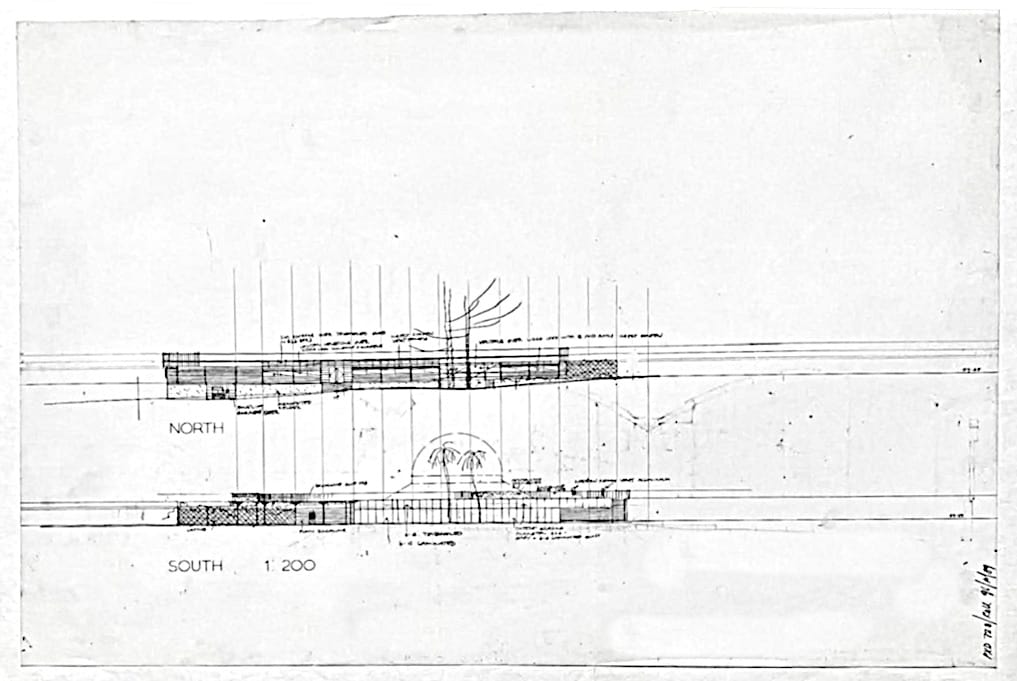
Recent research by Dr Bess Moylan uncovered some remarkable plans by Murcutt for a visitor centre and herbarium located to the northern boundary of Wollongong Botanic Garden, probably just off Northfields Avenue.
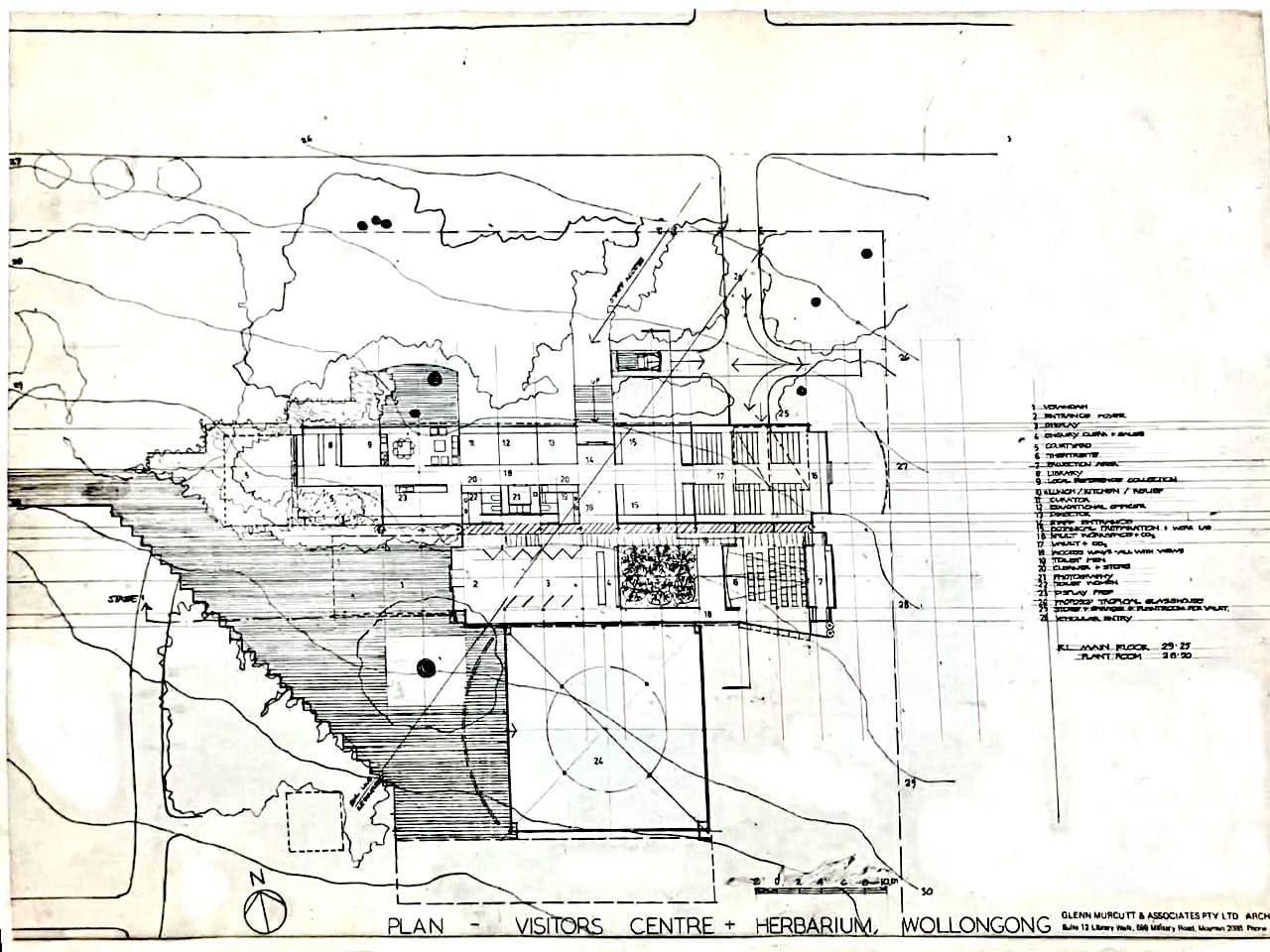
Along with remarkable drawings from the 1980s, she also uncovered correspondence from the council to Murcutt, Australia's most internationally renowned architect, as well as a press clipping that would indicate that extra funding was being sought to allow for a planetarium.
It is unclear whether the planetarium would be incorporated with the herbarium or that Glenn would be engaged to design it, but it does intimate that the funding for the herbarium was deferred by council so that it could negotiate a planetarium in the deal. From all evidence on site, that funding never came through.
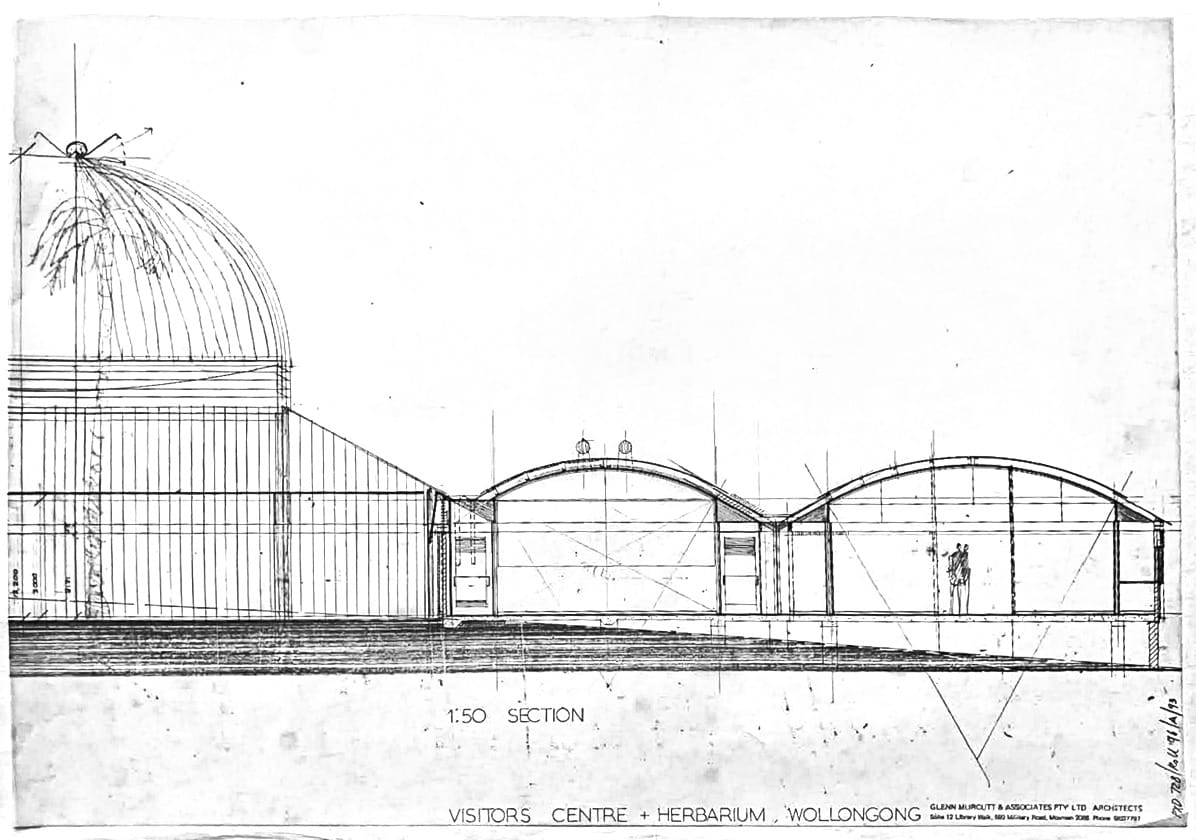
From the limited amount of correspondence I have been privy to, it would seem that documentation for the herbarium reached about one-third of the way through when council advised to wrap up final sketch drawings. The building itself looked fairly typical of Glenn’s early work, with a series of long pavilions with curved roofs in front of a glazed dome that would house the tropical plants, with tall palm trees indicated on his drawings.
The floorplan included a small auditorium, an internal courtyard, a library, a laboratory, a gallery space, a series of office suites and a large covered balcony all set out on a ~3m grid. Looking over the drawings, I can only imagine what a wonderful addition to the Botanic Gardens this would have been. Opportunity lost! In their search for the stars, the council lost sight of more proximate earthly delights – a common mistake we humans seem to make!
Read more
A local researcher uncovered historic plans for a visitors centre and herbarium drawn up in 1986 by renowned architect Glenn Murcutt, Tyneesha Williams reports in Peek at past plans points way for gardens cafe


