

Bewildered? Nature lovers will soon find it all crystal-clear
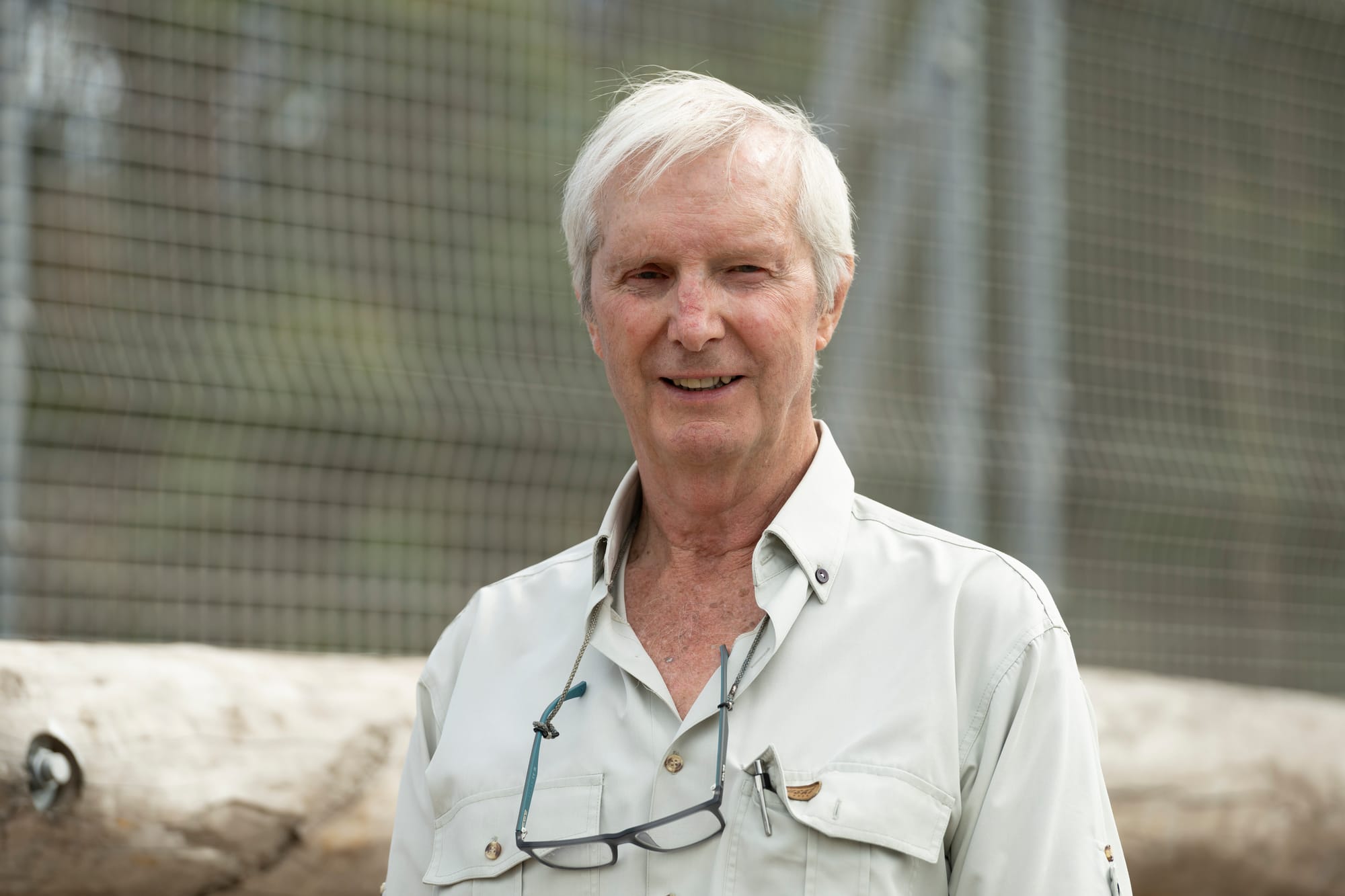
By retired ranger Bob Crombie, creator of the concept of 'bewilderment'

Welcome to a new column for nature lovers by Bob Crombie, the retired ranger who inspired the makeover of Cawleys Road Bridge. The wildlife crossing is the first of its kind in the Illawarra and the embodiment of "bewildering", a word Bob redefined to include "rewilding" almost 20 years ago. Australian gardening greats Don Burke and Costa Georgiadis embraced the idea, as did King Charles III, who was inspired to "bewilder" his UK estates. Now the Illawarra Flame has asked Bob to tell us more in a series of articles exploring his original concept of "bewilderment".
Chapter 1: Stillness and Bewilderment
We live in a time of changing orthodoxies. We have wrapped ourselves in a world view almost completely derived from science, religion and capitalism, largely divorced from nature and with a technological bent that, placing prime value on what is humanly created, regards nature as separate from us and little more than a source of raw materials and profit.
This mode of separation from the visible and invisible worlds of nature is almost unique to our civilisation. Most cultures in human history have experienced that all life forms are imbued with a spirit or essence, and that spirit may exist without form, and even precedes and is responsible for the creation of form. These were reflections of their experience, not their faith or beliefs – an experience that has been the reality of countless, perhaps even most, human beings through the ages.
Nearly everyone in our present society professes spiritual feelings when being in wild nature. Most people explain these feelings in terms of the religion they were taught as children. However, those feelings are older and more basic than any traditional religion. They are a natural part of our existence as natural material beings. They are recognition of our participation and belonging as members of nature and the universe.
For we also live in a very wonderful world, rich and diverse in its treasures of beauty and ugliness, form and being, a world of immense potential for experience, creativity, and growth if we can let go and connect. Patterns of qualities and images flow through us from this richness according to our own unique being and this experience of ourselves gives inspiration and direction to our life.
“Nature is a prairie for outlaws,” American naturalist Henry Thoreau understood so well.
As much as Thoreau understood, I will provide an alternative and say instead: “The wild or wilderness is a prairie for outlaws.”
For in my view, we are all part of nature and not separate from it, as Thoreau suggested, nature and civilisation being separate things in his mind. Although he was using a different treatment here for the word nature than I, for our times I believe it is better to use the terms wild or wilderness instead.
Those who go into the wild or the wilderness become, of necessity, uncivilised. The word civilised comes from the Latin civilis, meaning under law, orderly. Thoreau was having a little joke. Civilis itself comes from an even older Latin word, civis, meaning someone who lives in a city, a citizen.
Those who go into wilderness, the home of wild things and a place that has not been tamed, are no longer under (arbitrary) human law, but under the all-encompassing, inevitable law of the wilderness. They go out from under human law. They are no longer citizens, they are not orderly, they are not civilised – they are outlaws to it.
When you go into wild places such as our national parks, you expose yourself to a whole set of new forces and interactions, and something may happen to you, something that civilisation does not like. Apart from the possibility of being eaten by a crocodile, there is no doubt that the wild will test us, using the caprice, extremes and stratagems of its unfathomable nature. Hot and cold, wind and rain, storm and tempest, flood and drought, snakes and spiders; creepy-crawlies, ticks, leaches and flies.
But those of us who have not been discouraged by such apparent malevolent whimsy may suddenly find ourselves rewarded with tenderness, a delicacy of sublime subtleness or an unrestrained passion and love that far surpasses ordinary comprehension. And that will change us.
Have you ever heard the Earth as she receives the first rain after a long drought? She really makes a sound, a deep evocative sound like a sigh of relief. But it is more. One can plainly hear the deep murmur of the Earth taking the rain deep into her like a woman taking her lover into her arms, all the more ardently because she had doubted that he would ever come. And he is here after so long! I have – along the Wallumarra Track.
And when I was in Africa. I shall never forget the haunting sounds of an African song sung in the village I stayed in for three months in the Cameroon before the monsoon rains came. It is called the Song of the Rain.
It would begin anytime, anyplace whenever the spirit moved some woman to express in song and she would sing. It would come suddenly from anywhere and float over the village and fields:
The Song of the Rain
Under the sun
The earth is dry.
By the fire
Alone I cry
All day long
The earth cries
For the rain to come.
All night my heart cries
For my hunter to come
And take me away.
Then equally suddenly and all the more hair-raisingly, from somewhere out of sight, a man would reply. The answer would carry a message of love and tenderness, and it was as if his whole male being knew the reply:
Oh! Listen to the wind,
You woman there;
The time is coming
The rain is near.
Listen to your heart,
Your hunter is here.
Whenever I heard this, I felt so good it was like I had to pray and say thanks. They would sing them over and over again and the songs became more charged and meaningful by repetition. Such simple, unrestrained importunity from the woman and such tender assurance and loving from the man. This song was straight from their hearts; hearts connected not only to one another but to life itself.
When we are in the bush and these peak moments come upon us, if we are still and allow our attention to pass the place of thoughts and words, the spirit of the bush may pull our attention to within, to the level of pure awareness that is prior to the words and images of the mind.
Then nature’s beauty truly presents itself, nature gives herself to us, and we are truly present once again in the bush — renewed, detached and enjoined, whole, inwardly still, alert and joyous, re-created by the spirit of the bush. We become bewildered.


