

Change of tack could test all kinds of clean energy offshore
Applications are open for research and development licences that could trial everything from wind to wave technology in the Illawarra's offshore zone

A shift to a research and demonstration (R&D) phase has caused a flutter of positivity after the Illawarra Offshore Wind Zone was officially declared empty of applicants in January.
R&D licences are now open for applications and may lead to all sorts of innovative technology being tested in Australia’s six offshore zones, including the Illawarra.
“The idea behind this is that a company can set up, say, one wind turbine within the zone,” said Good for the Gong board member Darryl Best, a retired coal miner turned renewable jobs advocate.
“The construction methods and effectiveness and design of the anchoring system can then be further refined. The turbine would be fitted with every possible monitoring system. The data from this monitoring can then be used to assess the effects that it has on the environment and the impacts to marine and bird life.
“The other upside to this announcement is that the community will get a chance to see a wind turbine in action. Once the trial is complete, people will be able to evaluate the actual effects that a wind turbine in the ocean will have. They will have facts that they can use to make their own informed decision on whether or not it is a good thing for the Illawarra region.”

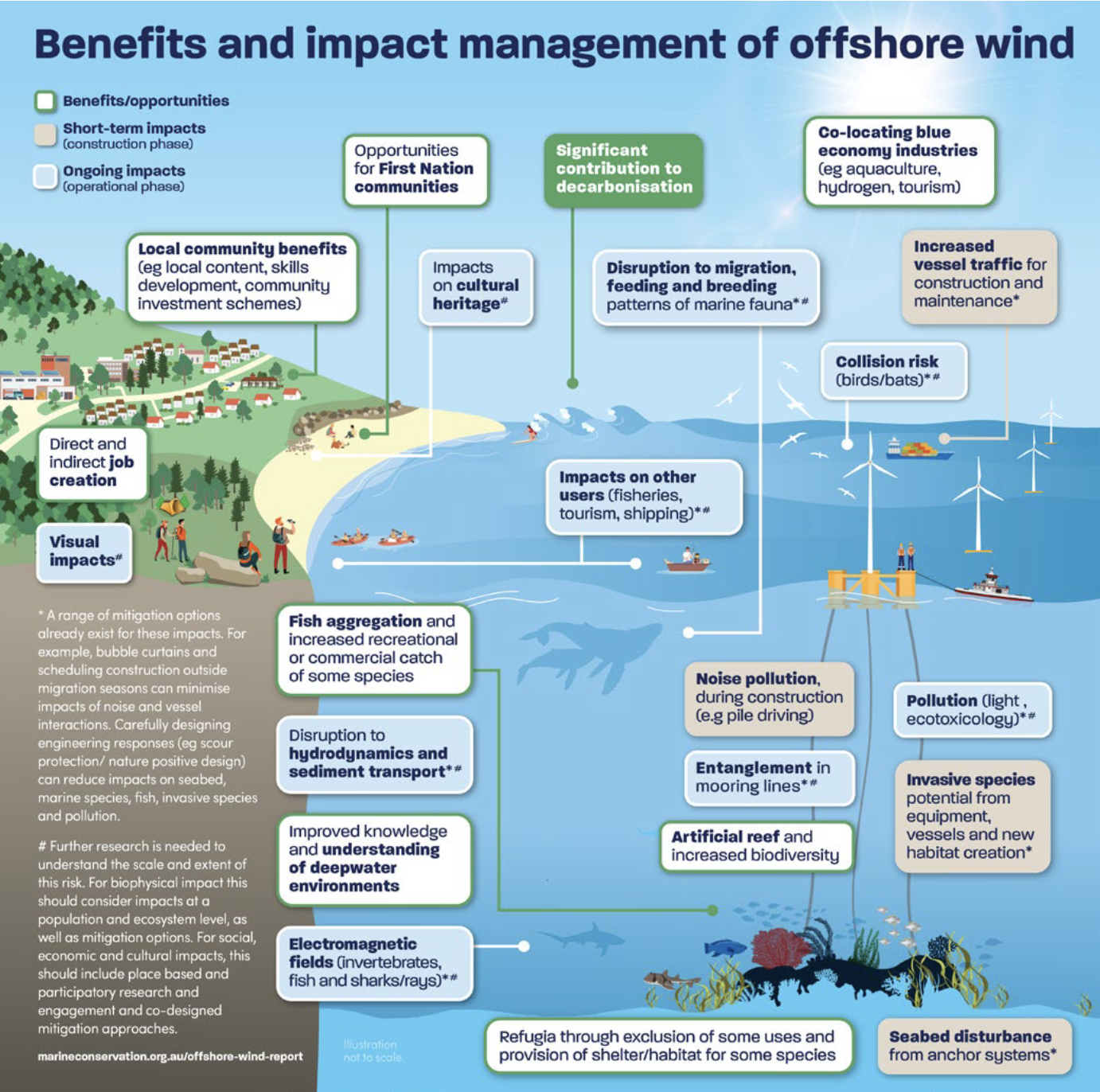
Darryl Best is on the board of Good for the Gong. At right: illustration from the Australian Marine Conservation Society's Improving decision-making in relation to offshore wind, co-authored by UOW's Associate Professor Michelle Voyer. The roadmap recommended independent research as a top priority
Trials widen technology net
Australia's R&D licence guidelines were put out for public consultation last August and developers are invited to apply.
Energy Futures Network director Ty Christopher at the University of Wollongong said “multiple companies” were interested in trialling not only floating offshore wind but wave- and current-based technology in Australian waters.
“They are even seeking to avail themselves of the temperature gradient that exists at ocean depths, as basically a mimic of a heat-pump in your air-conditioning system or your hot-water system, as a way to generate energy as well,” he said.
Ty sees the R&D licences as a chance to showcase home-grown innovation.
“I think we can as a region lean into the huge intellect and spirit of innovation that does exist within our region, is already proving its stripes in the clean energy space – Sicona batteries, Hysata, Green Gravity storage, Gravitas, all of those companies who are already innovating at the moment,” he said.
“There's that rich vein to tap into as a region and use these R&D licences to progress things – albeit with a longer pathway towards decarbonisation.”
While the first fixed-bottom wind farm was launched off Denmark 35 years ago and new developments are still popping up in the North Sea, floating turbines are an emerging technology.
However, Ty – who recommends watching Andy Evans’ film Planet Wind for insights into the history of clean energy at sea – said the use of floating wind turbines was growing.
“Anecdotally, we believe the Chinese are going gangbusters on this at the moment,” he said.
“In Europe, and in particular in the more northern climes off the coast of Scotland, the floating technology through tripod-based arrangements and seabed anchoring – the same technology, largely, as floating offshore oil and gas platforms – is being now deployed in volume.”

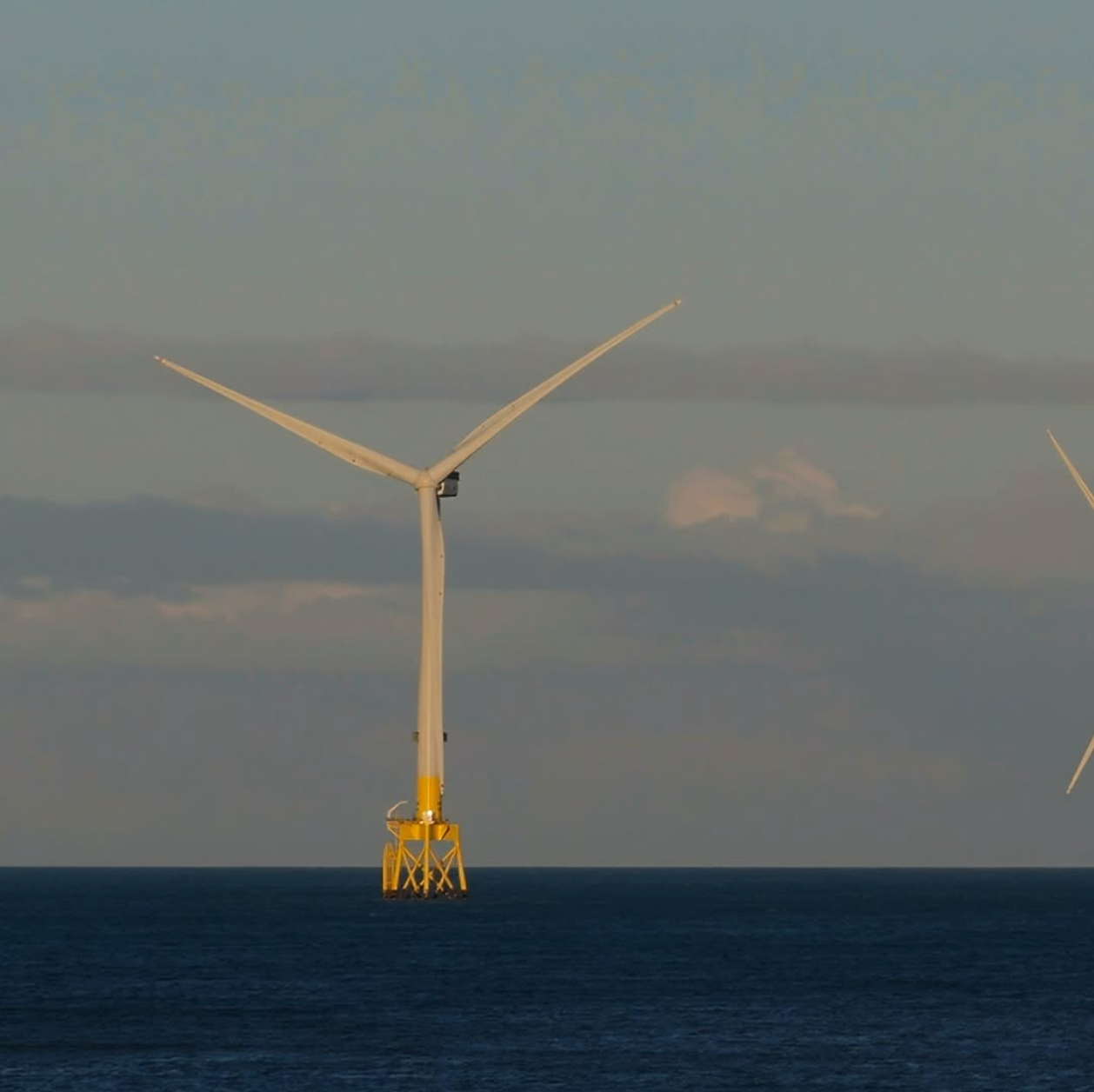
Energy Futures Network director Ty Christopher. At right: Floating wind turbines in the North Sea, a scene from Andy Evans' documentary Planet Wind. Images: Syk Flyk, Illawarra Flame
BlueFloat officially out
News of the research trials came in a joint statement on January 23 from the Illawarra’s three federal Labor members, who confirmed BlueFloat Energy had formally withdrawn its application for a feasibility licence.
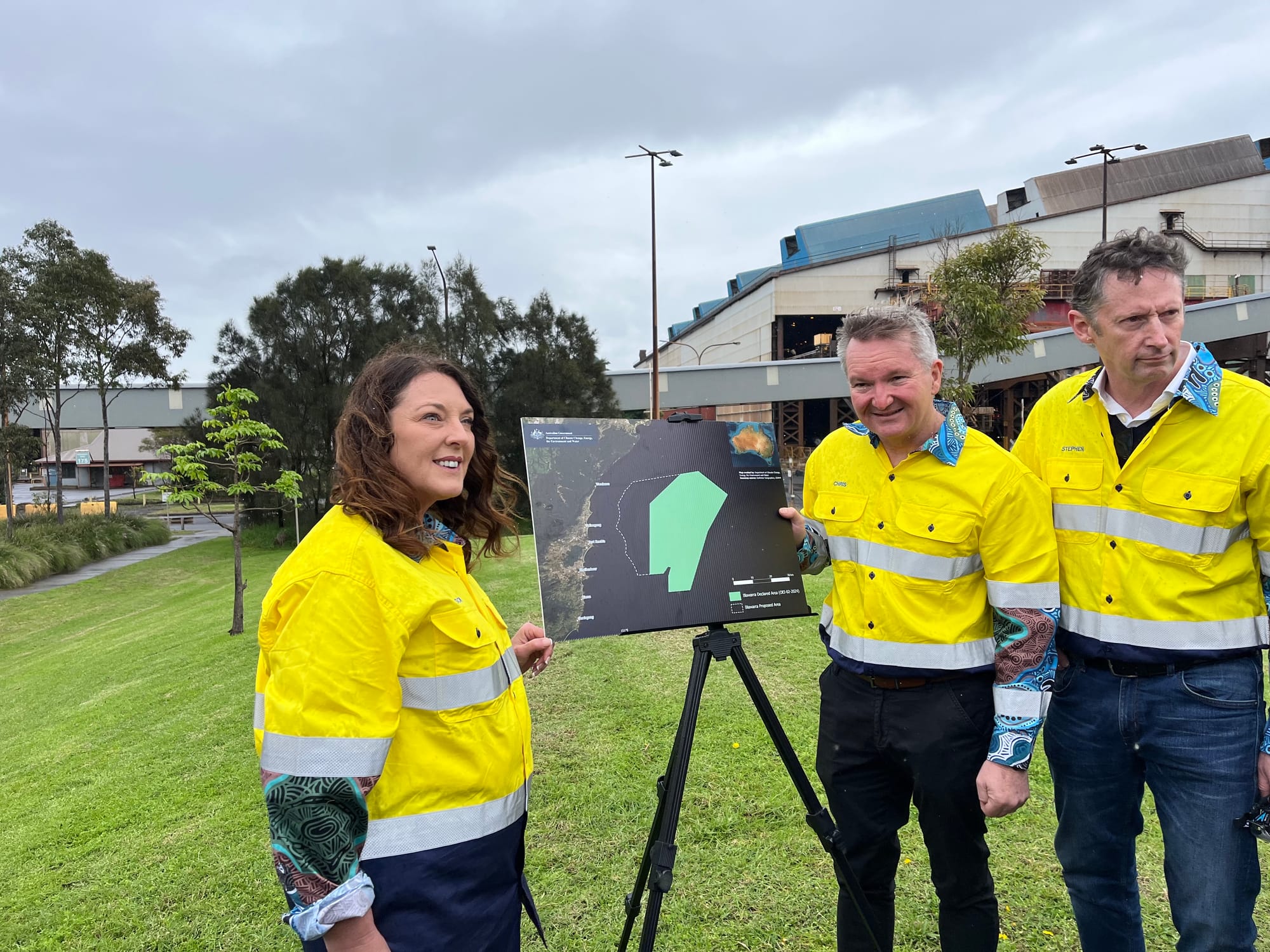
“The declared offshore wind zone in the Illawarra remains in effect and could open for applications for feasibility licences again should there be competitive interest for development and will play a role in research and development until then,” said the statement from Cunningham MP Alison Byrnes, Gilmore MP Fiona Phillips and Whitlam MP Carol Berry.
The Illawarra MPs’ news dropped at 4pm on the Friday of the Australia Day long weekend and, while the timing is a common PR strategy for dealing with ill winds, Good for the Gong has found a silver lining.
“The recent announcement that BlueFloat has officially withdrawn from the Illawarra Offshore Renewable project was totally expected,” Darryl said.
“They had already withdrawn from Gippsland and the parent company Quantum Capital Group had withdrawn from all offshore wind projects worldwide. This was announced last year and in reality nothing has changed.
“More important is the recent announcement by the federal government that the Illawarra Offshore Zone is still the same zone but the licence has been changed. Companies can now apply for a research and development (R&D) licence for this area. It also comes at a considerably reduced cost, which lends to the appeal for companies to invest in.
“This research and development project can run in conjunction to similar projects in Europe, particularly Denmark and the UK, and the data and technology that comes from this will be used to make offshore wind more efficient, cheaper and at the forefront of renewable energy installations.”
Government wants to ‘stay in the race’
In announcing that applications for R&D licences were open to developers last month, Minister for Climate Change and Energy Chris Bowen said: “These licences will give certainty to domestic and international developers, universities and research cooperatives to pioneer new technological advances in Australian waters.
“This will keep Australia squarely in the race for more offshore wind opportunities.”
Locally, anti-wind groups have criticised floating turbines as expensive and unproven technology.
After BlueFloat’s exit, Responsible Future Illawarra – an association formed after 2023’s polarising Facebook debate – called for the zone’s closure, with RFI president Alex O’Brien saying “offshore wind does not work for the Illawarra, and it does not provide a credible pathway to decarbonise our steelworks”.
‘Worth the wait’
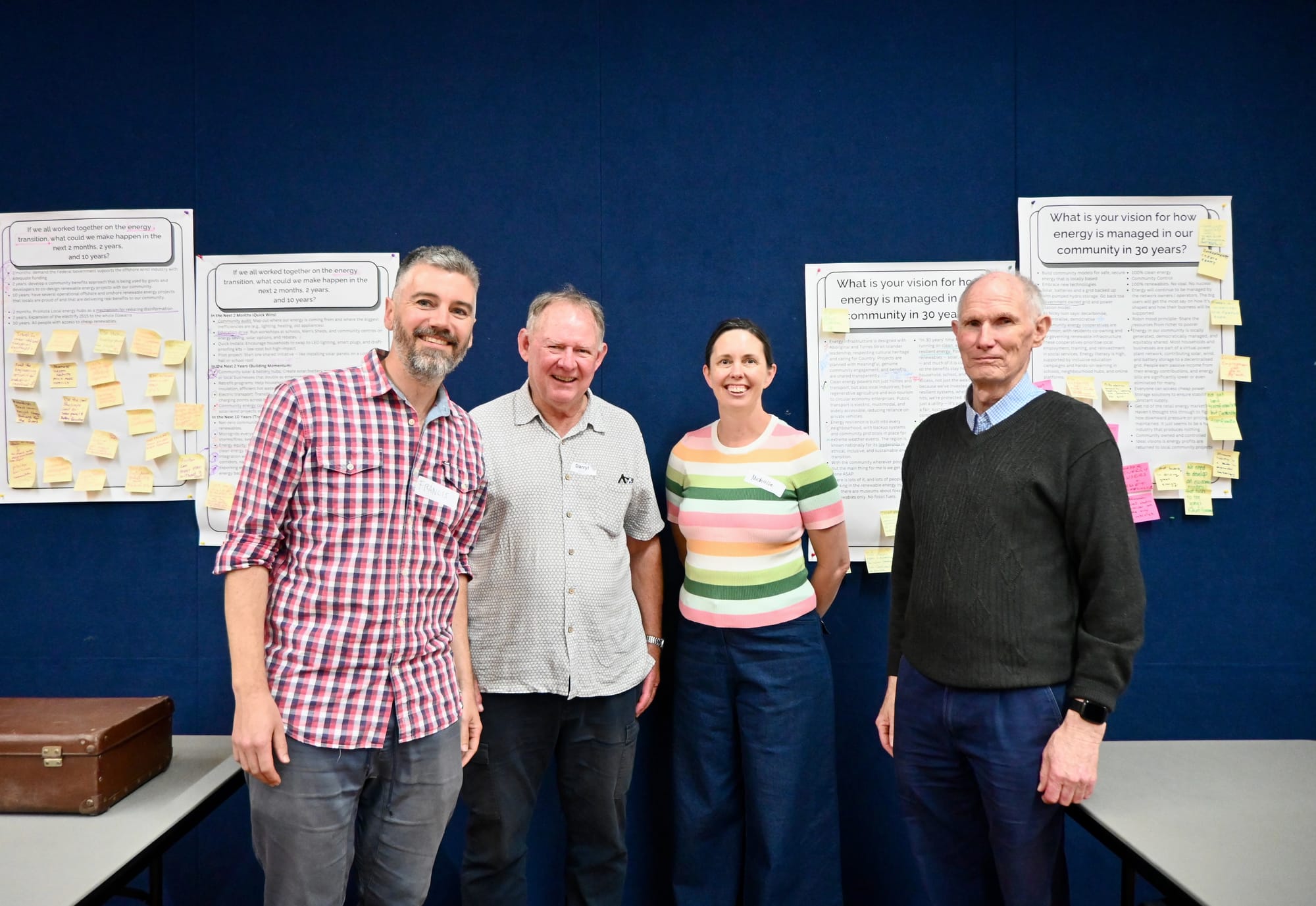
Darryl Best said volunteers at Good for the Gong knew that large-scale projects took time, but they believed “the long-term benefits of offshore wind energy – including good local jobs, reliable energy and a safe climate – are worth the wait”.
“Good for the Gong are very happy with the announcement of the R&D licences and see this as another important step toward ensuring the Illawarra plays a central role in powering Australia’s clean energy future,” Darryl said.
R&D licences will last for 10 years and be assessed on “appropriateness”. Projects will require community consultation.


