
Could 'tactical urbanism' reduce roadkill?
An idea from a reader has contributed to our ongoing investigation into how to save wildlife on escarpment backroads

In June, a long-nosed bandicoot joined the rising wildlife toll on suburban roads in the shadow of the northern Illawarra escarpment.
The backroads where animals are at risk include Morrison Avenue, Cater Street, Denmark Street, Asquith Street, Foothills Road, Kirton Street and Buttenshaw Drive, also known to Coledale conservationists as 'the river of death’.
In March, the Illawarra Flame reported on the death of a young male lyrebird, one of 40 species, including diamond pythons, wallabies and echidnas, found dead on these roads, according to records kept by a local family.
Residents’ calls for action have met a bureaucratic knot hard to untangle. Following our reports in October and December, Wollongong City Council told the Flame that Buttenshaw Drive was not a funding priority for traffic calming, while Transport for NSW said without calming measures to slow cars, the rural road would not be a priority for a 30km/h zone.
In response, a reader suggested “tactical urbanism”.
“I think some rope bridges spanning the road and connecting treetops on either side could potentially help with the tree-dwelling mammals. Crowd-funding might help as a funding source too,” wrote Jennifer Kay.
Invented in America, ‘tactical urbanism’ is a term for community action, such as guerrilla signage, street art, pop-up bike lanes and shutting streets to cars. The movement's founders, Mike Lydon and Anthony Garcia, wrote a book about it in 2014 called Tactical Urbanism: Short-term Action for Long-term Change.
So could this work in Wollongong?
"The idea of tactical urbanism is always a cool idea,” said Ed Birt, president of the Illawarra Bicycle Users Group (IBUG). “Time and organisation and expense involved is a bit of a barrier but it's a good idea."
Ed thought rope bridges might be an option, but too costly for the public purse. "I mean they haven't built the underpasses for the koalas up at Appin yet – if that isn't a priority I don't know what is. Australia is pretty useless at taking care of our animals – cars are all that matter it seems…"
The Illawarra Flame asked Wollongong City Council if it was possible to crowdfund speed humps as part of tactical urbanism. The answer appears to be 'definitely maybe', with a council spokesperson saying: "While the community may consider crowdfunding traffic calming measures, Council’s capacity to fund ongoing costs associated with this infrastructure (i.e. maintenance and replacement) would need to be considered and prioritised against funding ongoing costs associated with other traffic calming priorities across the Wollongong Local Government Area (LGA)." The full response may be read here.
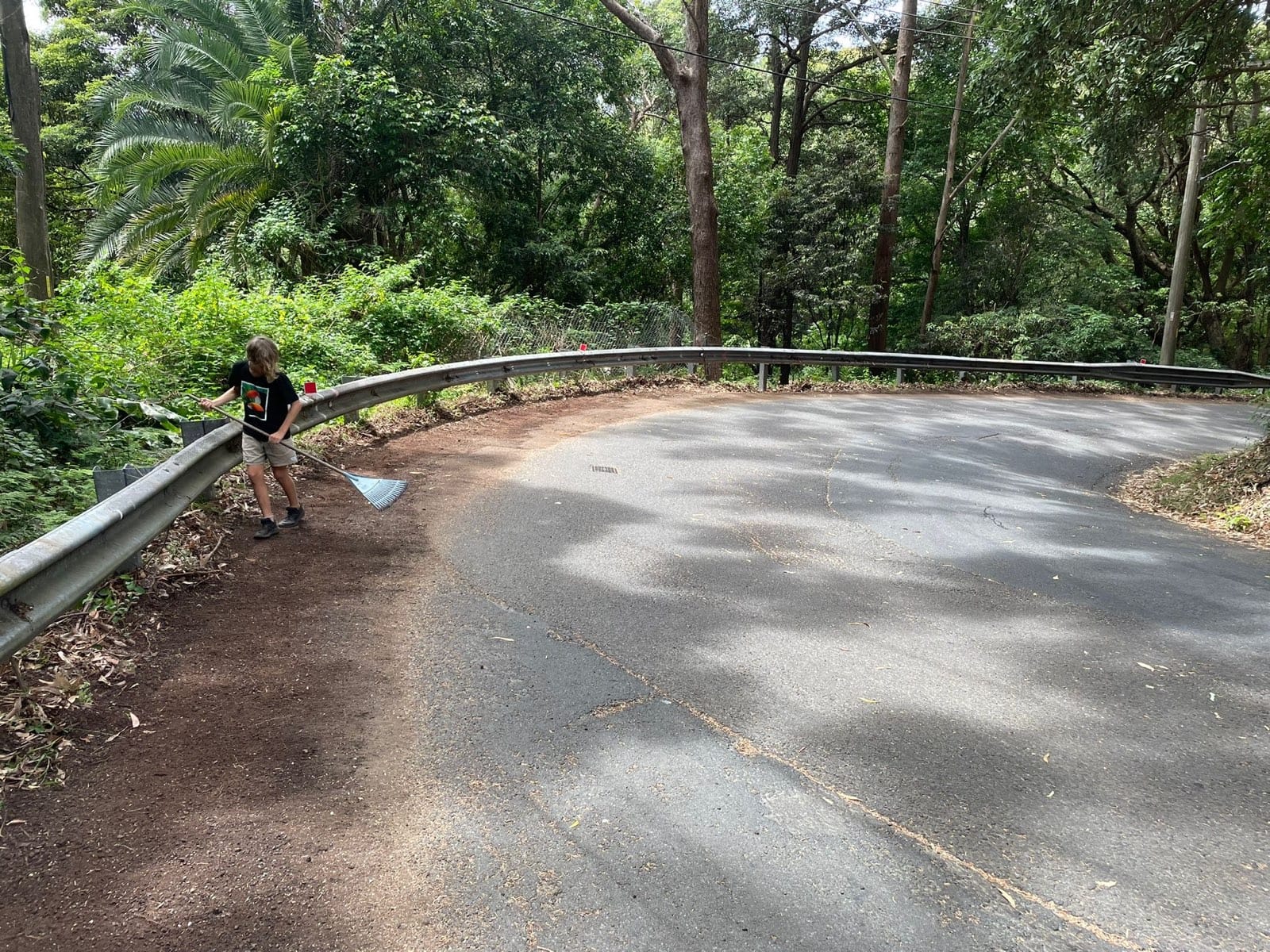
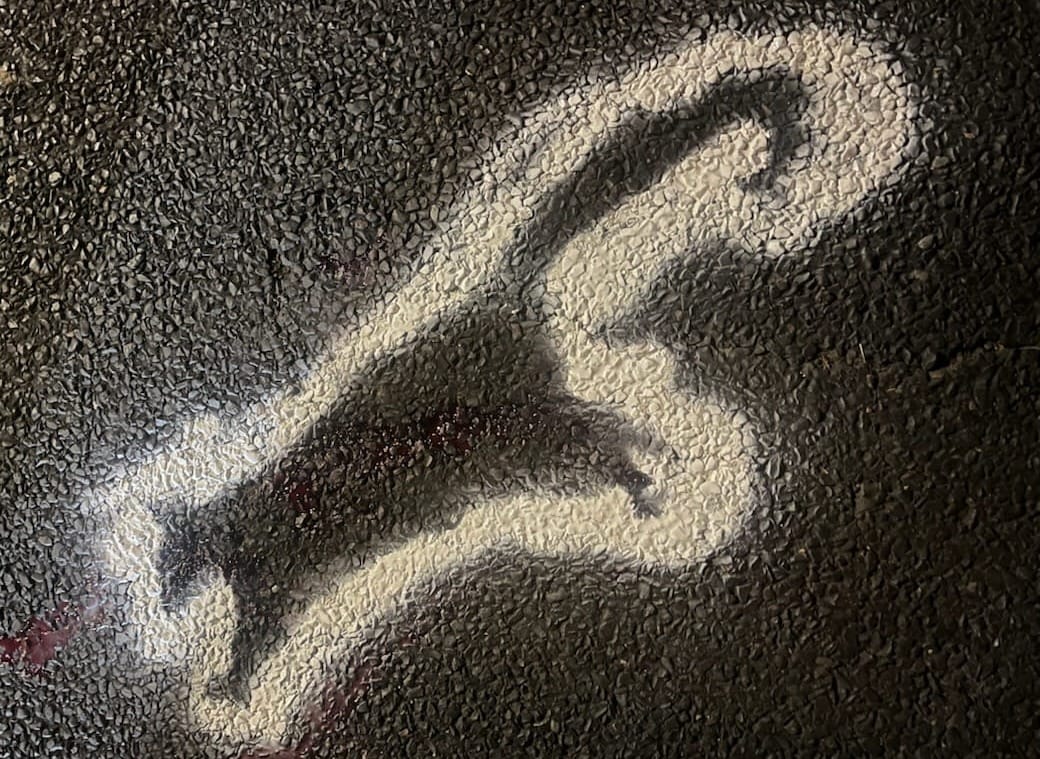
Some residents have already acted to protect wildlife, cyclists and pedestrians. They’ve tried a strategically parked yellow trailer, bin stickers, spraypainting the road, and handmade and self-funded signs.
Ecologist Kylie Madden – who has advocated for safer backroads for seven years – said the idea of tactical urbanism was tempting, but rope bridges are "not legal and probably of limited benefit because the trees almost touch in most places”.
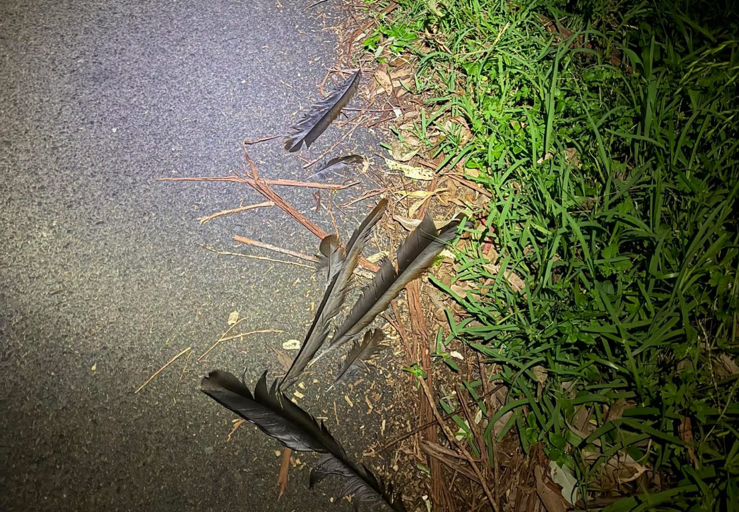
Kylie is still mourning the loss of two lyrebirds killed near her home in Coledale. After finding lyrebird feathers on Buttenshaw Drive one night in March, Kylie told the Flame she felt “sick to the stomach”.
She wrote to council and Maryanne Stuart, the Member for Heathcote, to call for change, saying the lyrebird was likely the son of 'Frank', who had lived in the area for more than 10 years before dying on the same road. "For those of us who have lived in this community for decades, and who have been watching this road claim wildlife and near-miss pedestrians for years, it is a moment that is difficult to put into words.”
At the time, residents again called for safety measures, such as speed humps.
Three months later, Kylie said: “It’s disappointing because we’re left with very few options.
“Council records and longtime residents both admit we’ve been saying the same thing for decades and it’s only getting worse. Of course we understand that Council has a lot of competing priorities but all of us who lived up here have lived other places and we’re not making it up. It is dangerous. And I want to be confident I’ve done all I can to point this out before some serious accident takes place.”
Residents are not only worried about wildlife – they also fear the safety of cyclists and pedestrians is at risk, particularly on Cater Street, a steep descent to the public school that lacks footpaths.
In October 2025, Bettina, a local mum of two school-aged children, told the Flame she would like to see the area made a 30km/h zone: “I feel it would not impact many people in a negative way to reduce the speed on this street – it would just have benefits, and also it wouldn’t be very costly either, to just put a few speed bumps, a few signs.”
In May 2026, Ward 1 Councillor Jess Whittaker became the first politician to visit residents on Buttenshaw Drive since July 2020, when the Flame reported on a meeting with then Greens councillor Mithra Cox.
"Wildlife strikes, the popularity of the route for exercisers and school kids were all discussed," Cr Whittaker said. "It was noted that people walking along here are unable to use the verge as the grass is long and there are regularly snake sightings. Some options we discussed was for the road to be a 30km/h zone, installing speed cushions, better maintenance of verge grass and painting large 'wildlife signs' on the road."
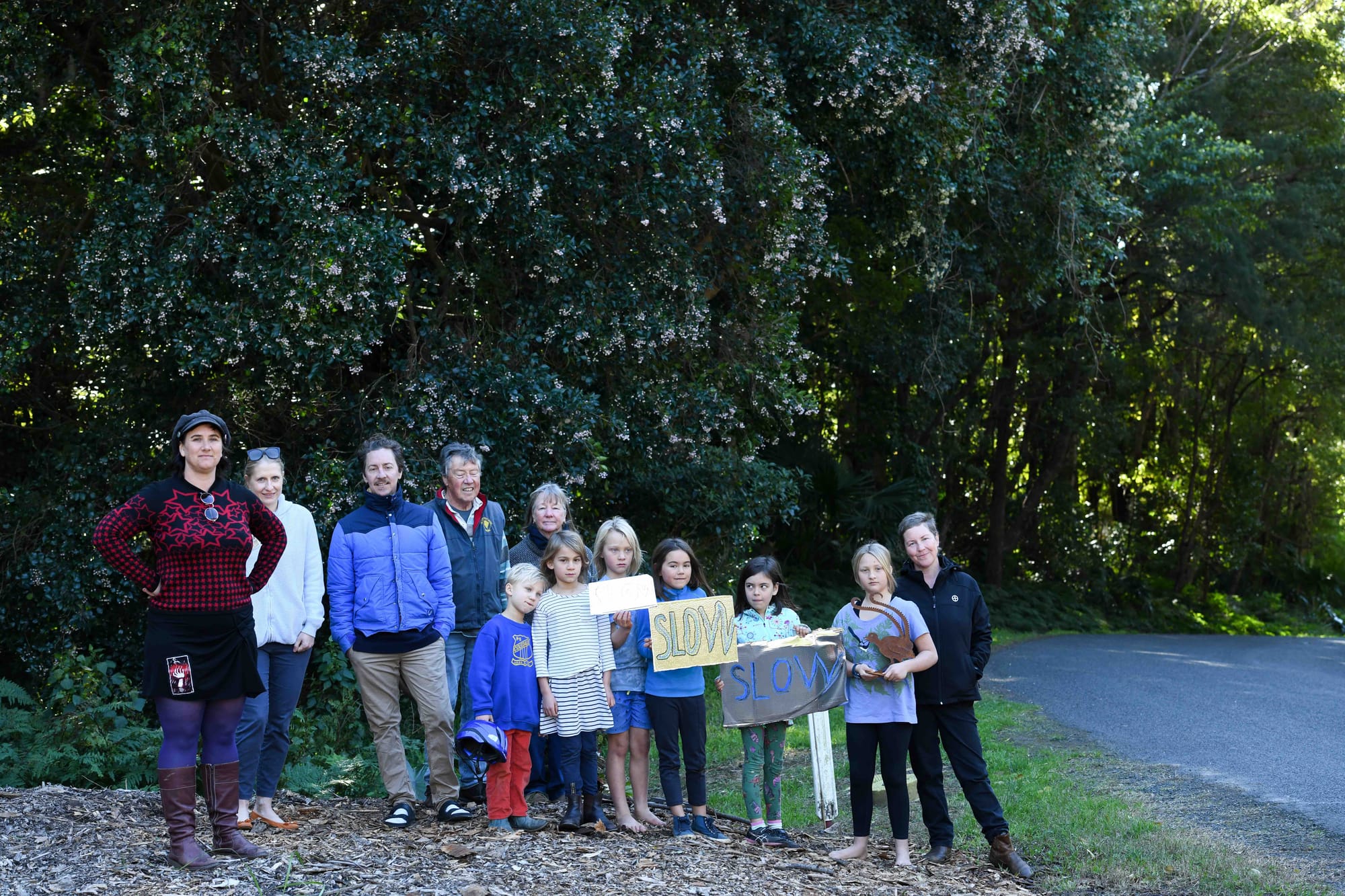
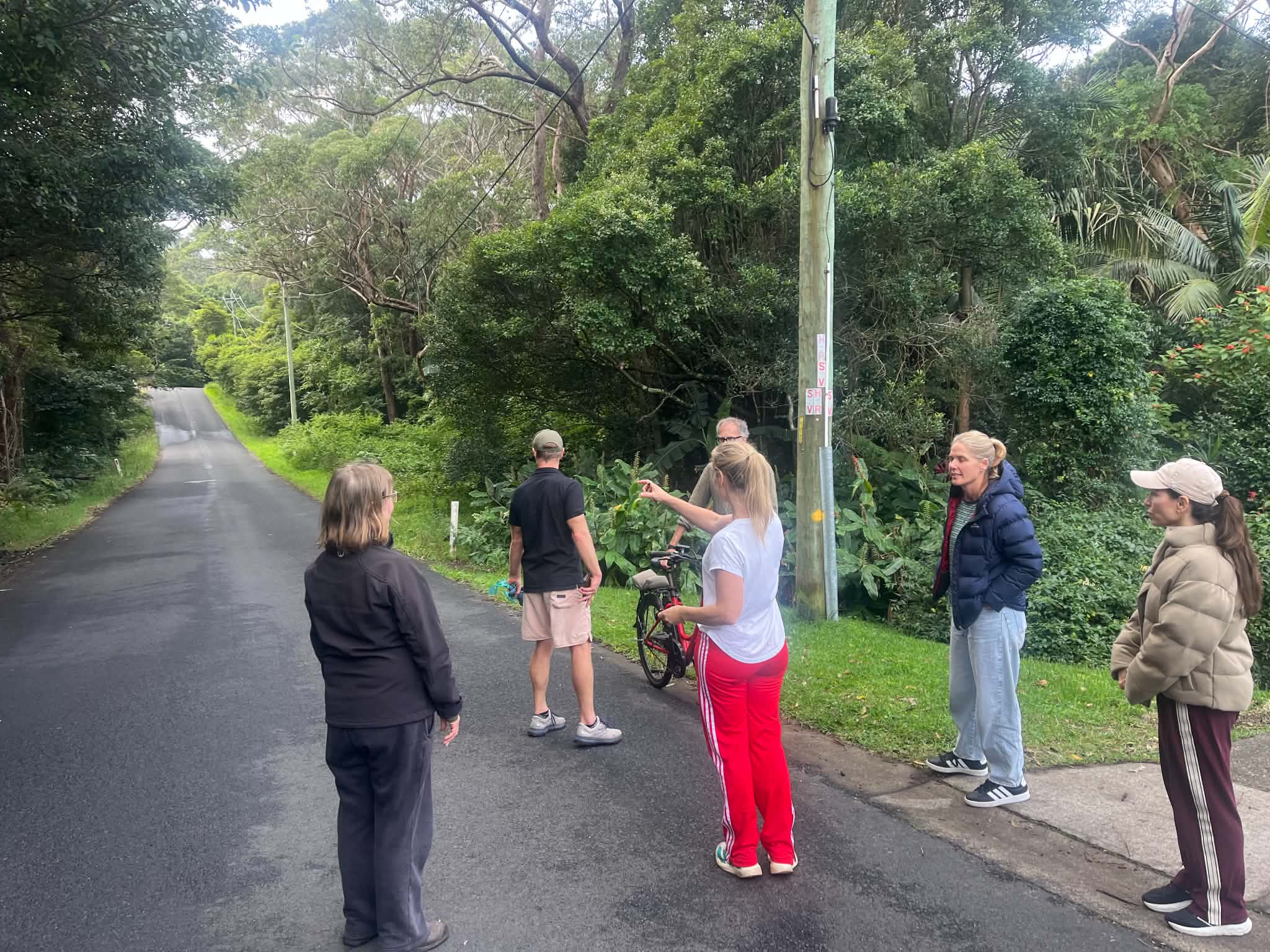
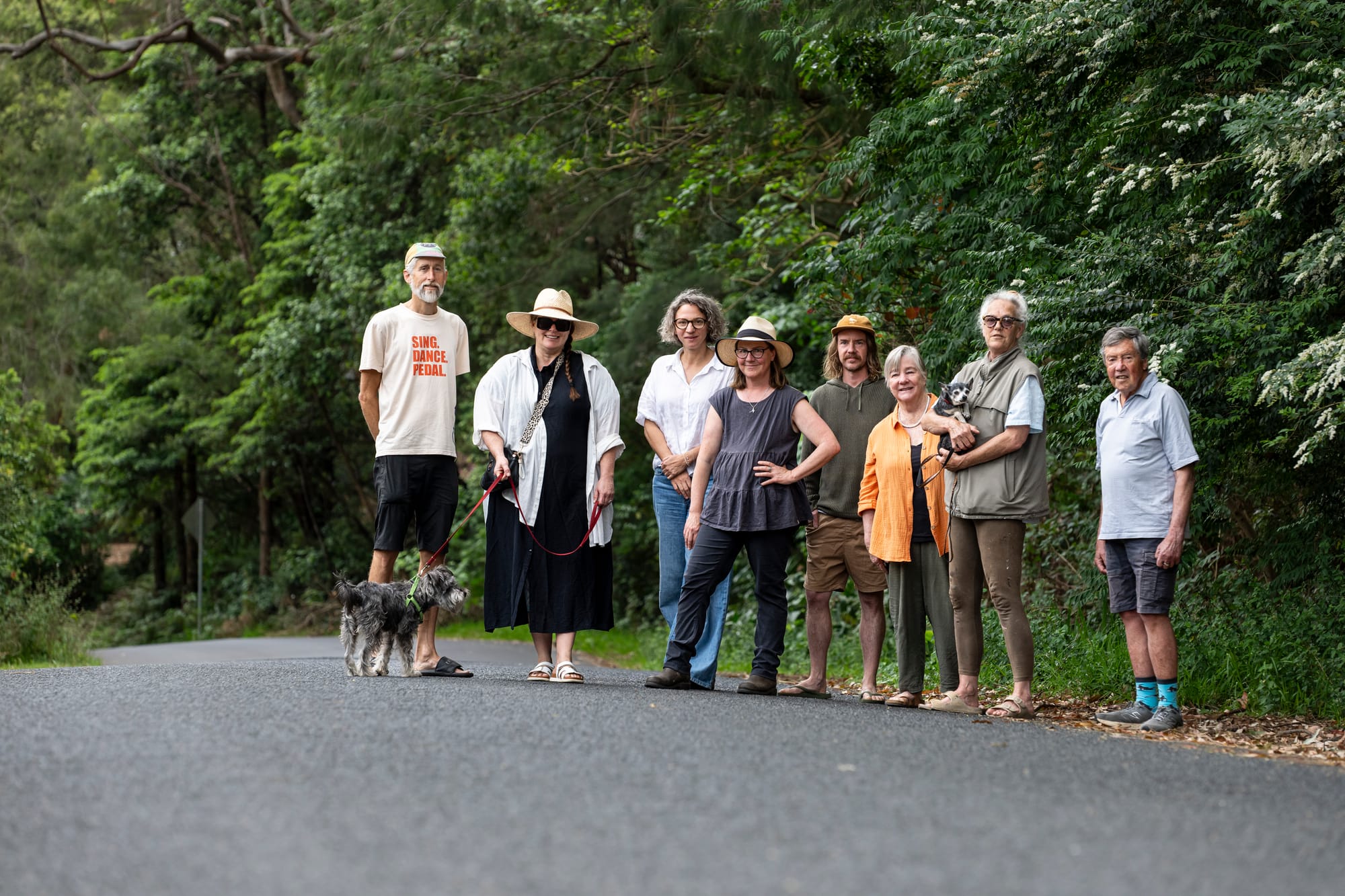
Left: Cr Mithra Cox with Buttenshaw Drive residents in October 2020. Right: Cr Jess Whittaker with residents in May 2026. Photos: Unicorn Studios, supplied
Ed said the councillor's visit inspired residents to make submissions to council's Draft Delivery Program 2025-2029 and Operational Plan 2026-2027 before the public exhibition period closed in mid May.
“So I think they would have had a number of submissions from us on the back roads about wildlife and safety for kids to school and need for traffic calming etc.”
Next, Kylie would particularly like to see Cater Street made safer for children walking to Coledale Public School.
“The day we met Cr Whitaker, I visited a neighbour afterwards and he was repairing the bike of his daughter who had crashed going down Cater Street the day before trying to move off the road out of the way of a car and hitting gravel and uneven ground. It’s just so lucky she wasn’t seriously injured. I’m making a bold claim that Cater St is the most dangerous walk to school in the Illawarra, if not New South Wales – I’m keen to see if anyone can prove otherwise.”