

World of Whalefall
A chapter in the Hello Fish series by Duncan Leadbitter

The word ‘whalefall’ conjures up all sorts of interesting but uniformly messy outcomes. Thankfully whales live in the water and the risk of a day way worse than being under a pelican is not something we have to worry about.
The recent fiasco over the disposal of a dead whale via the Bellambi boat ramp has put the need to consider whalefall on the list of factors to consider when working out what to do about a dead whale. The term refers to the fact that most whales die in the open ocean and fall to the seabed, which can be hundreds if not thousands of metres below.
The seabed, especially in deepwater is commonly a place where there is not much food. Most fish life lives on the continental shelf (waters of 100m depth or less) where there is sunlight to convert the sun’s rays into plankton and then into fish food. In deepwater the animals that live down deep rely on a steady supply of dead plants and animals that slowly rain down from the shallower waters. This organic matter is called marine ‘snow’.
A dead whale falling from above is an absolute gift if you’re one of a wide variety of critters that feed opportunistically on whatever they can.
A dead whale supplies tonnes of much needed calories, especially given the amount of fat and oil involved. A recently landed whale gets covered in a wide variety of animals but the decomposition process can take months or even decades. Indeed, research has discovered a whole new family of worms that bore into the bones to feed on any organic matter they can find, and this can take decades. Decomposing whale also seeps into the surrounding sediments which is also fed upon by various worms and crustaceans.
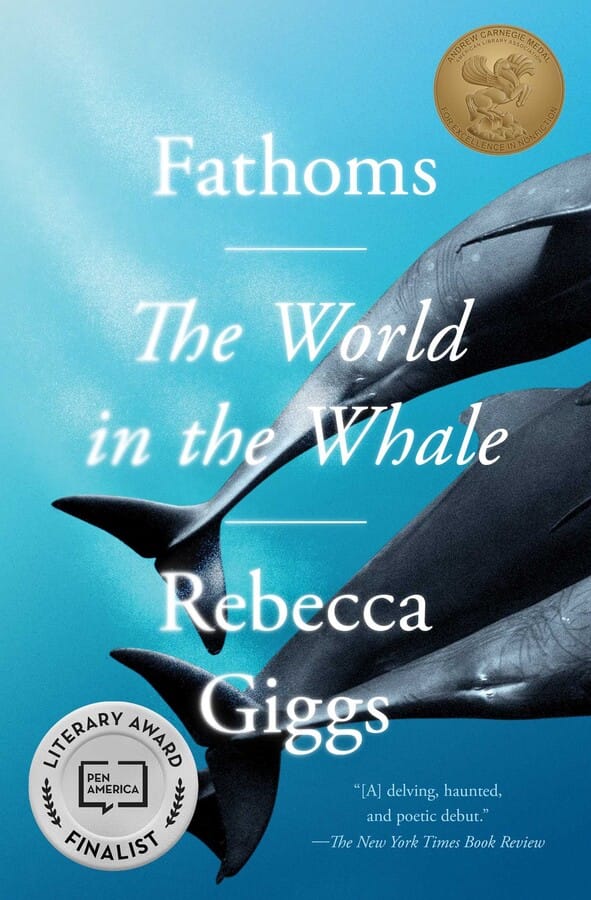
The book Fathoms by Rebecca Giggs contains all sorts of interesting facts and stories about whales. In the context of whalefall the sheer tonnage of whales removed by whaling in the early to mid 20th century was astounding. Millions of tonnes of whale was removed from the marine environment and converted into land-based products.
At present there doesn’t seem to be any publicly available and well-considered process for handling dead whales.
The numbers will undoubtedly increase as there are now an estimated 50,000 humpbacks alone passing us by. As the population reaches its natural carrying capacity and the average age increases, more will die and some will wash up on the beaches.
Hopefully there will be a well-considered protocol in place that may even ensure the new species of worms get a feed.


