

Fern studies can provoke the frondest memories
It is robust, not well liked and mistaken for other similar species, but bracken fern is going nowhere
When we moved to Illawarra, many years ago now, I remember being astonished at how much bracken fern (or Pteridium esculentum) there was around the place.
I saw it in large numbers in many areas of bushland, and I learned from local bush regenerators that it re-establishes after clearing more quickly than many other local plants and can dominate modified landscapes long after the original disturbance.
So I was slightly dismayed to see its presence expanding in one area I was helping to care for.
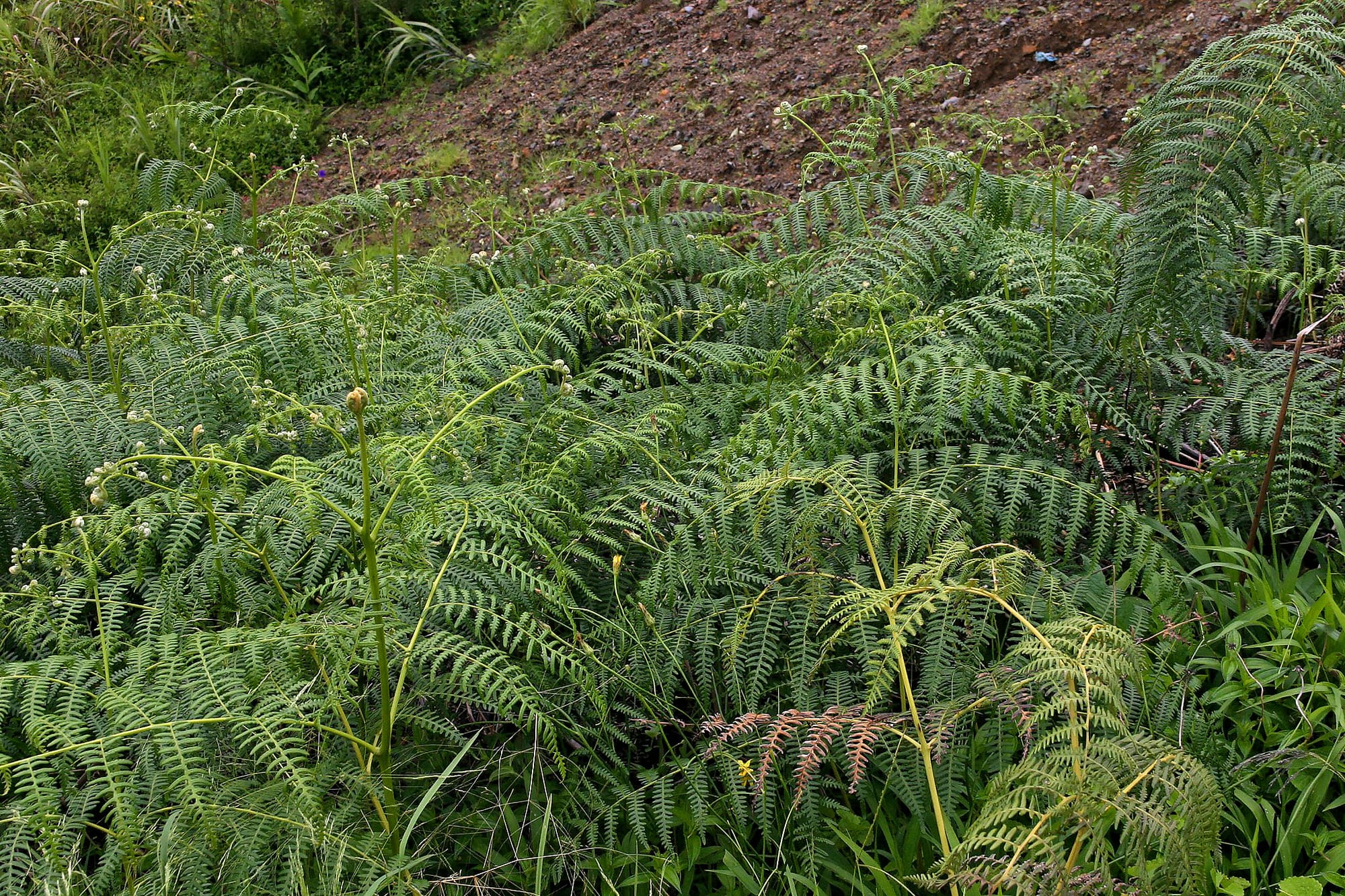
Bracken fern is large and robust and can grow over 1.5m tall in suitable conditions, with a triangular shape to the lamina (the green leaf-blade-like parts of the frond).
It is pretty conspicuous by its sheer size. It is also incredibly resilient, with its very long-creeping underground rhizomes able to withstand periods of drought. For this reason, it can survive in conditions many other ferns cannot.
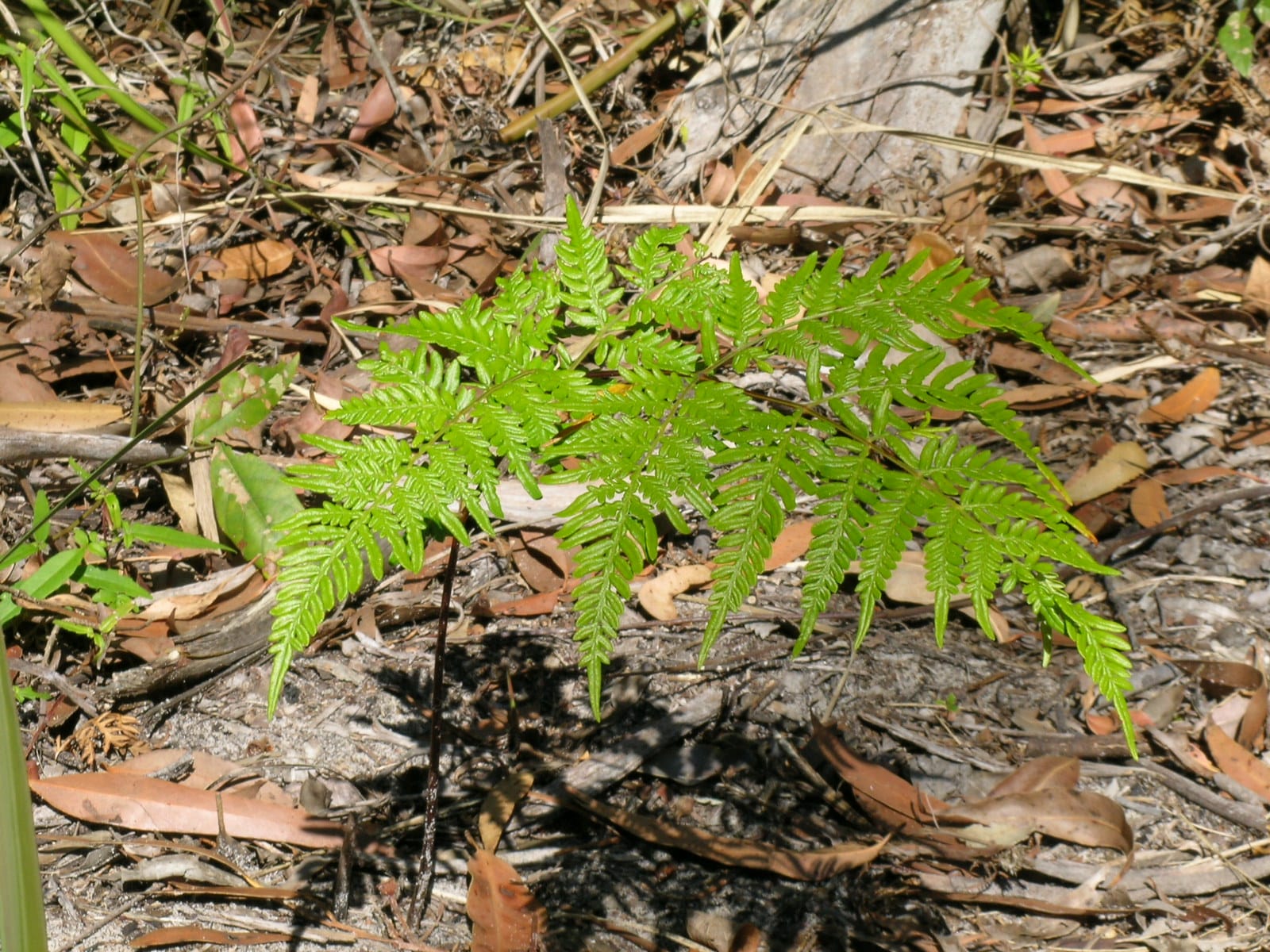
Then one day (more recently than I'd like to admit), I started looking more closely at the "bracken ferns" around me and realised that I'd made a whole bunch of assumptions about fern identification, and hadn't checked the features of these ferns closely enough.
Other ferns that are somewhat similar, and are also quite locally common, include the tender brake (Pteris tremula). It has the same linear pattern of the spore-bearing sori around the edges of the fertile fronds, and also tends to appear disturbed areas. But it is limited to damper situations and is usually found as a single plant or small group.
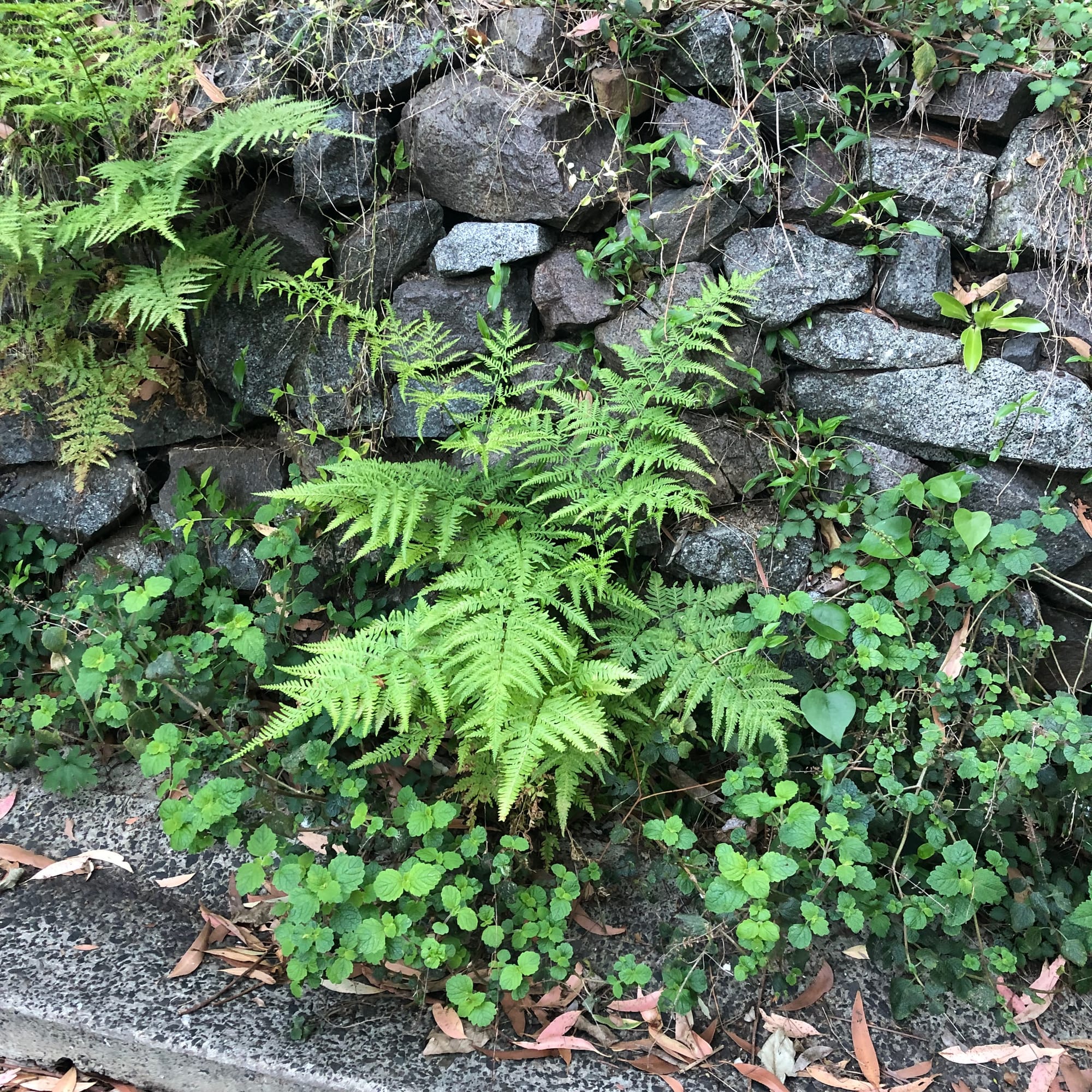
Another that somewhat resembles bracken fern is rainbow fern (Calochlaena dubia). This is the one that had me tricked for a while, as it is common and widespread, and can cover large areas.
It is a fairly large fern with a triangular lamina and it is quite tolerant of sun. But its spores are held in circular sori that appear in two rows on the underside of the fronds.
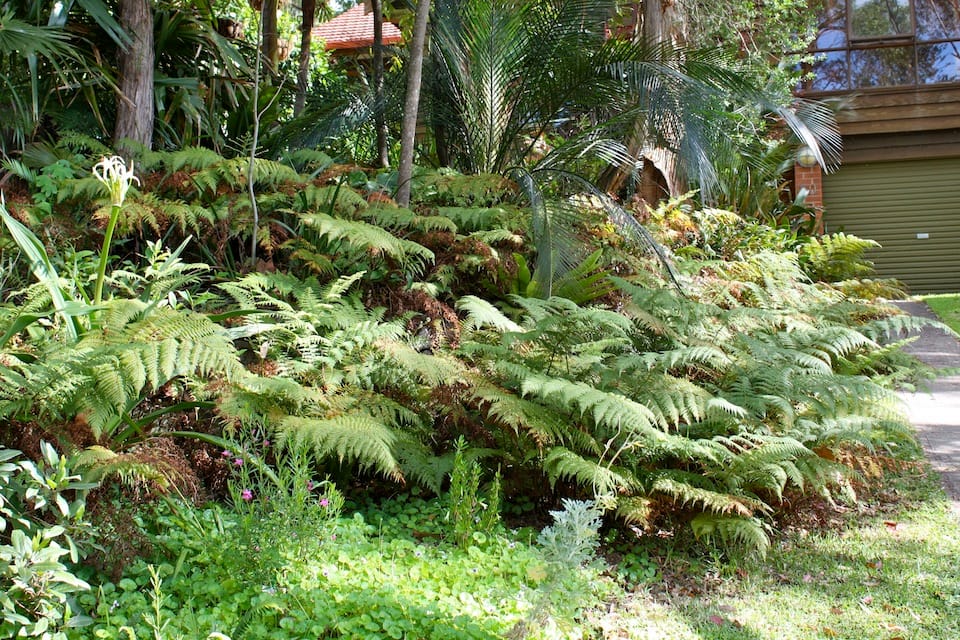
So much to learn, all the time!
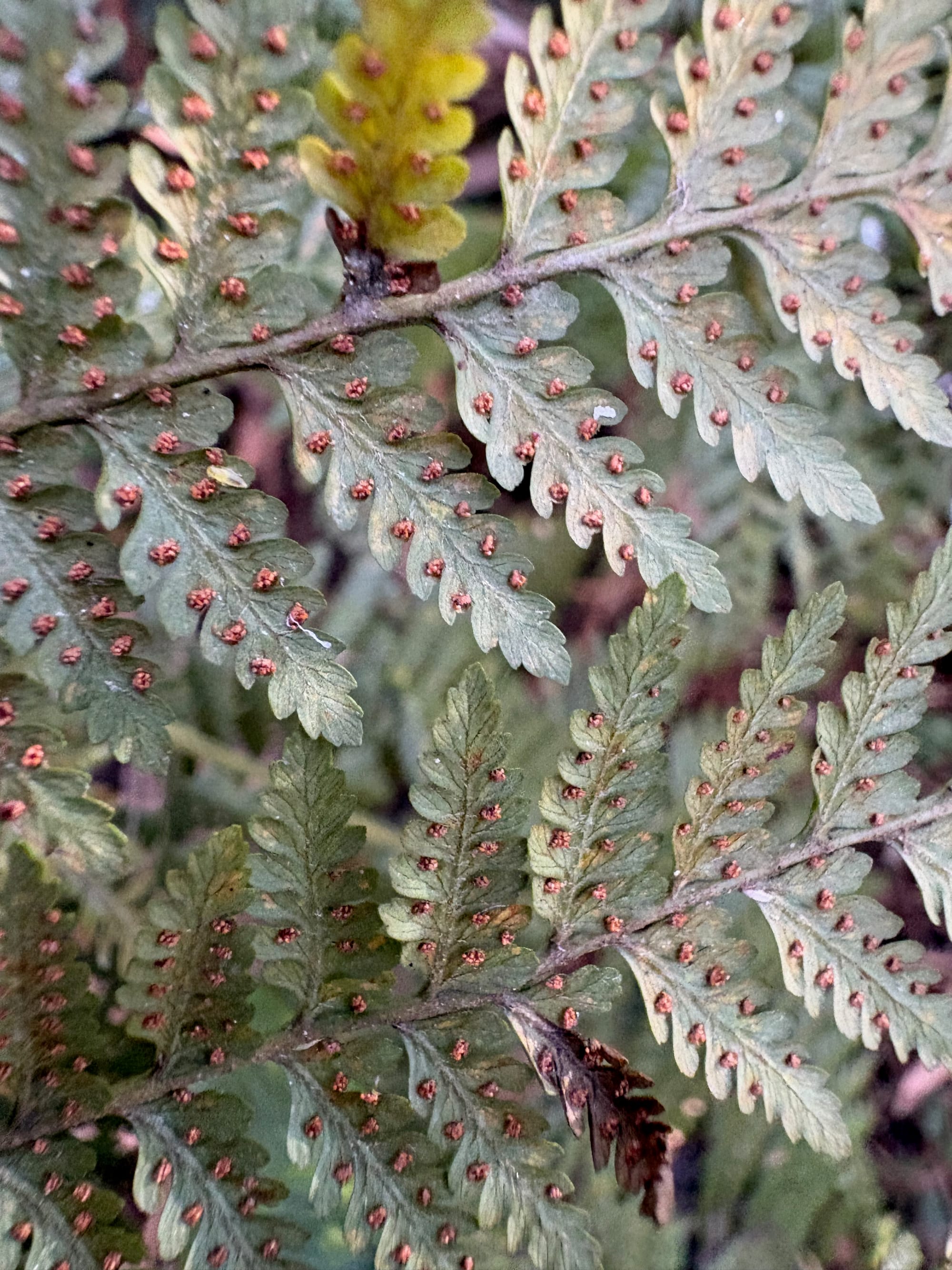
Fun extra fact: Bracken fern in general seems to come in for a fair amount of public revilement.
In Australia, it tends to regrow well after fire so can come to dominate in areas where fire regimes have changed. Criticism particularly relates to northern hemisphere species, which are often considered invasive as they can negatively affect farming and grazing practices, as per the rather opinionated Wikipedia article on bracken.
A welcome corrective is provided by Eoghan Daltun's An Irish Atlantic Rainforest, in which he writes about the important ecological role bracken seems play in protecting smaller woodland plants in areas deprived of canopy as a result of farm management practices (pp.158-9).
Sources
- Dalton, E 2022. An Irish Atlantic Rainforest: A Personal Journey into the Magic of Rewilding. London: Hachette.
- Mills, K 2023. South Coast Ferns: A Complete Guide to the Ferns and Fern Allies of the NSW South Coast. Sussex Inlet: Envirobooks.


