
Bee good to Grassy Woodlands
With an extremely hot summer predicted, the Illawarra's native pollinators could use your help to boost their endangered habitat

To help our native bees, two things are vital: protecting Illawarra Lowlands Grassy Woodland and planting the local species our pollinators love.
“Both of those things are really the most important things we can do for our native bees,” says environmental educator Alison Mellor.
With extreme heat likely this summer, Alison is already planning to drape wet towels over her backyard beehives on 40°C days to protect the stingless native sugarbag bees (Tetragonula carbonaria) inside.
“Naturally, they live in tree hollows – and tree hollows are much better insulated than anything we can make.”
Illawarra Lowlands Grassy Woodland is one of the most threatened habitats on the South Coast – once widespread, only about 12% remains.
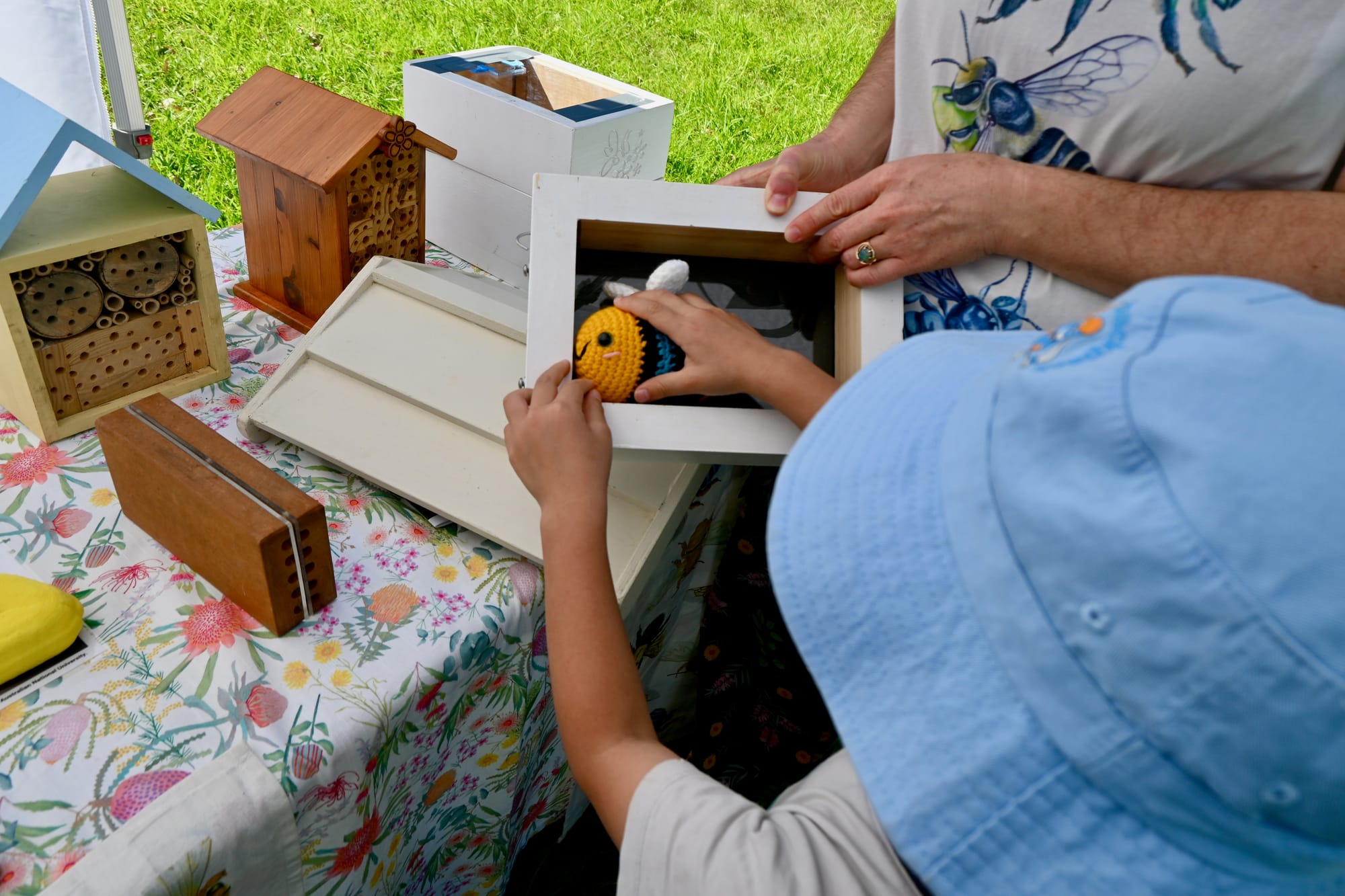
Children love learning about native bees. Photo: Illawarra Flame
Sweet life of native bees
Alison specialises in science engagement and is looking forward to October’s Illawarra Nature Festival, when our endangered habitat will be the subject of an art installation titled Tracing the Grassy Woodlands at Pork Kembla’s Servo. She is also busy writing a children’s book about native bees and loves fielding questions from curious kids.
“Questions like: Do all bees sting? Where do they make their homes? And how big are they? Kids are really surprised that there is a lot of size diversity – some of our native bees are really small, some of them are really large, like our beautiful Teddy Bear Bees (Amegilla bombiformis).
“In the Illawarra, we do have one species of native bee that doesn't sting. That one is Tetragonula carbonaria – sounds a bit like an Italian pasta. They are often kept in schools or preschools.
"With all of our other native bees – and there's probably 200 different species of native bees here on the South Coast – all of the females except one species can sting.
“It’s a bit of a superpower – just the girls can sting.”
Unlike European honeybees, many species of native bees are solitary creatures, living in the ground or in hollow stems or dead wood without queen bees.
“With solitary bees, each female is just making its own little nest," Alison says.
"They don't have stores of honey to defend, they don't have a big family to defend. So even though they do have potential to sting – and you do want to make sure that you're not picking them up or things like that – they generally are not aggressive, so they're not something to be scared of.”
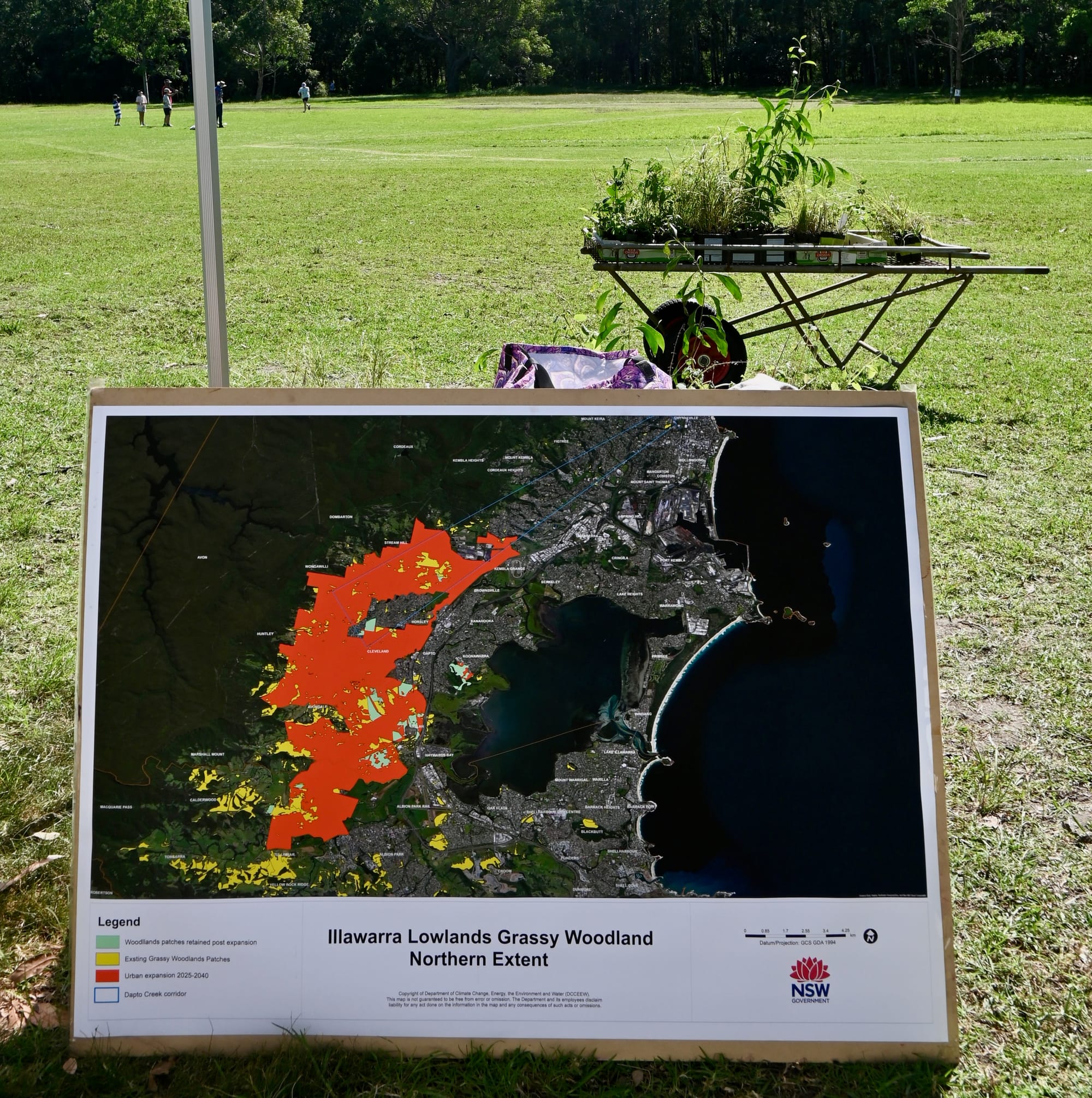
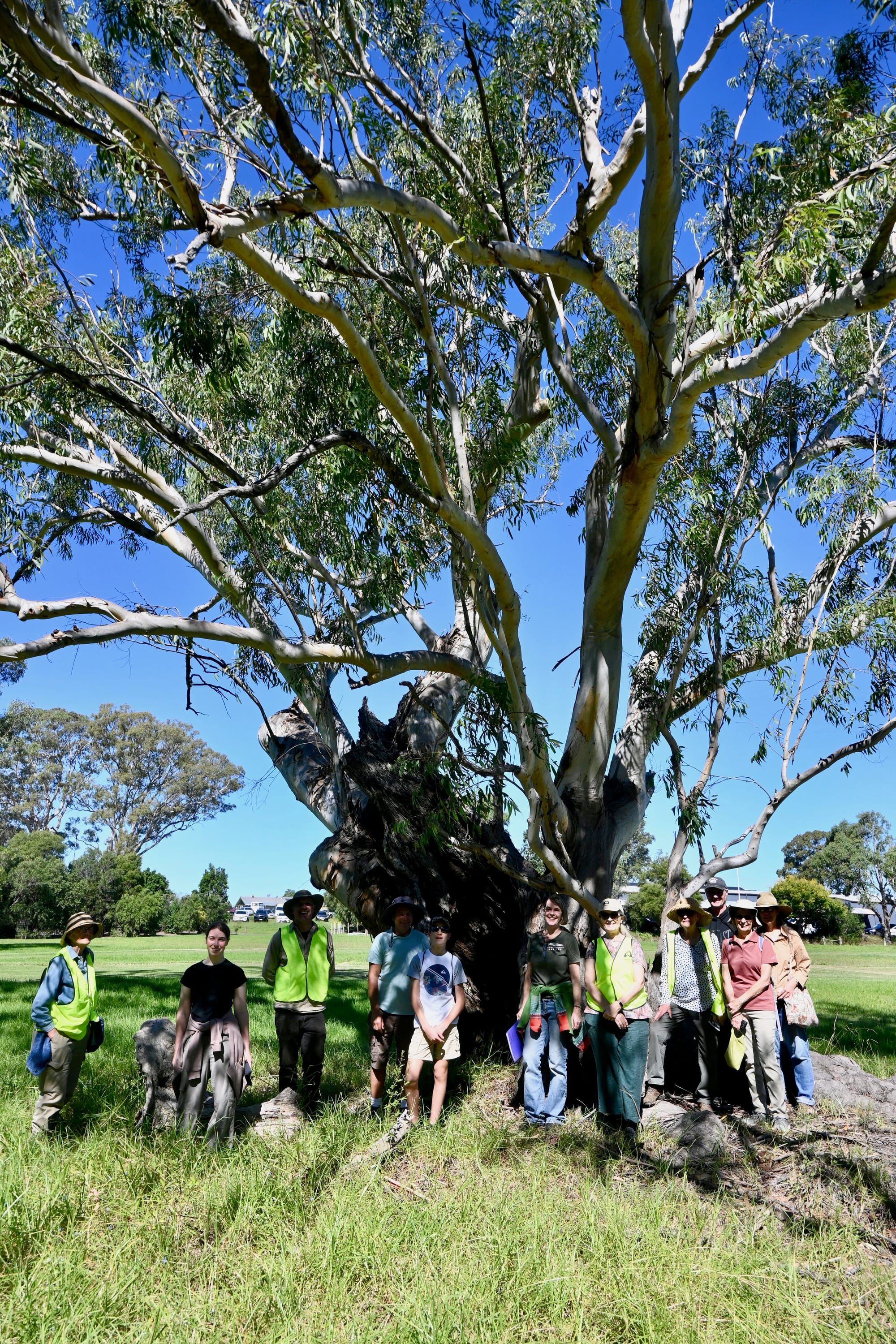
Growing Illawarra Natives coordinator Emma Rooksby led tours of remnant patches of grassy woodland at a community day in April. Photos: Illawarra Flame
Beekeeping on the rise
With more than 2000 species across the country, interest in protecting our unique bees is rising. The Australian Native Bee Association (ANBA) formed in 2019 and has grown a national network of 10 branches, including the Illawarra Shoalhaven branch, which launched in 2024.
“Over the last 10 years, there has been a lot more interest in native bees,” Alison says.
“Our mobile phones these days can take photos and zoom in on things in a way that we just couldn't before. People are taking incredible photos of Australian native bees.”
Pollinators have also been in the spotlight since the arrival in 2022 of the parasite varroa mite (Varroa destructor) – which affects European honeybees and the industries that rely on them.
“It is really negatively affecting European honeybees, which were brought here by the European colonists in the 1820s,” Alison says.
“People are noticing that there are less of them around in the Illawarra, and I think that's making people look at what other native pollinators we have.”
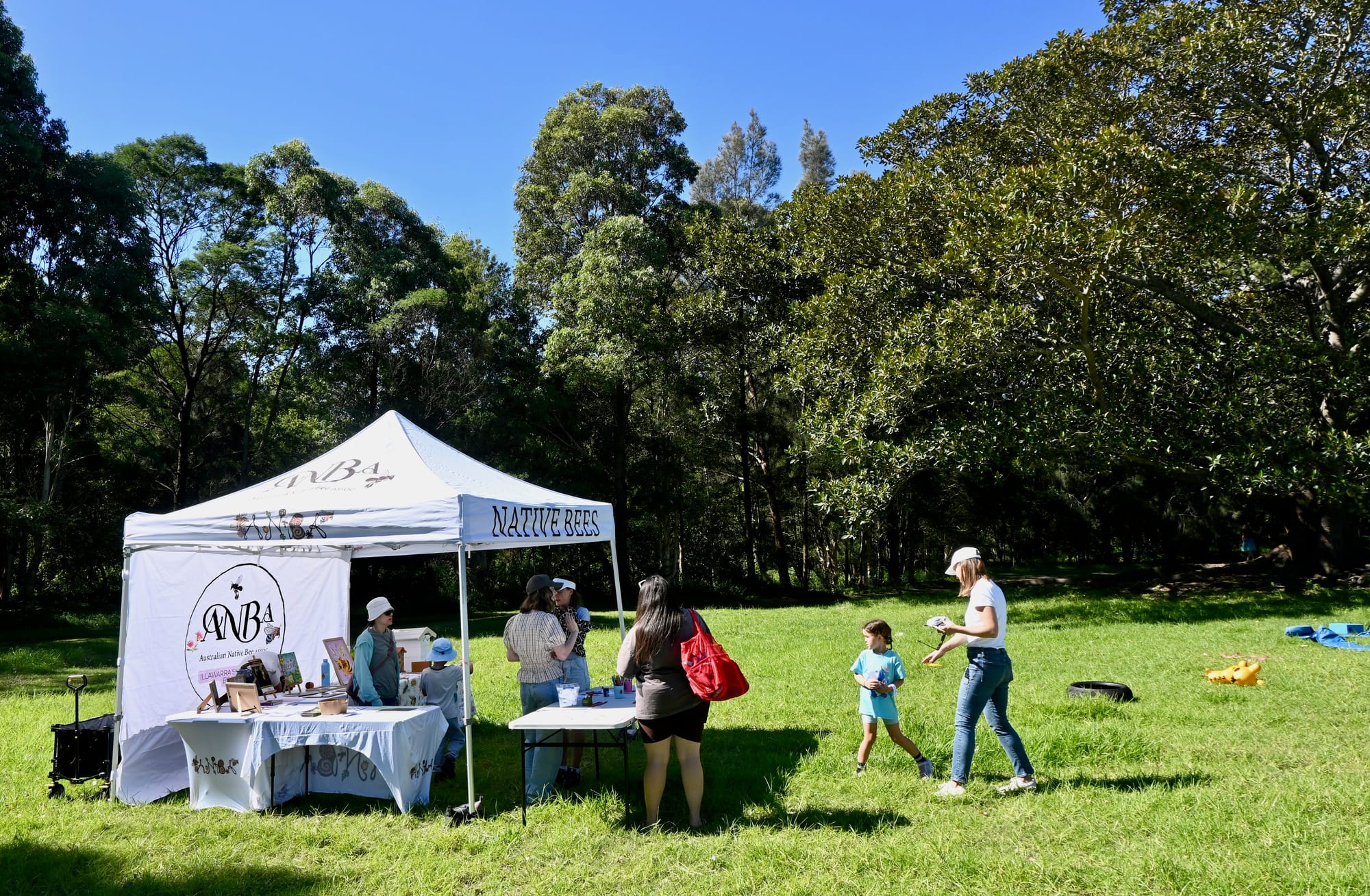
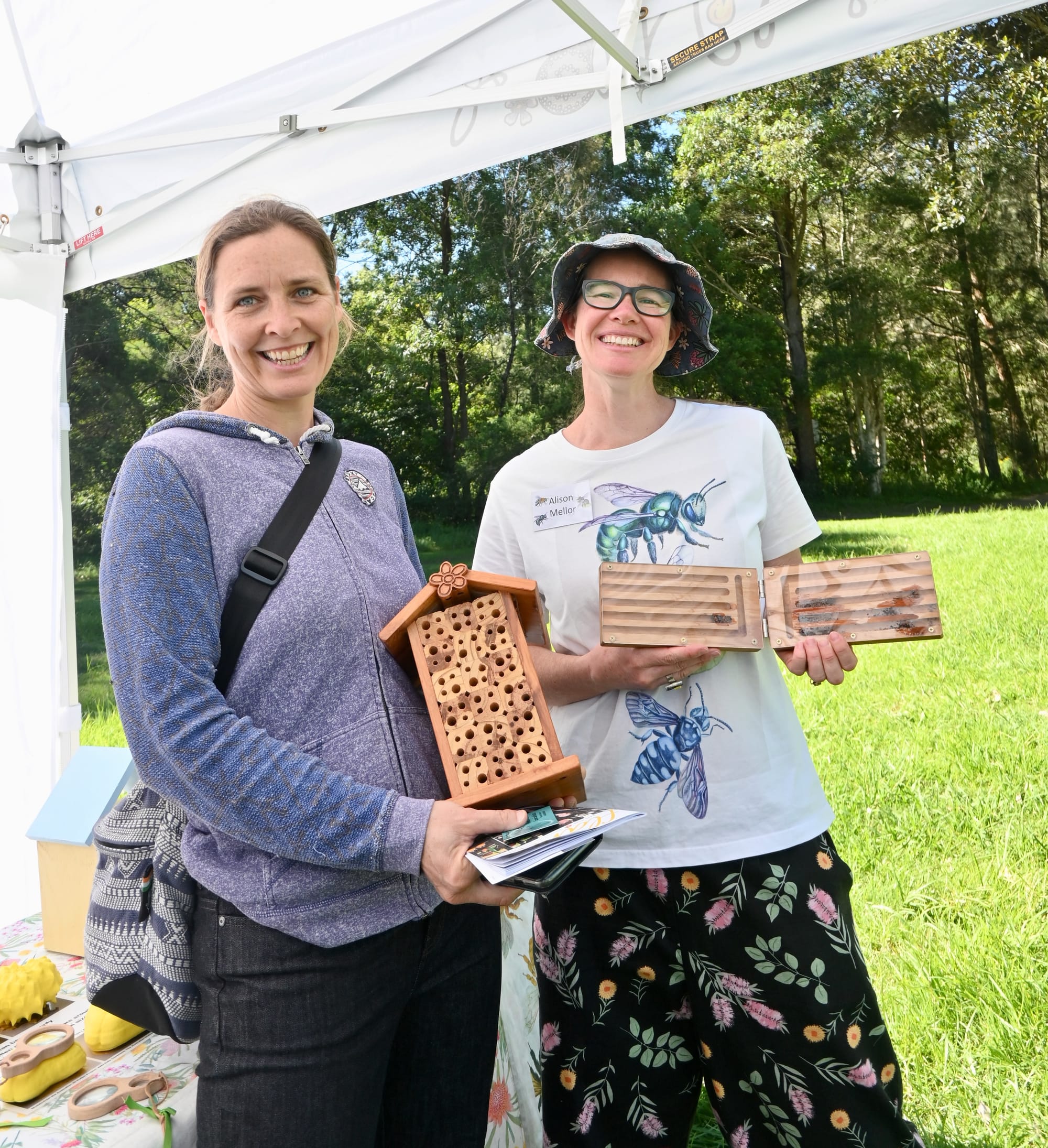
Alison Mellor fielded questions about native bees at April's Stream Hill Community Day. Photos: Illawarra Flame
Interesting place to nest
It’s nearly time for spring’s new generation of native bees to emerge – but not from a hive.
“It's really interesting that a lot of our native bees are actually nesting in the ground,” Alison says.
“In late April, early May, the adults of many species die off, leaving their young in nests under the ground. Depending on the species, many of those young won't come out until probably spring, when you'll start to see them again.”
Sugarbag bees, the backyard beekeeper's favourite, are an exception. “They are active year round and quite generalist bees as well, so they will visit a whole bunch of different flowers.”
A community abuzz
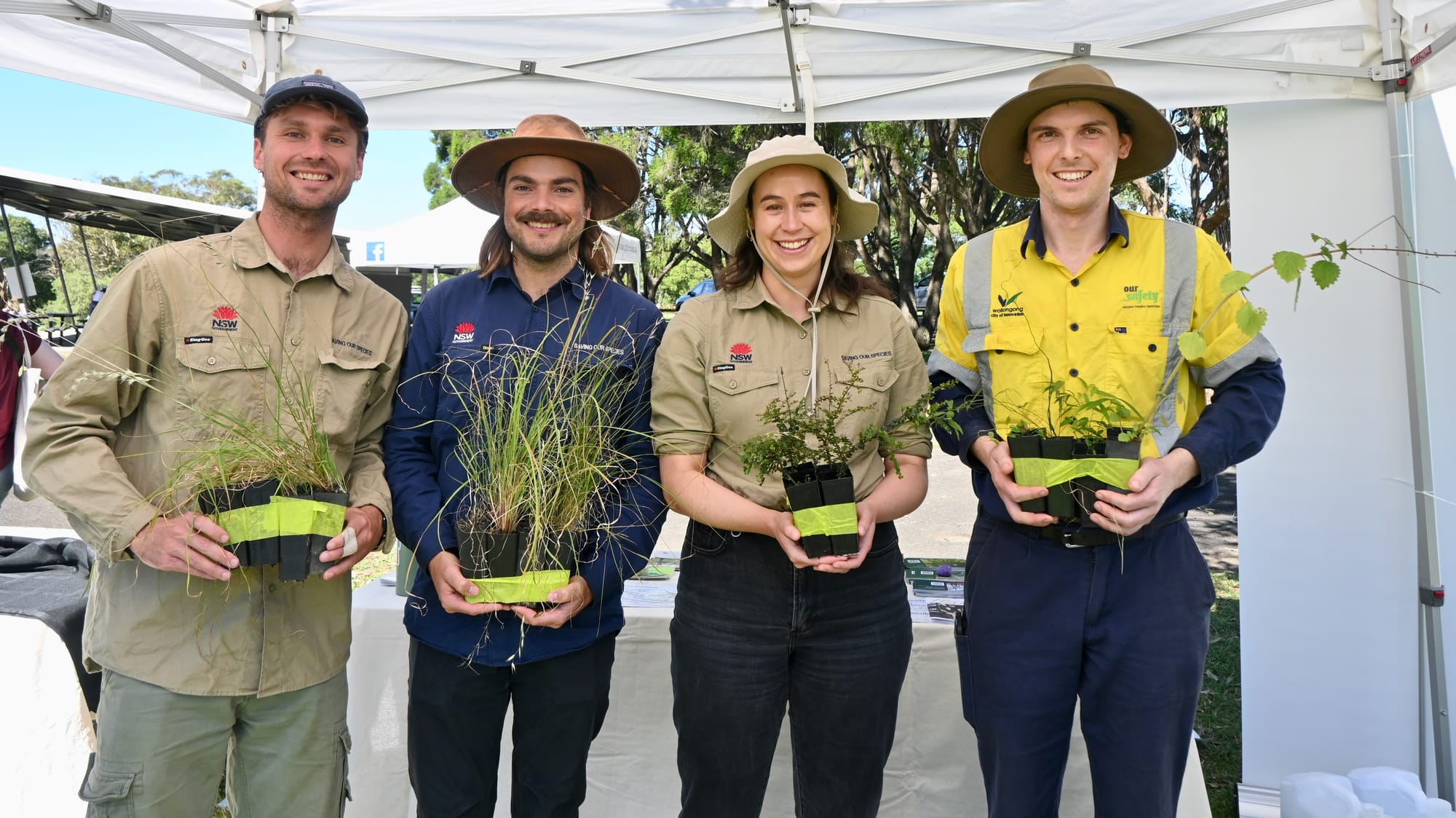
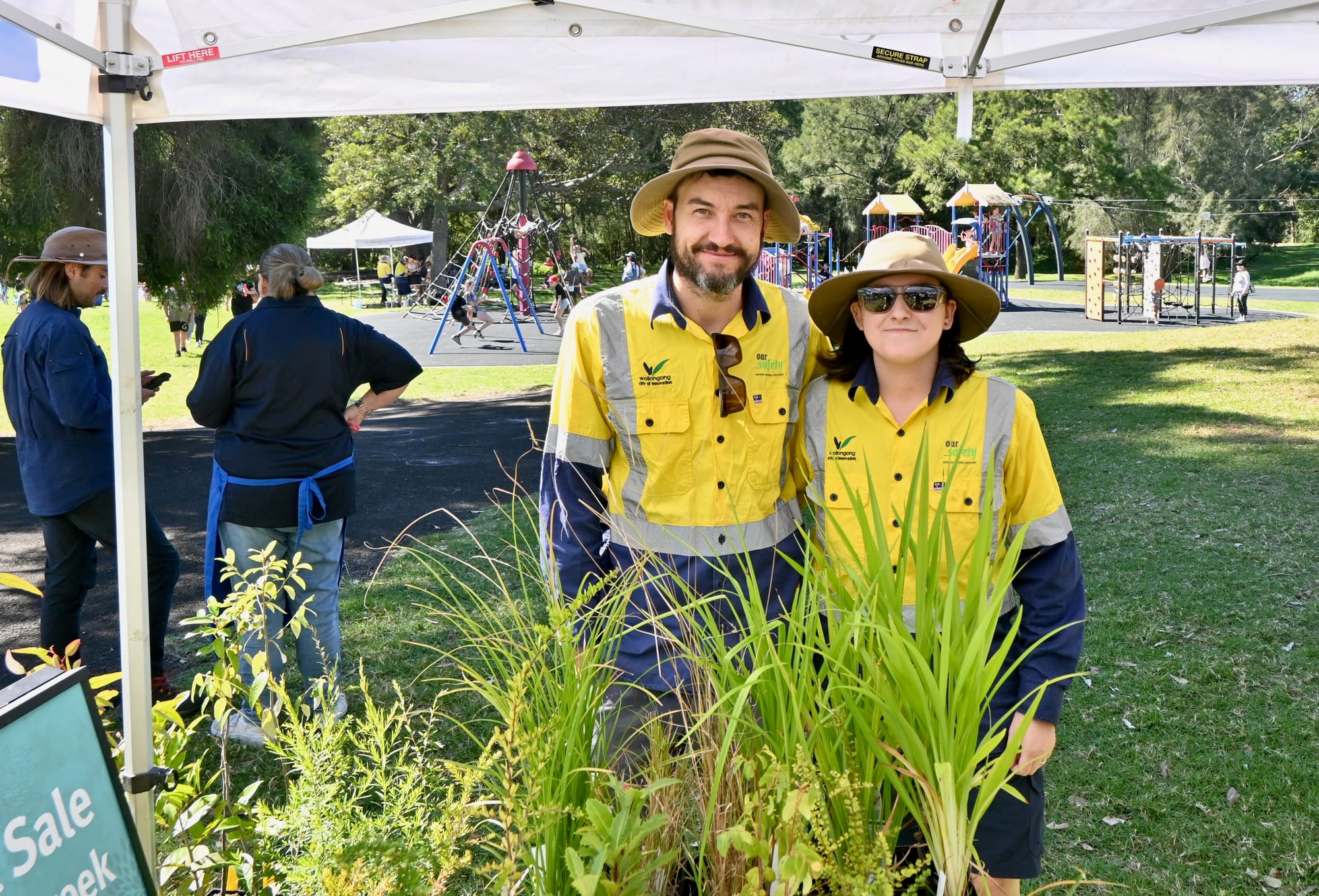
In April, Alison ran a scavenger hunt at the Stream Hill Community Day, organised by the Guardians of the Grassy Woodlands. It was a popular school holiday outing for families, with walks by Growing Illawarra Natives, plant displays by Wollongong City Council and backyard beekeeping information at ANBA’s stand.
Alison was thrilled to see the community abuzz with interest in protecting the remnant Illawarra Lowlands Grassy Woodland, which is found along our coastal plain and in the escarpment foothills.
“It’s lovely, seeing people so enthusiastic to learn more about our beautiful Australian native bees and the other insects that we have in the woodlands here, like Christmas beetles,” she says.
“It's really incredible what diversity we have here.”
Save the dates
- Friday, September 18: Guardians of the Grassy Woodlands are holding a free Acacia Avenue community planting from 1-3pm at Fairy Creek Shared Path, Gwynneville. More info via the NSW Government's Saving our Species program.
- Thursday, October 15 and Saturday, October 17: Grassy woodlands will feature alongside nature talks, interactive activities, music and an immersive art installation Tracing the Grassy Woodlands as part of the Illawarra Nature Festival at the Servo. Check out the the full program and book your free ticket at Humanitix.
Learn more
Follow Alison @Paperbark_native_bees on Instagram.
The Guardians of the Grassy Woodlands project is led by the Illawarra Ecosystems and Threatened Species Team (Department of Climate Change, Energy, the Environment and Water) and delivered as part of the NSW Saving our Species program.
Looking for local bee-attracting plants? Check the Growing Illawarra Natives website.