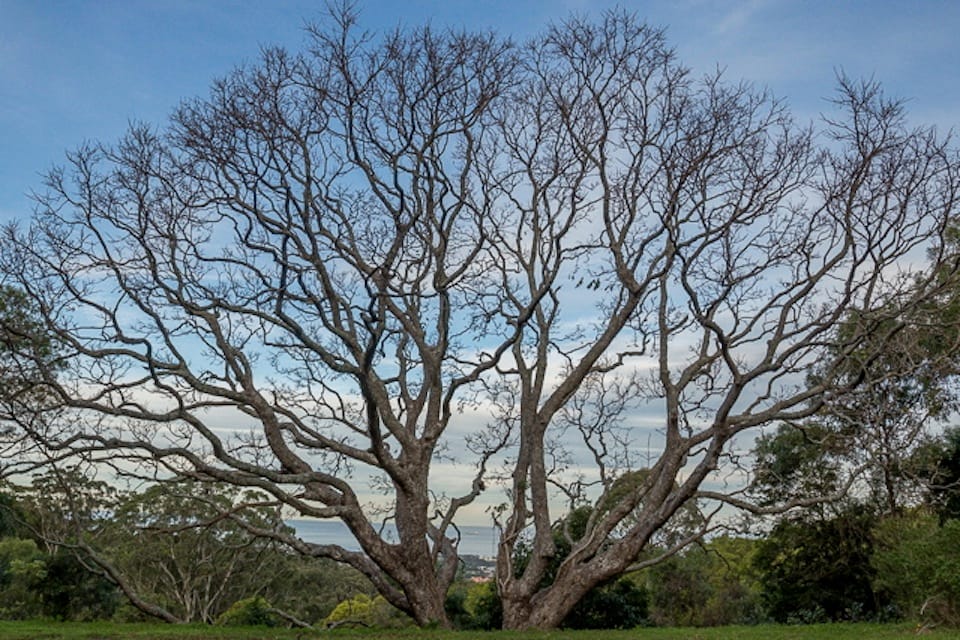

Fruiting (and leafing) now: the mighty Red Cedar
Lift your eyes to the escarpment to see the colourful leaves of 'Toona ciliata', the historic timber tree
Red Cedar (Toona ciliata) is probably one of the most famous local trees. It is well-known as a historic timber tree, and of course logging of this species has had ecological and economic impacts on the Illawarra from the earliest days of European colonisation.
Red Cedar is a striking tree, tall and deciduous, and often with a very broad spreading crown. It grows to be one of the tallest trees in the local rainforests, both on the escarpment and in the lowland rainforests that occur on rich volcanic soils, such as around Kiama and Jamberoo.
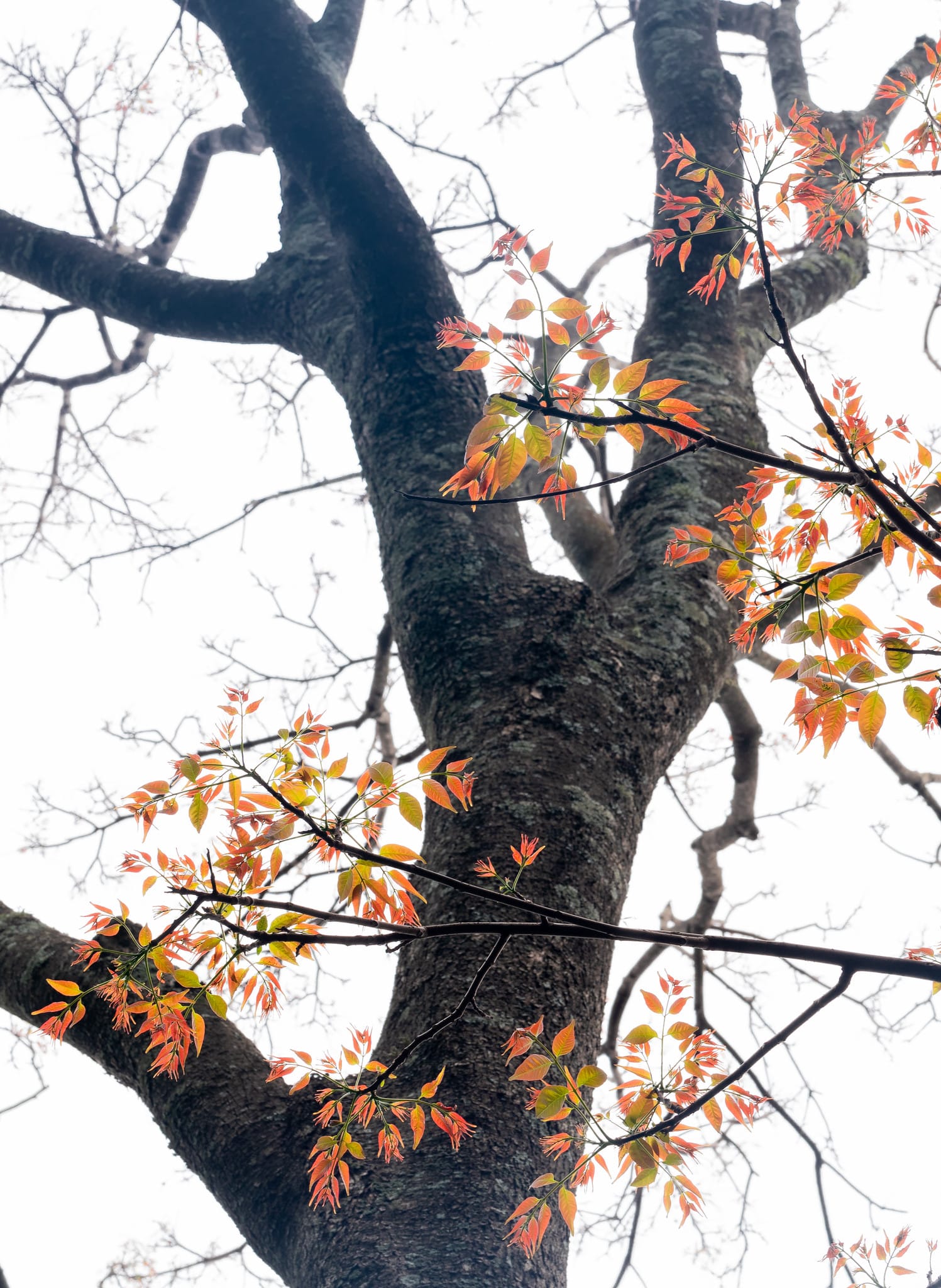
Its distinctive colourful new growth is visible along the Illawarra Escarpment from the coastal plain. Have a look now and you should be able to make out a few trees in various shades of red, orange and purple.
The image below shows some of the colours the leaves may go through, but by no means all!
Despite having been heavily logged during European colonisation, Red Cedar is making a solid comeback across the region, at least in areas where rainforest is re-establishing. Large old remnant trees are certainly rare, but smaller trees and saplings are common.
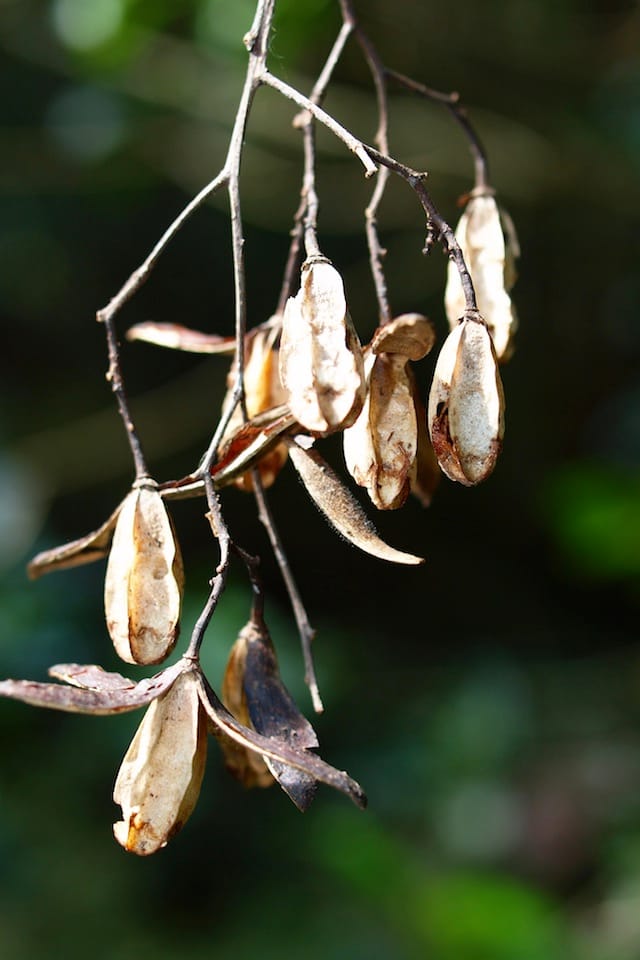
One reason for this is the species' wind-borne seeds, which don't rely on birds or other animals to transport them away from the parent tree. If you go on a walk in local rainforest, such as on the Mount Keira or Mount Kembla ring tracks, or at Minnamurra, you may see empty seed capsules on the ground, the seed having already floated away.
Ecologist Kevin Mills' latest book, The Rainforests of Southern New South Wales (which was launched earlier this month), includes a profile on Red Cedar (p.214) and a number of interesting facts. One is that the first timber was taken out by boat from the Shoalhaven River area way back in 1811. Another is that the species was so heavily exploited in the region that it lost its commercial significance by the 1850s. Dr Mills also observes that this tree was most likely the main driver of early European settlement in the Illawarra and Shoalhaven regions.
If you want to see a Red Cedar up close, one option is at the Illawarra Rhododendron and Rainforest Gardens in Mount Pleasant, where there's a massive tree on 'Cedar Bend', easily visible as it's alongside the pathway that winds through the rainforest in the upper gardens. It takes about 10 or 15 minutes to walk up to the bend, though be aware that the path is uphill and sometimes uneven.
You can look at the foliage high above, see and feel the rough bark with its tessellations (semi-regular square or rectangular patterns), and maybe hear the calls of birds in or near the tree. (A Brush Turkey sometimes hangs out in this area.) The September Spring Showcase at the gardens means there are guided rainforest walks each Saturday and Sunday that will take you past this wonderful tree.