
What's behind this well-trodden plaque to peace
Welcome to the first in a new series exploring our cultural history through the monuments, places and public art of Wollongong, Australia's first city of peace
Hidden in plain sight in the pedestrian mall at the corner of Crown and Church Streets in Wollongong lies a bronze plaque featuring an image of two hands fringed in laurels releasing the dove of peace. The plaque commemorates the 1986 United Nations International Year of Peace.
Today, dwarfed by the large sandstone blocks of New York-based artist Mike Hewson's Illawarra Placed Landscape, most people probably pass it by without noticing. But each year on 6 August, groups of local peace activists gather around the plaque, as they did at its unveiling in 1986, to remember the first wartime use of an atomic bomb against the city of Hiroshima on that day in 1945.
The 1980s were a time of vibrant peace activism in Wollongong.
Local federal member Stewart West spectacularly resigned from the Hawke Cabinet in 1983 in protest when the new Labor government approved uranium mining at Roxby Downs in South Australia. A former leader of the Port Kembla Branch of the Waterside Workers Federation, West represented the union's strong anti-war and anti-nuclear position, forged during the 1937 Dalfram dispute, when Port Kembla wharfies stared down the federal government and BHP and refused to load pig iron for Japan, then waging imperialist war on China.
At the Federal election in 1984, the newly formed Nuclear Disarmament Party gained more than half a million votes, with a branch formed in Wollongong that included many former Labor party members.
Australia's first 'city of peace'
Frustrated by national governments and their Cold War nuclear brinkmanship, peace activists around the world turned to their local governments to build institutional support for peace. Community campaigning saw Wollongong declare itself a 'City of Peace' in May 1980, making it the first city in Australia to do so.
Perhaps hoping to extend an olive branch to disgruntled Labor members and unionists, the Hawke government invested $3 million dollars in an International Year of Peace Secretariat within the Department of Foreign Affairs, including grants for community projects. The City of Wollongong got on board, establishing an International Year of Peace Committee bringing together local government and community members to coordinate activities for the UN Year. Wollongong Council was represented by Deputy Lord Mayor Bill Mowbray, who had a strong record on peace and was a member of Mayors for Peace, the international local government peace movement.
Wollongong's IYP activities culminated on Wednesday, 6 August 1986, when the committee held a ‘Peace day ceremony and act of civic awareness’ to unveil the new plaque. The program featured civic, religious, union, and youth leaders.
Civic leaders included the Lord Mayor Frank Arkell, Mowbray, and the Town Clerk P Berthold. Religious leaders included Father C Roberts from Wollongong Catholic Cathedral and Reverend John Queripel from the Uniting Church. Unions were represented by South Coast Labour Council Secretary and Communist Party member Merv Nixon. The University Singers provided a solemn choral accompaniment to the formalities. According to the Illawarra Mercury, 50 people braved 'appalling weather' to remember the victims of the atomic bomb at the event.
A few days later on Saturday, 9 August, 1,000 people marched through the streets for the Hiroshima Day March, culminating in a peace festival at MacCabe Park. The marchers were motivated by a wide variety of concerns, from the presence of US bases such as the Pine Gap spy base in the Northern Territory, to visits by nuclear-armed ships and threats to turn Jervis Bay into a naval base. The march featured musicians, clowns, stilt-walkers, colourful banners and papier-mache sculptures.
At the festival in MacCabe Park, the local branch of People for Nuclear Disarmament (PND) organised a Peace Tent. Funding from the Australia Council was obtained to support young people involved with the Community Youth Support Scheme (CYSS) to paint banners for the tent.
In October that year, Wollongong Council was recognised for its efforts in promoting the International Year of Peace with the presentation of an Australian Peace Award at the Lodge in Canberra.
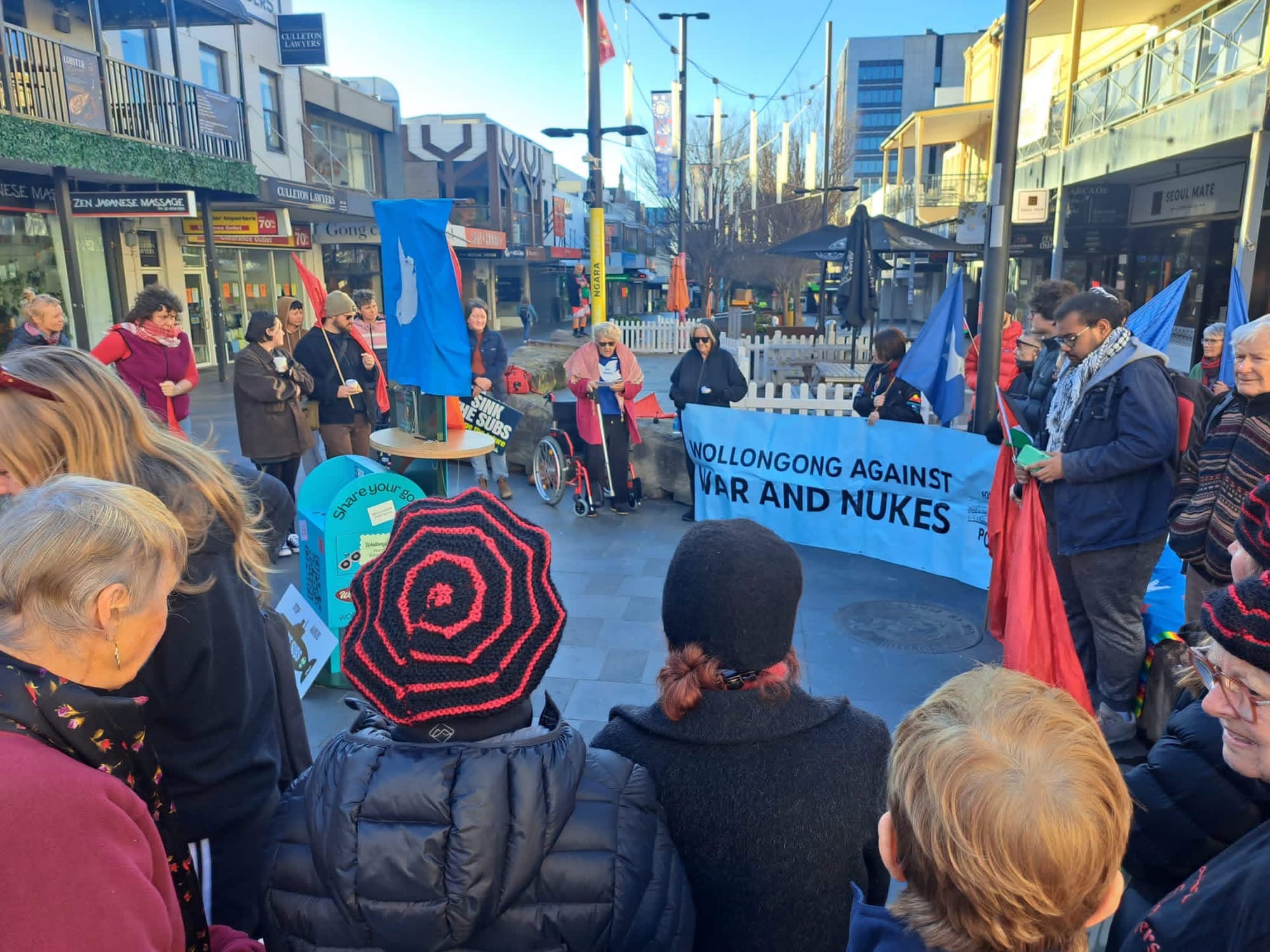
Standing in pride of place in the heart of our city, the International Year of Peace plaque reminds us of the ongoing struggle to make Wollongong a city of peace.
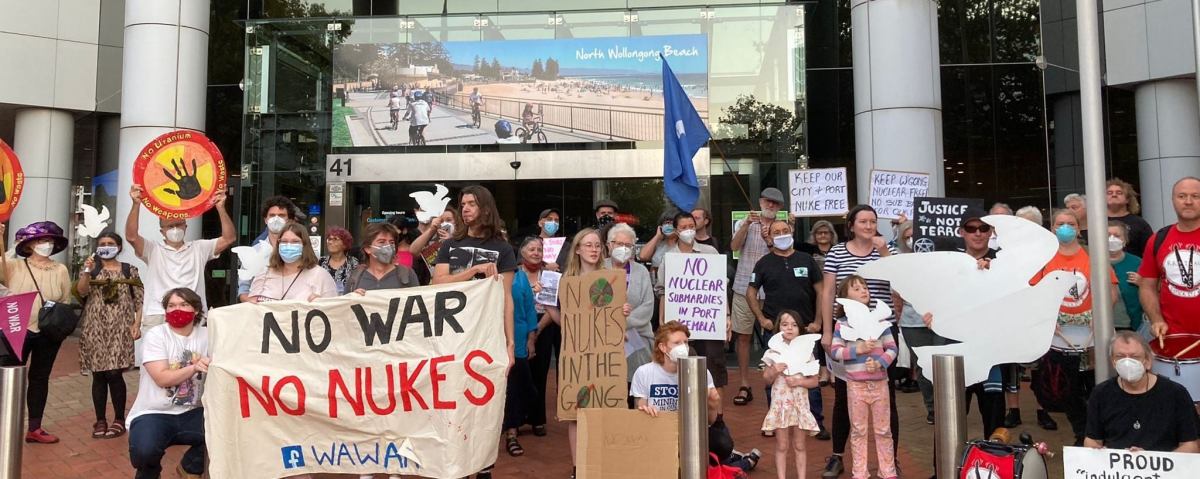
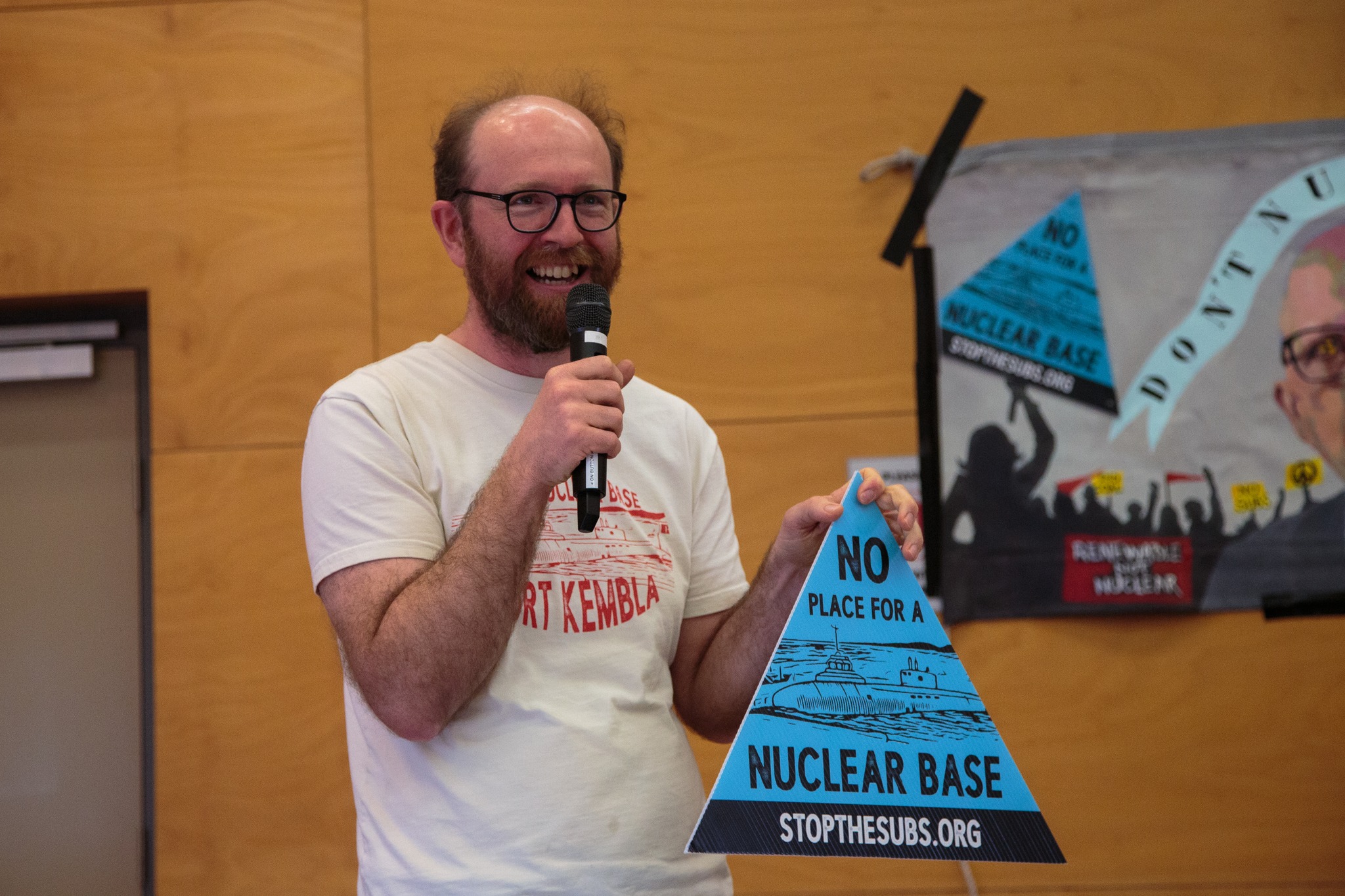
In 2026, the group who gathered around the IYP plaque was larger than it has been in many years thanks to a revival of anti-war activism spurred by Israel's genocide in Gaza and the deepening of Australia's military alliance with America through the AUKUS pact.
This month, peace groups around the country will commemorate the UN International Day of Peace on 21 September with National Days of Action against AUKUS. Wollongong Friends of Palestine, supported by Wollongong Against War and Nukes, will hold a 'Rawkus Against AUKUS' fundraising concert at Project Contemporary Artspace on Friday, 19 September from 4pm. All are welcome to attend to continue Wollongong's proud tradition as a city of peace.
About the writer
Alexander Brown is a writer, translator, and activist living in Port Kembla. He writes about anti-nuclear movements in Australia and Japan and the radical history of the Illawarra.
This article is the first in his new series exploring the cultural history of Wollongong through monuments, places, and public art. If you have questions or additional information to share regarding any of the places discussed in this series, we would love to hear from you. Visit alexanderbrown.online to learn more or contact mail@alexanderbrown.online