

Why are we seeing more whale entanglements?
Humpback whales are a conservation success story, yet more whales have been seen caught in ropes and fishing gear this migration season. ORRCA secretary and Illawarra local Jody Langlois reports
Each winter we are treated to one of nature's greatest spectacles as thousands of humpback whales migrate along our coastline. It is a conservation success story that few could have imagined just a few decades ago. Once hunted to the brink of extinction, humpback whale populations have recovered remarkably, with an estimated 40,000 to 50,000 whales now travelling along Australia's east coast each year.
Unfortunately, this success has also brought new challenges.
In recent months, Organisation for the Rescue and Research of Cetaceans in Australia (ORRCA) volunteers and our partners have responded to an increasing number of whale entanglement incidents. During one particularly busy weekend in July, five separate entanglement reports were received from locations across the New South Wales coastline.
There is no single cause for the noted increases in entanglements. Instead, several factors are contributing to the rise.
The primary reason is simply that there are more whales than there have been for generations. As humpback whale numbers continue to recover, the likelihood of interactions with fishing gear, shark mitigation equipment, ropes, and other marine debris also increases.
This is one of the paradoxes of conservation success. The recovery of whale populations is something to celebrate, but it also means we must adapt how we manage our marine environment to keep these animals safe.
Australia's coastline is becoming increasingly busy. Commercial and recreational fishing, aquaculture operations, boating activity, shark mitigation programs, and coastal development all place more ropes, lines, nets, and infrastructure into the same waters used by migrating whales. Many whale species, particularly humpback and southern right whales, travel close to shore during migration, bringing them directly into areas where these hazards are concentrated.
One positive factor is that more people are reporting whales in distress.
Drone technology, increased public awareness, social media, whale watching activities, and improved coordination between organisations mean entangled whales are being detected more frequently than ever before. While this can make it appear that entanglements are increasing dramatically, some of the rise may also reflect improved detection and reporting.
From an animal welfare perspective, this is encouraging. The sooner an entangled whale is reported, the greater the chance trained disentanglement teams have of successfully intervening.
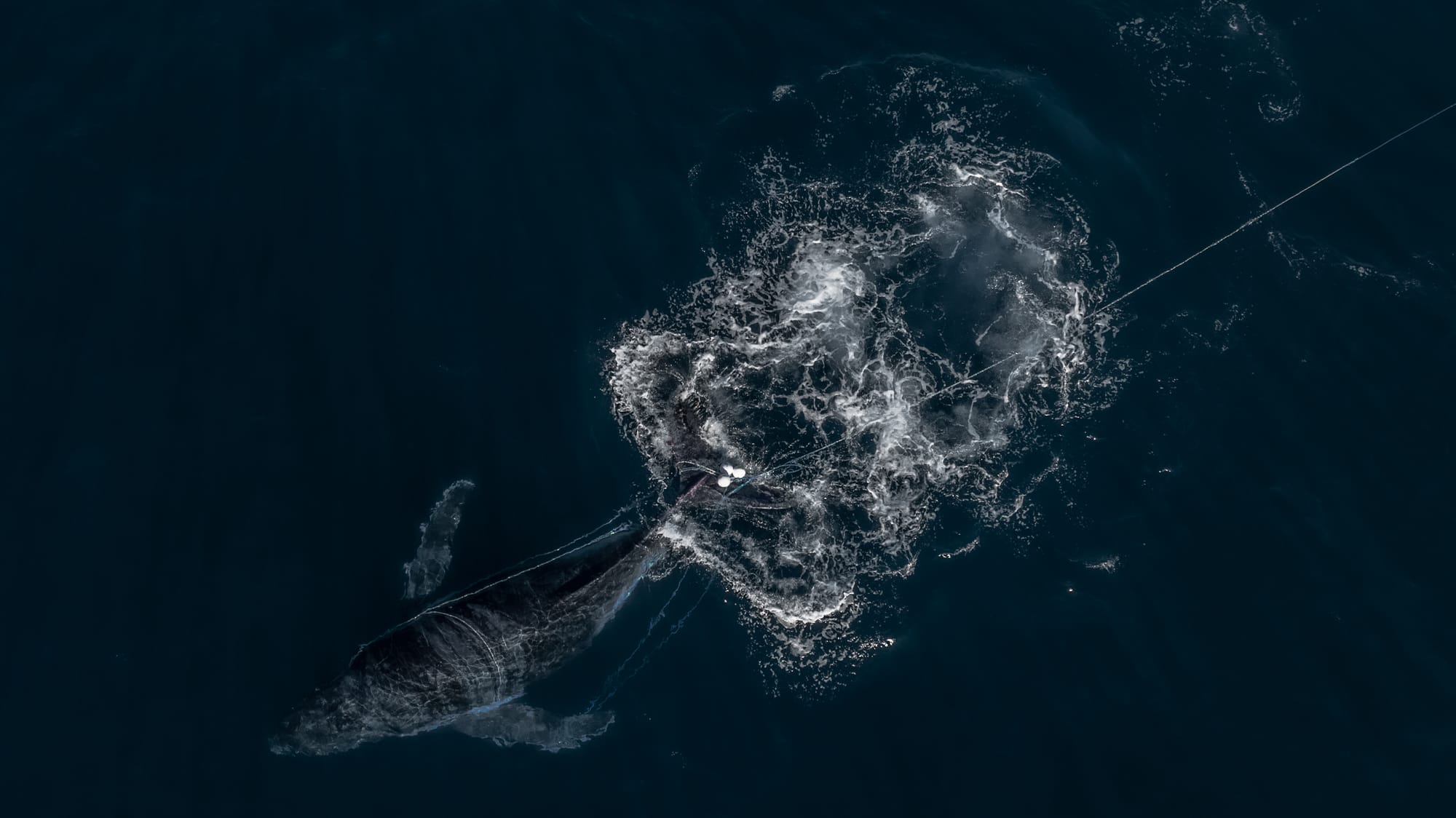
Lost, discarded, or abandoned fishing gear, often referred to as "ghost gear", continues to pose a risk to whales and other marine wildlife. Ropes, floats, lines, and nets can remain in the marine environment for years. Entanglements can cause severe injuries, infections, reduced mobility, impaired feeding, and in some cases, death. Even whales that survive may carry entangling material for months or years.
Across Australia, government agencies, researchers, commercial fishers, and conservation organisations are working together to reduce entanglement risks.
Programs are trialling modified fishing gear, sinking rope systems, reduced rope strength, delayed-release technology, and other innovations designed to minimise the amount of rope and slack line in the water column during whale migration periods.
ORRCA works closely with the NSW National Parks and Wildlife Service, Sea World Foundation, and other partners to monitor reports, assist with assessments, and support whale disentanglement operations.
These rescues are complex, highly specialised, and often dangerous, requiring trained personnel and carefully coordinated responses.
The community plays a critical role in protecting whales.
If you see a whale that appears to be entangled:
- Keep your distance.
- Do not attempt to free the animal yourself.
- Record the location if it is safe to do so.
- Contact ORRCA’s 24 hour rescue hotline immediately on 9415 3333.
- Remain nearby, if safe, to assist responders with updates on the animal's location.
Early reporting can mean the difference between life and death for an entangled whale.
The increase in whale entanglements is a reminder that conservation success brings new responsibilities. Australia's recovering whale populations are one of the world's great environmental achievements, but ensuring these animals can migrate safely through increasingly busy coastal waters will require ongoing collaboration between government, industry, researchers, conservation groups, and the wider community.
At ORRCA, our volunteers remain committed to responding when whales need help, but prevention remains the ultimate goal. Through better reporting, improved fishing practices, continued research, and community awareness, we can work together to reduce entanglements and help ensure a safer future for our whales.
If you see a whale, dolphin, or seal in distress, please contact the ORRCA 24/7 Rescue Hotline: (02) 9415 3333.


