
A very small panic attack
Emma Rooksby, co-ordinator of Growing Illawarra Natives, discovers a rare local grass flourishing in the escarpment at Wombarra
One of the great pleasures of wandering around the region looking at native vegetation on public and private land is coming across an interesting, unusual or rare plant doing well. I am very fortunate to have the time to undertake this kind of wandering. And a recent find in the escarpment in Wombarra made my heart sing.
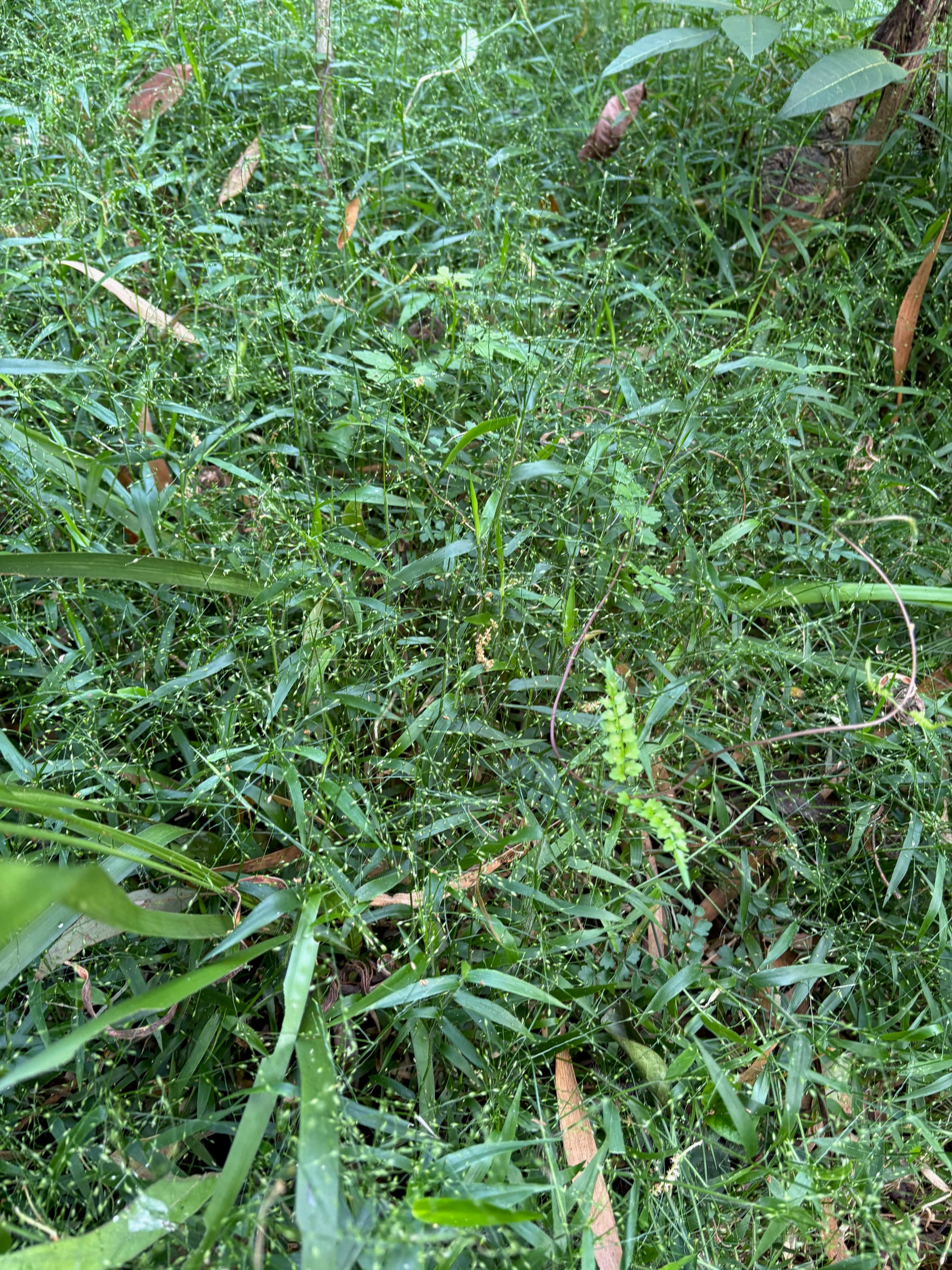
It was a veritable forest of an uncommon local grass: Pygmy Panic (Panicum pygmaeum), which is rarely seen. But on this Wombarra property, the Pygmy Panic was absolutely flourishing: it was growing in the understorey in profusion, beneath Wollongong Woollybutts (Eucalyptus saligna x. E. botryoides) and emerging rainforest tree species.
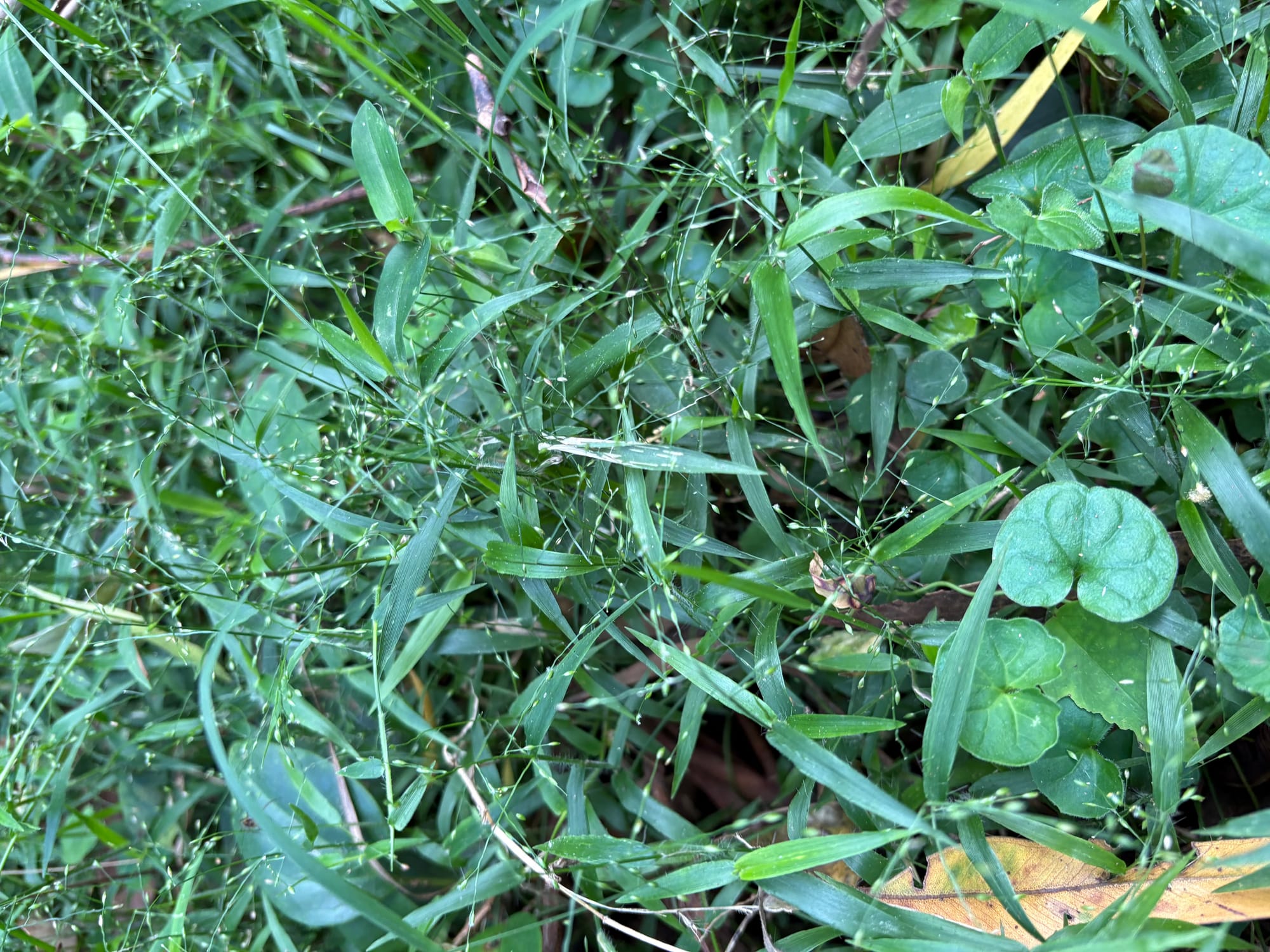
Judge for yourself how cute it is! Look at those tiny sprays of seeds, and that delicate foliage. I've written about Pygmy Panic before, but figured it's time to put it in a new light, as a really excellent garden plant.
Its stronghold locally is the escarpment slopes, but it does well in all sorts of different situations, and copes with low light levels better than most grasses. I would love to see it used more in gardens, both in garden beds and on grassy pathways.
As the image below shows, it can be absolutely outstanding along a path. The plants below are 'managed' by periodic mowing with a ride-on mower, though walking regularly on this grass will often be enough to keep it at a suitable height.
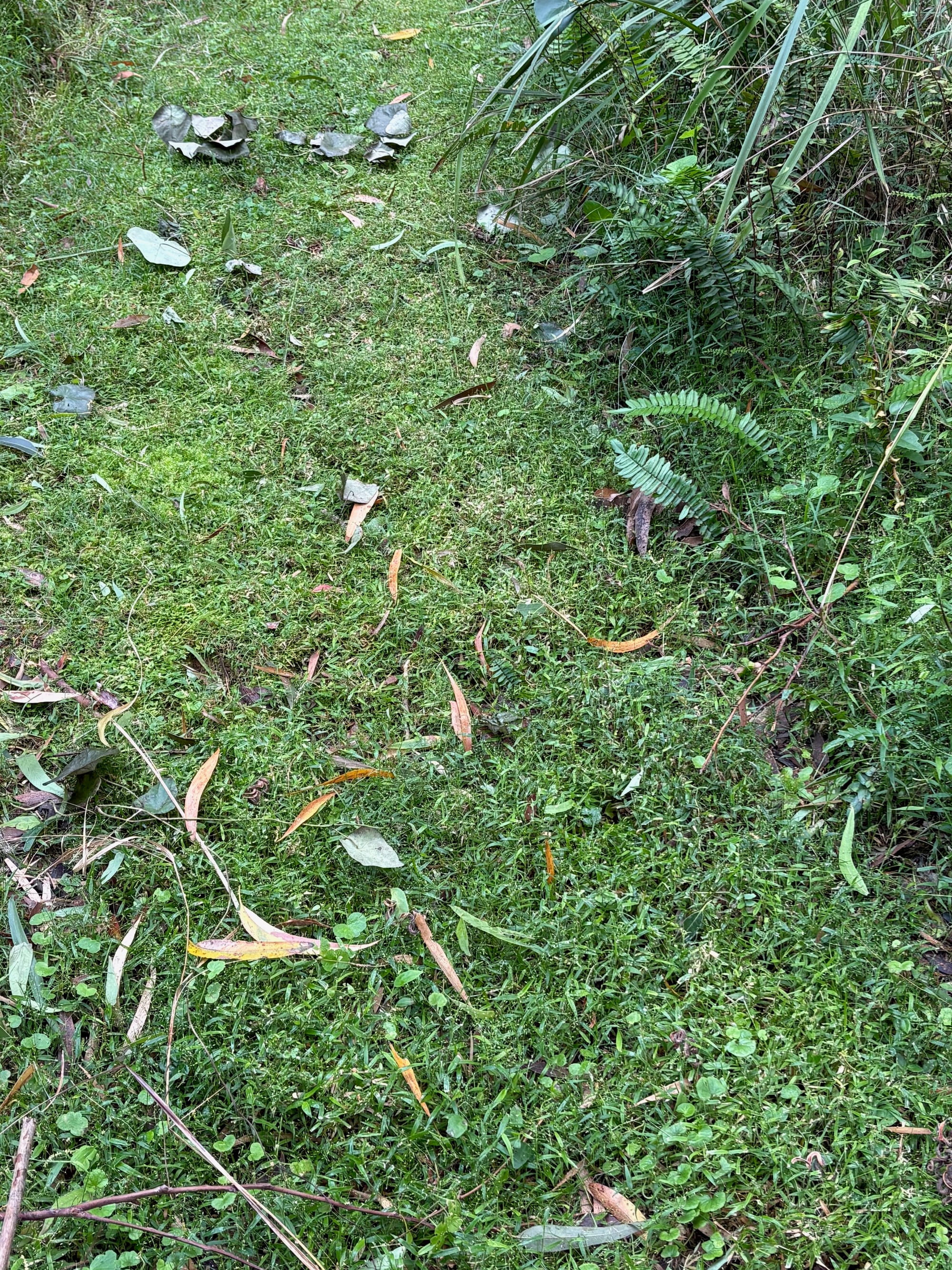
To encourage greater resilience, try the 'mixed native meadow' approach, and grow Pygmy Panic together with other low ground covers and grasses, as shown in the image above. Different conditions will favour different elements of the meadow, so that if one species starts dying back, others can fill the gaps.
Even left to go completely 'wild', Pygmy Panic is not a large or pushy plant. It will spread gradually and can be easily controlled with a bit of hand weeding. The final image below shows it at about its maximum height of 25cm.