

Beaches close and debate reignites after whale entangled in shark nets dies off Coledale
A Humpback Whale calf has died after becoming entangled in shark nets off the Northern Illawarra coast

A humpback whale that died wrapped in shark nets off our coast has reignited debate about the NSW Government’s controversial bather protection program.
On Tuesday morning, members of the public alerted the Organisation for the Rescue and Research of Cetaceans in Australia (ORRCA) to the juvenile whale, which had netting around its tail fluke and pectoral fin, and was floating upside down off Wombarra beach.
ORRCA worked alongside National Parks and Wildlife Service (NPWS) to find out more, then confirmed that the whale had already died.
A multi-agency response was launched, with Marine Rescue NSW vessel Port Kembla 31 attending with NPWS officers onboard to try to retrieve the carcass.
Marine Rescue NSW Inspector Stuart Massey said that, after several hours, the efforts were called off due to worsening conditions.
“About 14:30 the decision was made to call off the retrieval of the whale,” he said. “Conditions had changed and the proximity to rocks determined it was unsafe for the crew and rescue vessel to continue.”
The carcass has since washed ashore.
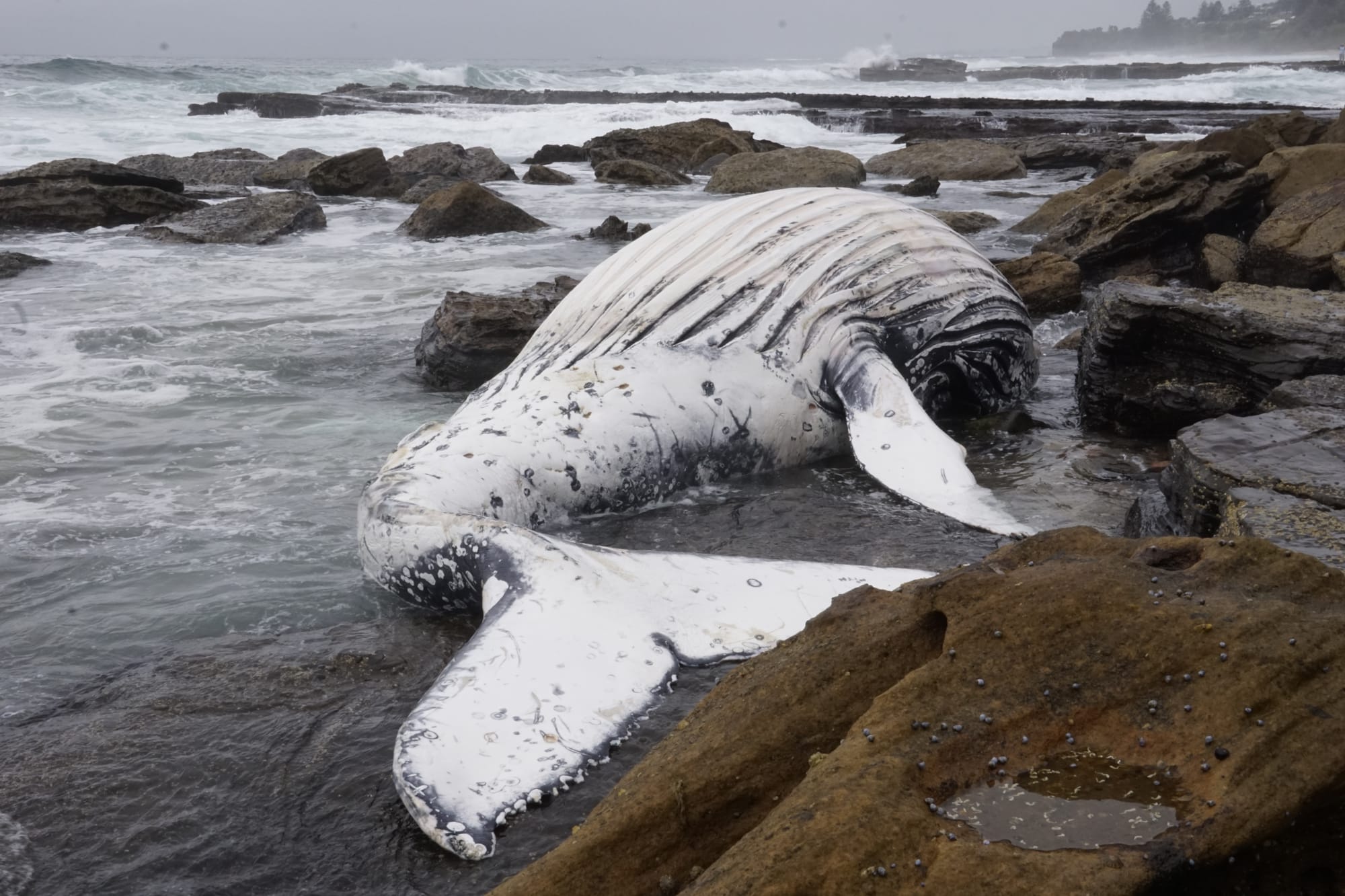
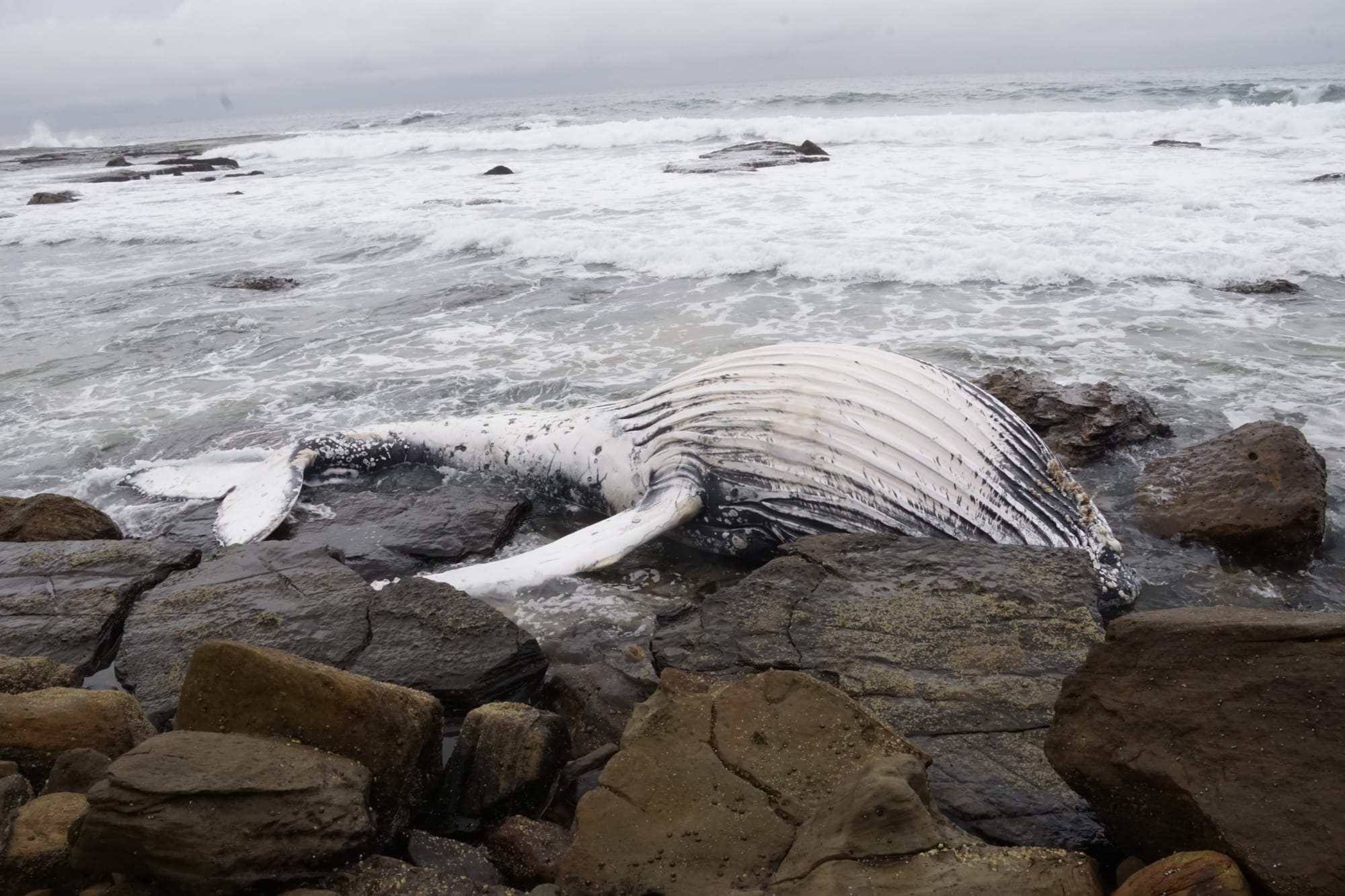
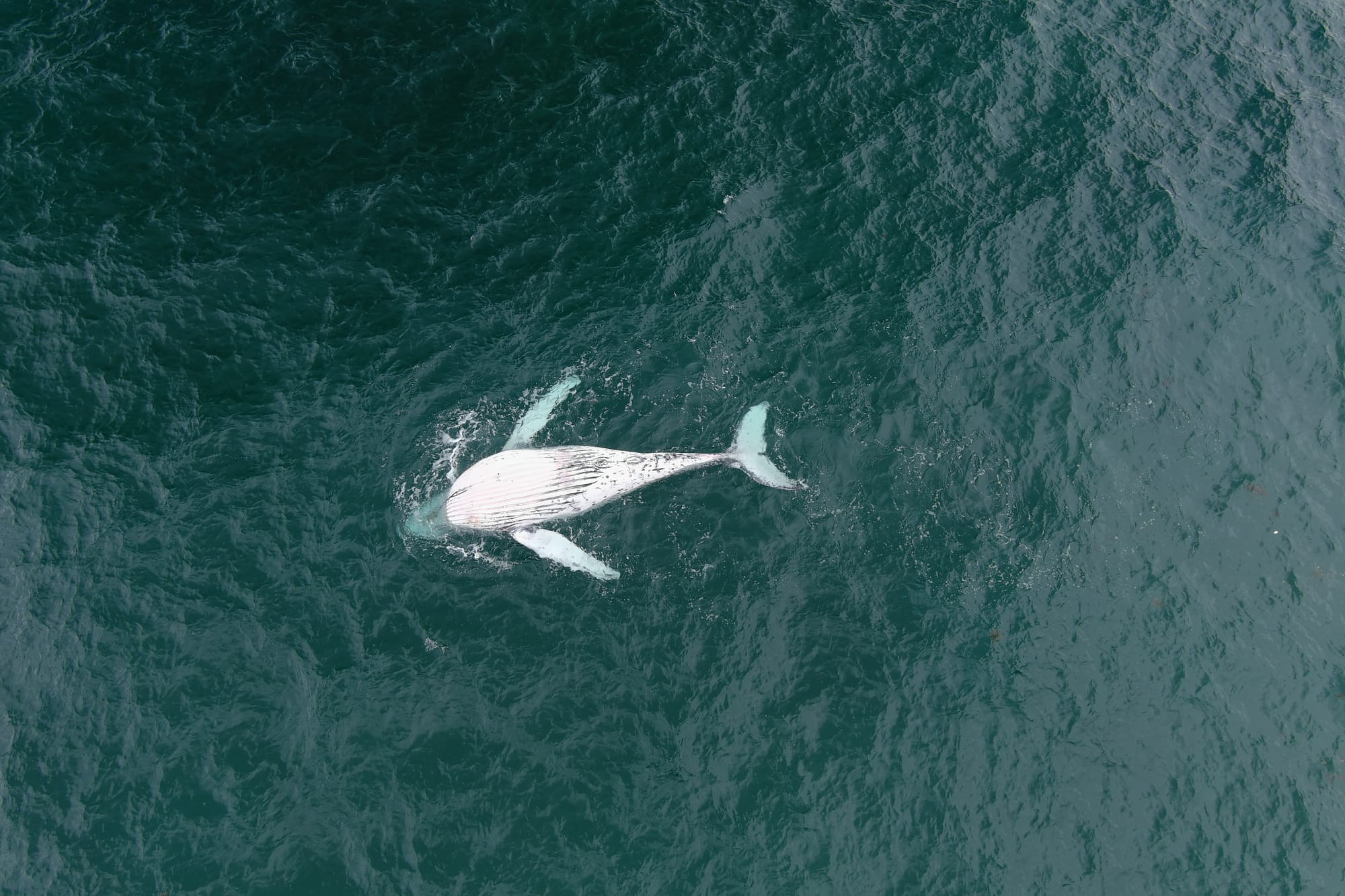
The deceased calf washed ashore after being caught in shark nets. Photos onshore: Lynne Tuck @urchin.creations and drone image courtesy of Duncan Leadbitter
Entangled on either Monday night or early Tuesday morning, the young whale is thought to have drowned, but the cause of death can't be confirmed until after a necropsy, which is a post-mortem examination of a non-human animal's body.
A spokesperson from the NSW Department of Primary Industries and Regional Development (DPIRD) said that Wollongong City Council is managing the removal of the carcass in consultation with NPWS and the Local Aboriginal Land Council.
As increased shark activity is expected, Council has closed Scarborough and Coledale beaches and advised swimmers and surfers to stay out of the water.
A controversial program
The NSW Government’s Shark Netting (Bather Protection) program has nets in place on 51 beaches from Newcastle to Wollongong from September 1 to March 31.
A trial to remove shark nets from three Sydney beaches was paused last month after a surfer was killed in a shark attack.
Ward 1 Councillor Jess Whittaker said of the nets, "It was harrowing to see what happened to this magnificent creature off the Illawarra coast, and what makes it all the more heartbreaking is that it was completely preventable."
"Decades of evidence show shark nets are not effective. They are are public safety hazard and they are a hazard to wildlife. The nets are essentially loose fishing devices that entangle marine life indiscriminately. This whale is just the latest of thousands of animals, including dolphins, turtles and rays, to be caught up and killed by these outdated nets."
The government’s SharkSmart program – which includes an app that issues alerts when tagged sharks are present – advises that nets are fitted with "dolphin pingers" and "whale alarms" to "deter and reduce the risk of entanglement to those marine mammals".
In 2025/2026, the government's shark management program consists of netting, smart drum lines, listening stations and aerial drone support.
A spokesperson for DPIRD said described the state government as “world leaders" in using technology for shark mitigation and research, adding: "The NSW Government will continue to investigate new shark mitigation technologies designed to minimise impacts on marine animals while protecting beachgoers."
Whales are rarely caught in shark nets, however, nets are not the only hazard on their annual migration.
“This season, ORRCA has received 26 reports of whale entanglements in NSW to date,” said Ashley Ryan, the president of ORRCA.
“While this was our first confirmed shark net entanglement of the year in our state, migrating whales continue to face risks from smart drumlines, commercial fishing gear, and marine debris – a reminder of the many human impacts and challenges they encounter along their journey.”
Shark nets in place until autumn 2026
On Friday, October 31, the Member for Heathcote, Maryanne Stuart, thanked all the volunteers and government agencies for their work this week.
"This is a tragic incident that has been really distressing for our community," she said.
"Wollongong City Council has advised that the whale carcass has now been removed from Coledale Beach. I wish to thank all those involved in this joint-agency response, including the Council, National Parks, Marine Rescue and ORRCA.
"The shark nets will be removed on 31 March 2026 to avoid much of the whale migration season and increased turtle activity in April.
"If you ever see a marine mammal on a beach that appears stranded, sick or abandoned, immediately report it to National Parks and Wildlife Service on 13000 PARKS (1300 072 757), Organisation for the Rescue and Research of Cetaceans in Australia (ORRCA) on 02 9415 3333."
Read more
From shark nets to drones: 4 ways to protect bathers, and their tradeoffs
'Shark Safety Requires Evidence, Not Outdated Nets'
31 Oct 2026: This story was updated with additional comments.


