
New Bugs in My Backyard Week launches
The first Bugs in My Backyard Week starts on November 17. Take photos of your local 'cutie-crawlies' and help with this new citizen science project

You already know about creepy-crawlies but have you heard about cutie-crawlies?
Alison Mellor was that kid. You know the one: rescuing moths and Christmas beetles from inside the house, rushing them outside and releasing them back into the night. She runs paperbark_native_bees on Instagram, sharing photos and stories of Aussie natives bees, and now, as the new project co-lead for Bug Hunt, Alison invites us to discover a hidden world in our backyards, and help protect the inhabitants one bug at a time.
“Bug Hunt is inviting everyone to grab their phones and help uncover the secret lives of the insects, worms, snails and spiders that keep our country alive,” Alison said. “It’s a new national citizen-science project led by the Invasive Species Council and Invertebrates Australia with support from the Australian Geographic Awards for Nature program.”
Snap, upload, save the world
The idea is that this project will tap into people’s curiosity, and when they spot a ‘bug’ – Invertebrates Australia use this term to refer to anything without a backbone so spiders, butterflies, snail, worms and millipedes – they can snap a photo and upload it using the iNaturalist app or by visiting the free-to-join (and endlessly fascinating) iNaturalist site.
These images will be automatically uploaded to the Bug Hunt Australia Project and will provide valuable data that will be used to not only give a general picture of invertebrate diversity around the country but also provide real-time, vital biosecurity information.
“Every photo you add to iNaturalist helps grow our knowledge and protect Australia’s incredible wildlife, and could even stop the next fire ant or shothole borer outbreak before it spreads,” Alison said. “Joining in not only benefits bugs and biosecurity, it also brings the important health benefits of connecting with nature.”
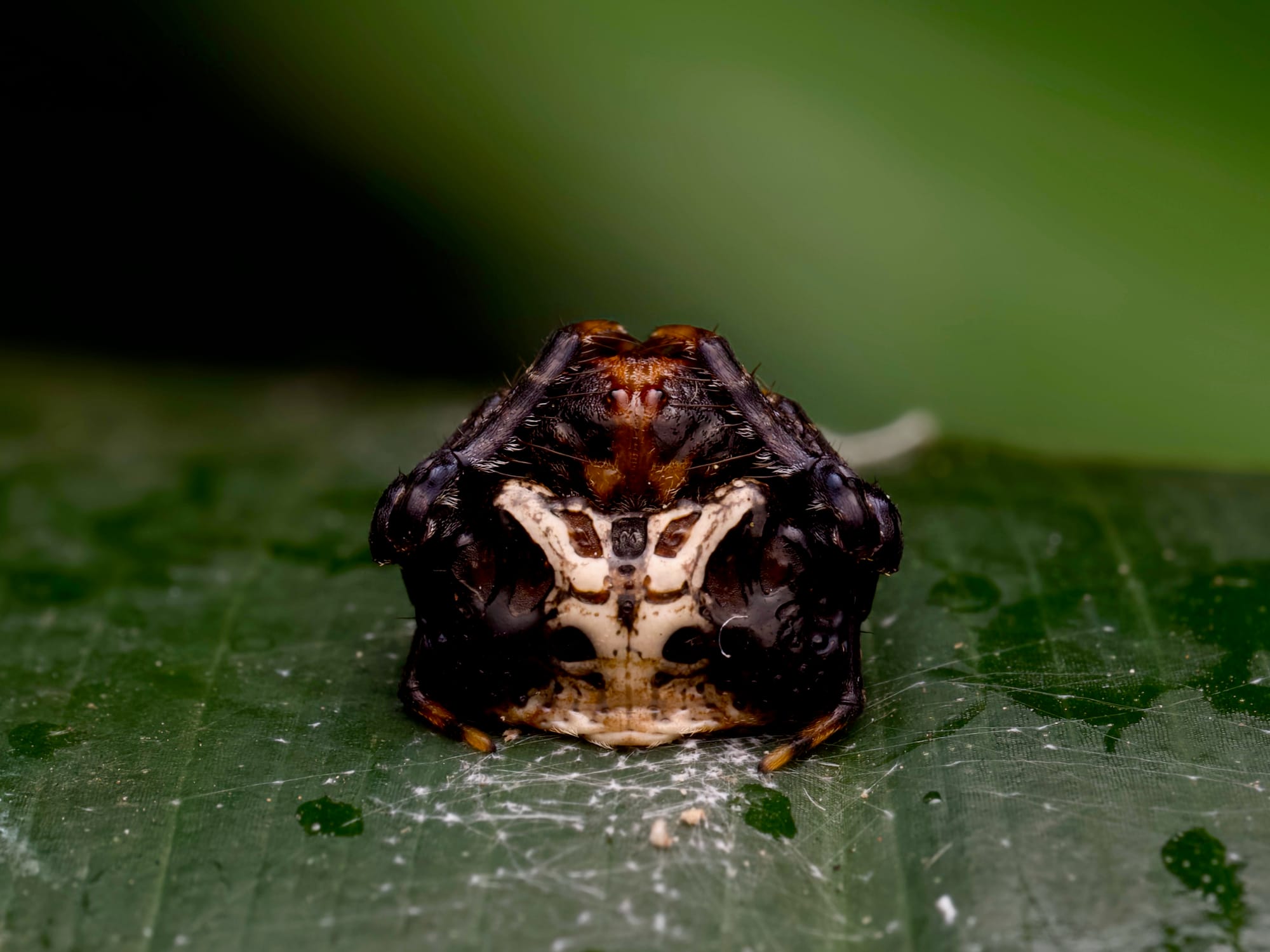
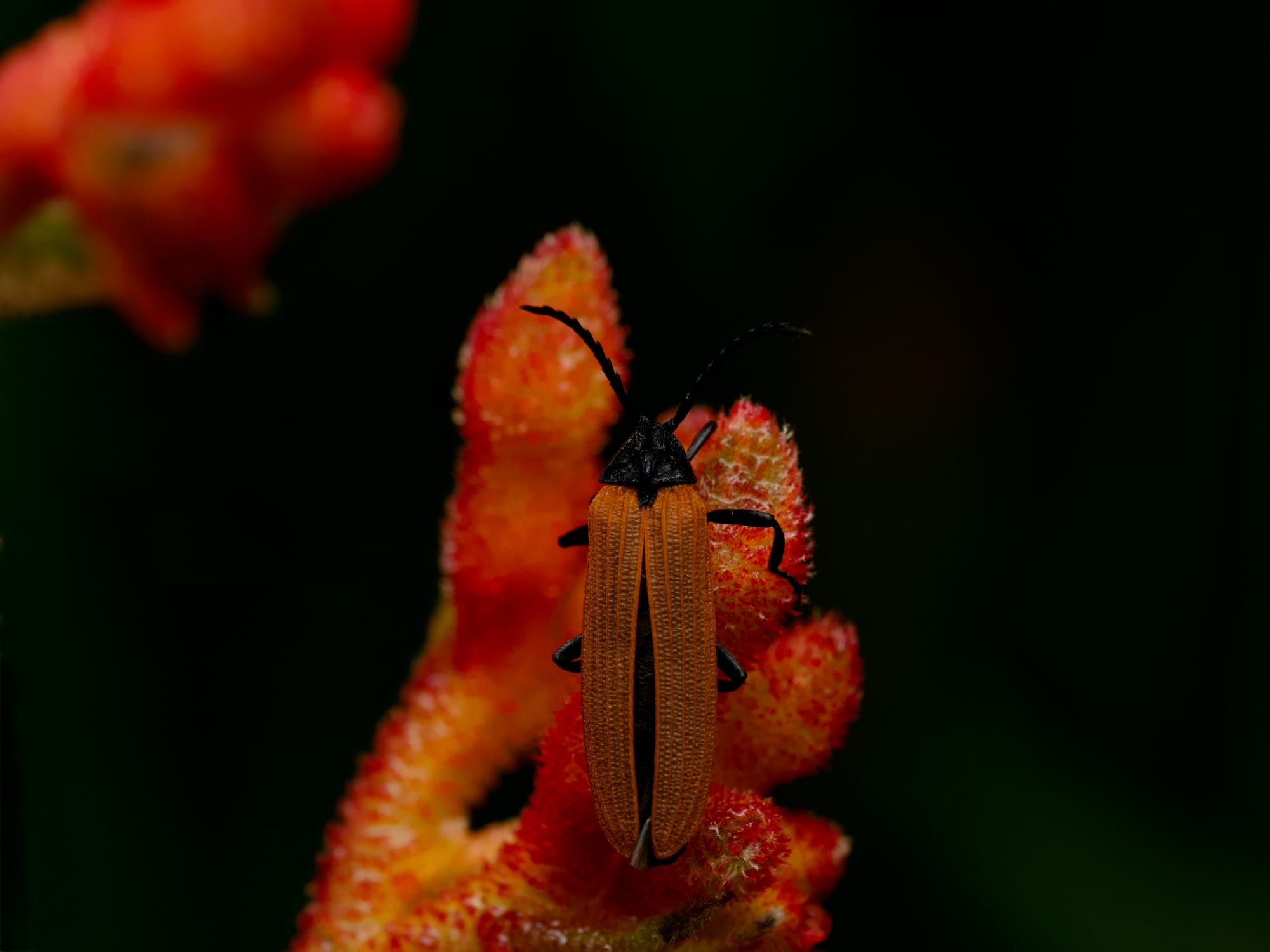
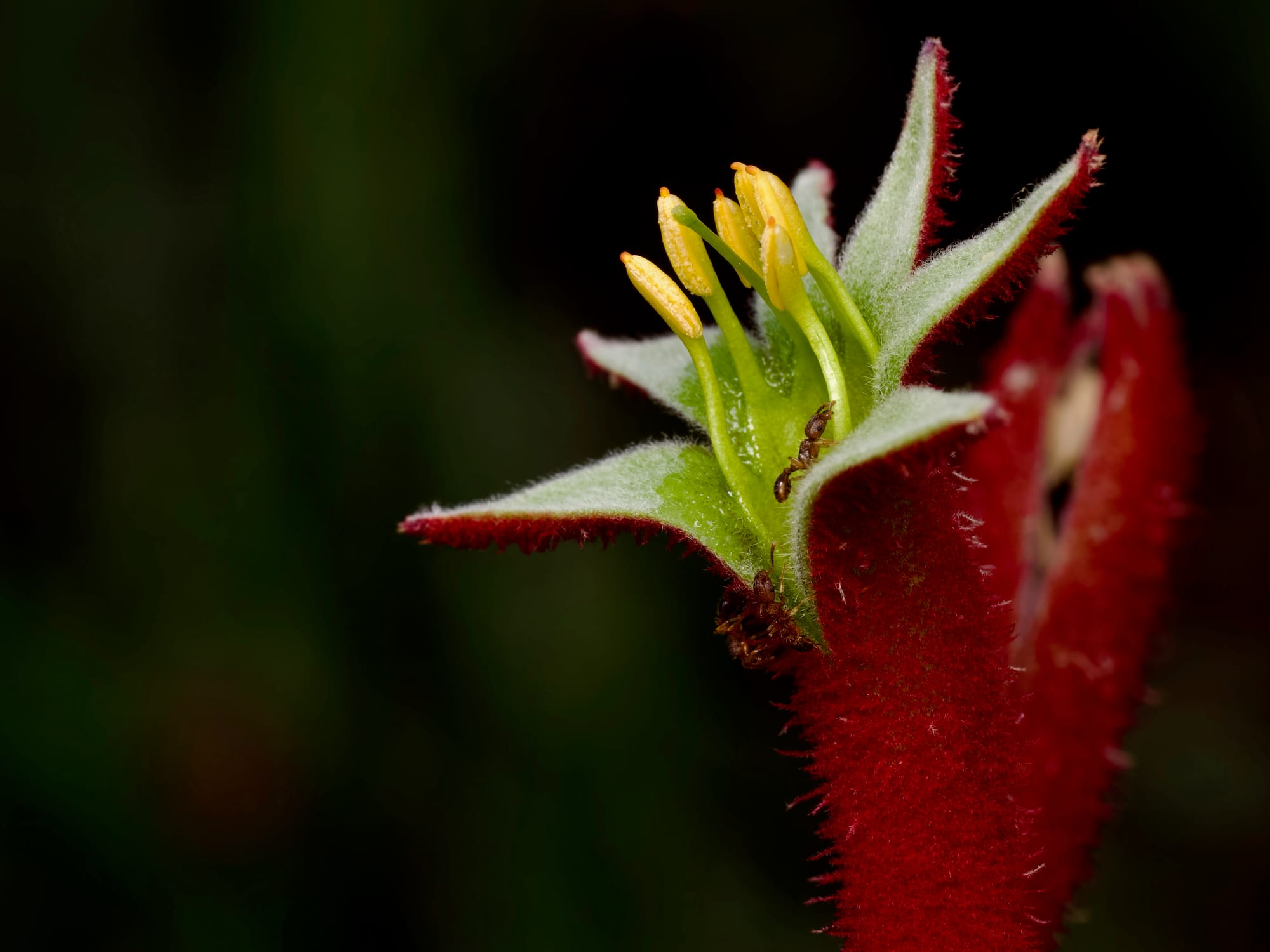
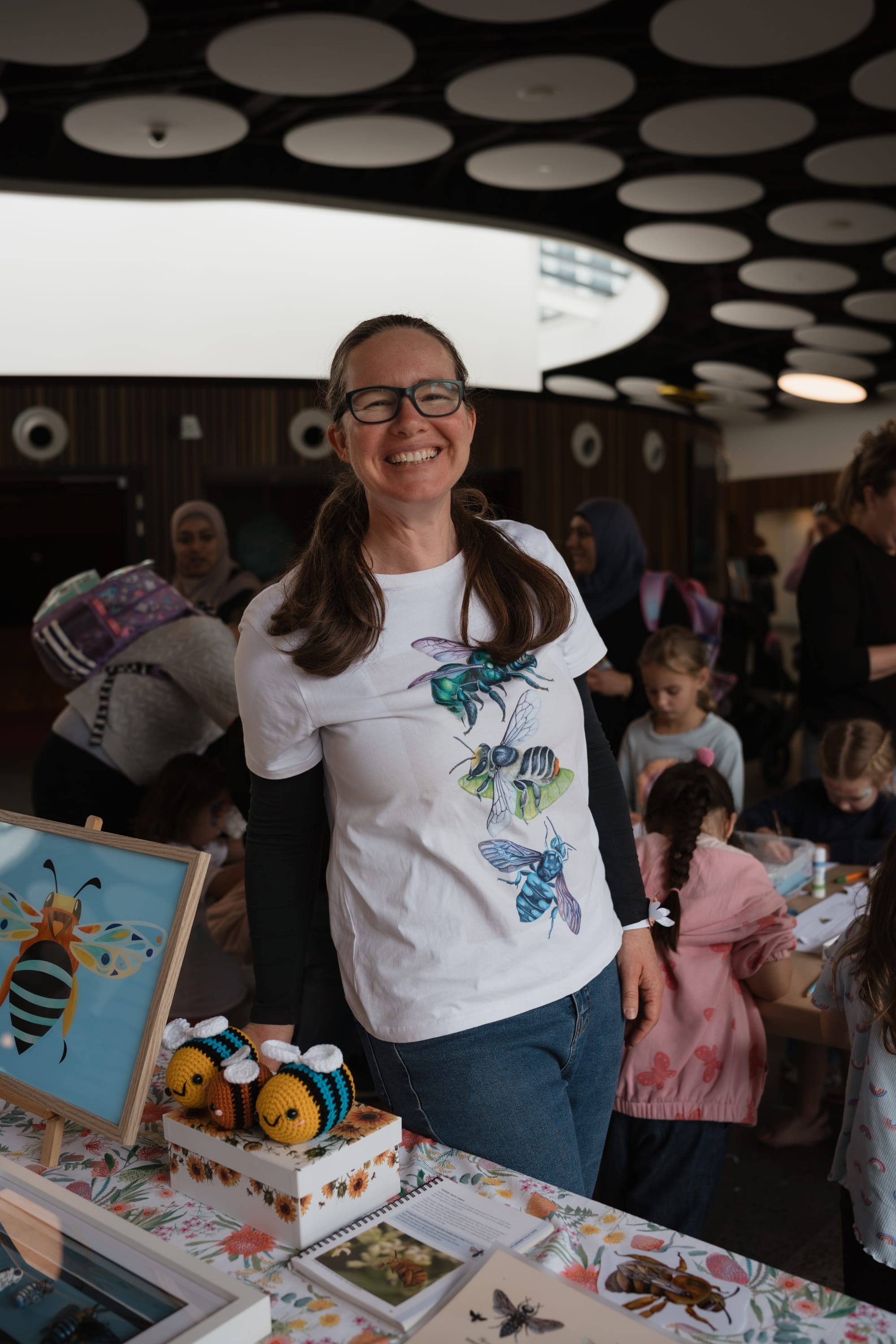
What bugs are living in your yard? Alison Mellor invites us to look closely during the first ever Bugs in My Backyard Week. Clockwise from top left: Bird Dropping Spider, Lycid Beetle, Alison Mellor, ants in kangaroo paw. Photos: Amanda De George & supplied
“Invasive invertebrates from overseas, like fire ants, could spread across Australia, devastating native wildlife, our way of life and costing our economy," Alison said.
"These invaders move fast and travel silently – through pot plants, mulch or stormwater drains – and by the time authorities detect them, it’s often too late. That’s why citizen science is such a powerful tool. By joining Bug Hunt, Australians are giving science an extra set of eyes at a time when we need it most.”
Not creepy-crawlies, cutie-crawlies
Invertebrates Australia has coined the phrase ‘cutie-crawlies’ to offset the oft used ‘creepy-crawlies’ with all of its negative connotations. “Australia’s native invertebrates are wonderful, sometimes bizarre, and often brilliantly adapted to their environment,” Alison said. “We have peacock spiders that dance, beetles that glow and snails found nowhere else on Earth.
"Australia’s ‘cutie-crawlies’ are the quiet workers of nature – pollinating plants, building soil and feeding our most iconic animals.”
Launching a new week
We’ve just had the much-loved Birds in Backyards week and now Bug Hunt are launching the first Bugs in My Backyard Week, from November 17-23, in spring when bugs are most prolific.
It's easy to join in. Snap a photo of every invertebrate you find, and no these don't have to be Australian Geographic standard images, and upload them. Easy! There's loads of prizes up for grabs, online seminars and even scavenger hunts.
To find out more, there’s a free online webinar on Sunday, 16th November, which you can register for at bughunt.org.au.
Final fact
In case you're still on the fence, I asked Alison for (one of ) her favourite 'bug' facts.
"Surprisingly, many of our native bees dig into the ground to lay their eggs," she said. "An Illawarra local, a type of Plasterer Bee called Leioproctus fulvus, is known to dig nests up over two metres deep!"
You in? I'll see you on the Bug Hunt.