

Plant a prickly hideaway for small birds
Want to do your bit for birds? Discover the Molucca Bramble – a great habitat plant, writes Emma Rooksby, coordinator of Growing Illawarra Natives
I wrote last year about a couple of the local raspberries, the Rose-leaf Bramble (Rubus rosifolius) and Small-leaf Bramble (Rubus parvifolius).
They're both excellent habitat plants, but they're not the only raspberries that grow around here. We're also lucky enough to host the Molucca Bramble (Rubus moluccanus var. trilobus), which is somewhere between a vine and a shrub, and can be seen as a dense and prickly thicket to around 3m, or ascending even higher into trees in a more viney form.
You can see a good example of Molucca Bramble in the image below, with a medium-sized human included for scale.
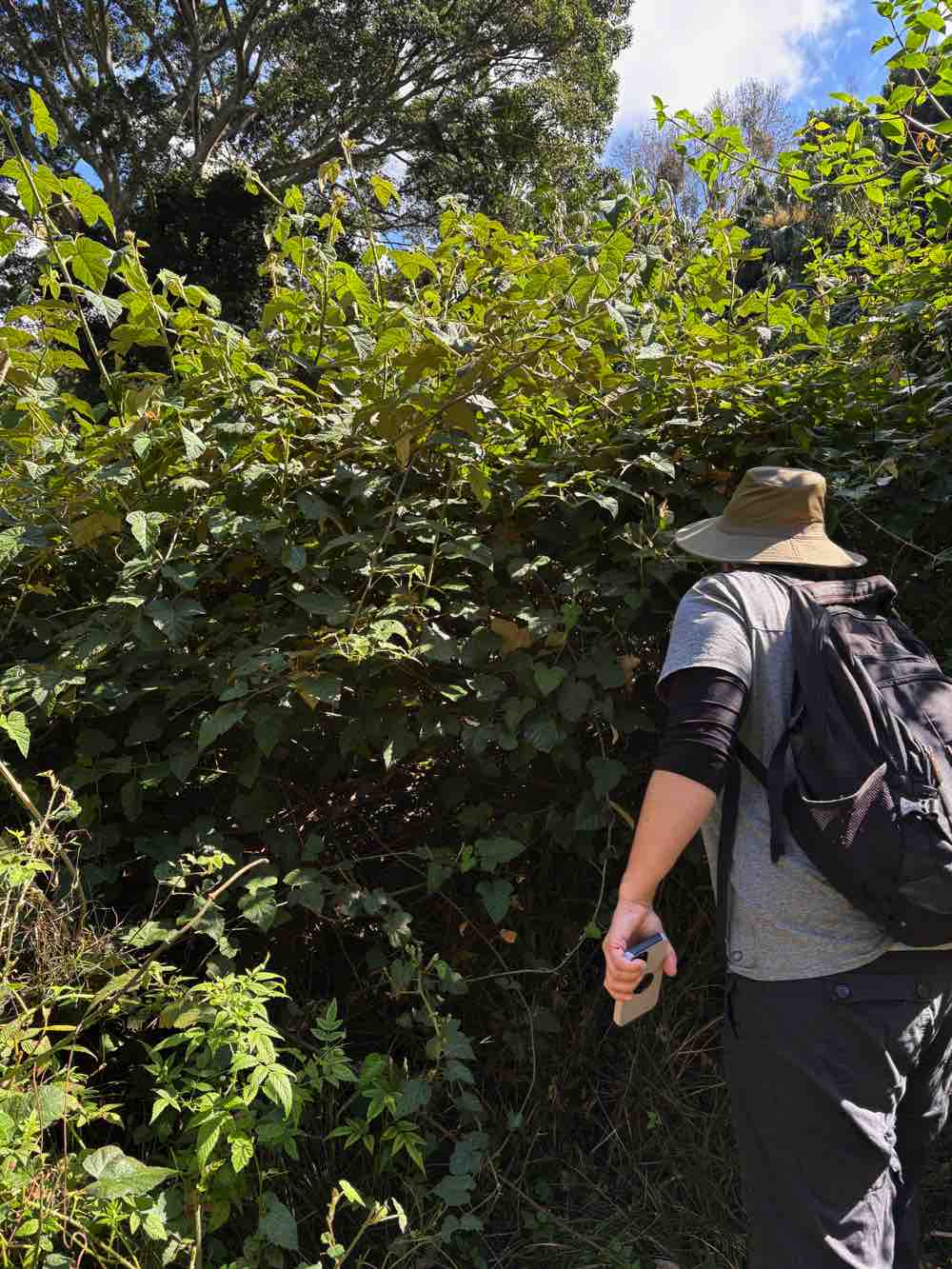
In fact, in habit and appearance, Molucca Bramble is rather like Lantana, a common and widespread weed in Australia. And, like Lantana, it creates great places for small birds like wrens to hide away from larger and more aggressive birds such as Noisy Miners.
Plus, it has the added benefit, of course, that it's a local plant rather than invasive weed of national significance!
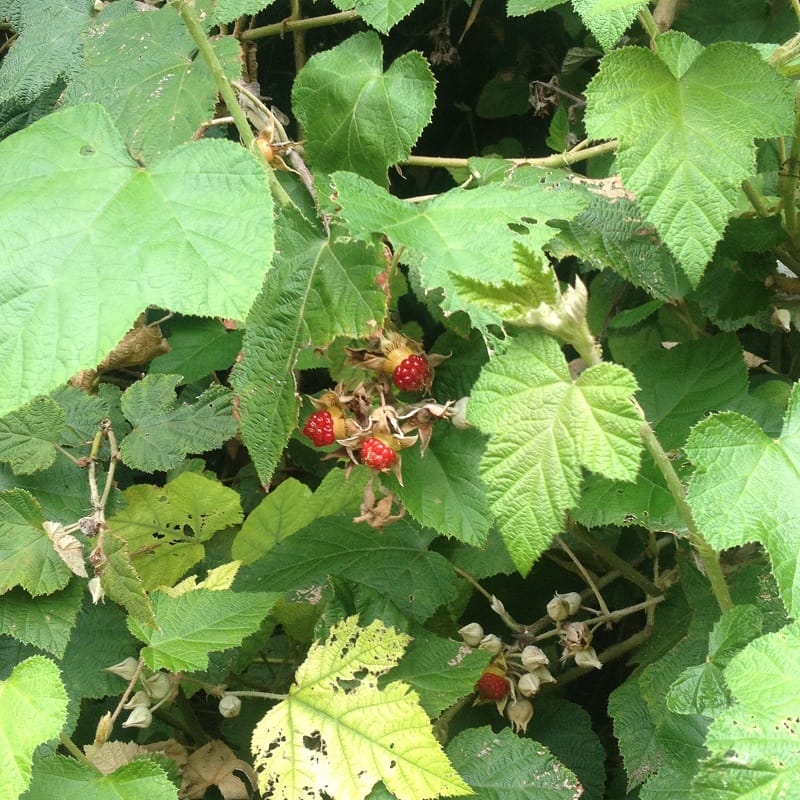
You can readily see Molucca Bramble on the Illawarra escarpment, where it occurs in rainforest and tall wet eucalypt forests, often appearing in sunny patches or on the edges of vegetation.
However, you rarely see this raspberry growing in gardens, despite the visual appeal of its flowers and fruits, and its obvious benefits for fauna.
The reasons are not hard to discern: it is large and takes some managing to be a conventionally appealing garden plant; it is prickly so not a terribly kid-or pet-friendly species; and those juicy-looking fruit don't taste of much and have what Encyclopaedia of Australian Plants authors W. Rodger Elliott and David L. Jones describe as "annoying hairs". Not irritating as such, just a bit annoying, and enough to put you off biting into a fruit that isn't terribly tasty.
That said, the Encyclopedia does recommend Rubus moluccanus (var. moluccanus) as "one of the more attractive species of native Rubus, with ornamental flowers, foliage and fruit", and says it can be kept bushy by regularly pruning off any long shoots that appear.
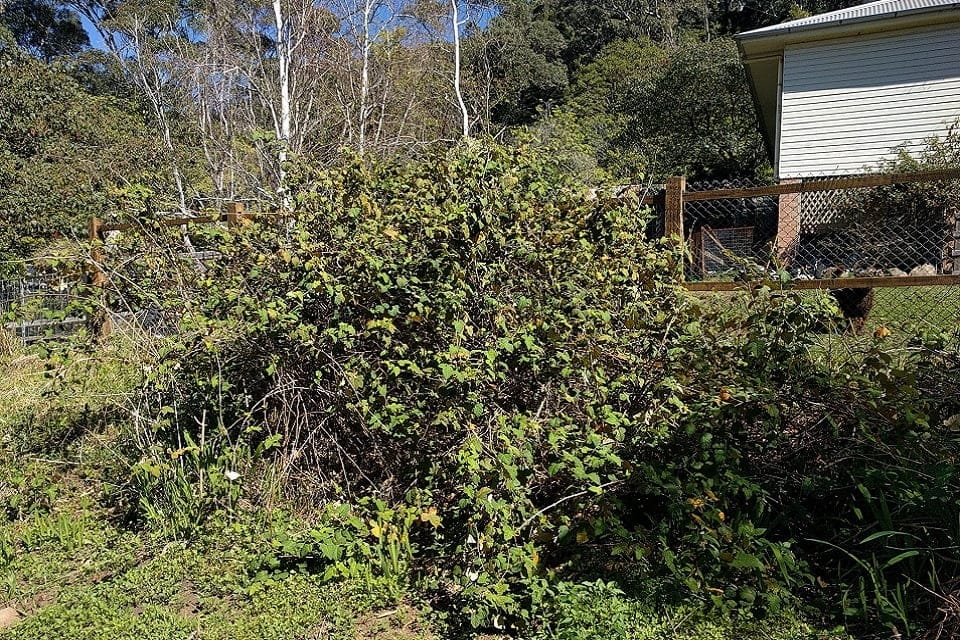
The below specimen is semi-managed against a fence.
With bird flu spreading rapidly now, and a disappointing government response to date, one of the main recommendations of the ecologists, biologists and conservation experts is to tackle the other ongoing threats to wildlife, including habitat loss.
Adding local habitat plant species like this to suburban and urban parks and gardens isn't a cure-all, but it is a small way that those of us who care for gardens can contribute.
Sign up to win!
Growing Illawarra Natives and The Illawarra Flame are teaming up to boost backyard bird habitat. Growing Illawarra Natives are giving away four native habitat plant packs. To have a chance to win, simply sign up as a Friend of the Flame (free or $5 a month) before Monday, September 13.
If you're already a subscriber, don't worry, your name is already in the draw!
 Emma Rooksby
Sources
W. Rodger Elliot and David L. Jones (1982). Encyclopedia of Australian Plants Suitable for Cultivation, Volume 8 Pr-So, 252. South Melbourne: Lothian Books.


