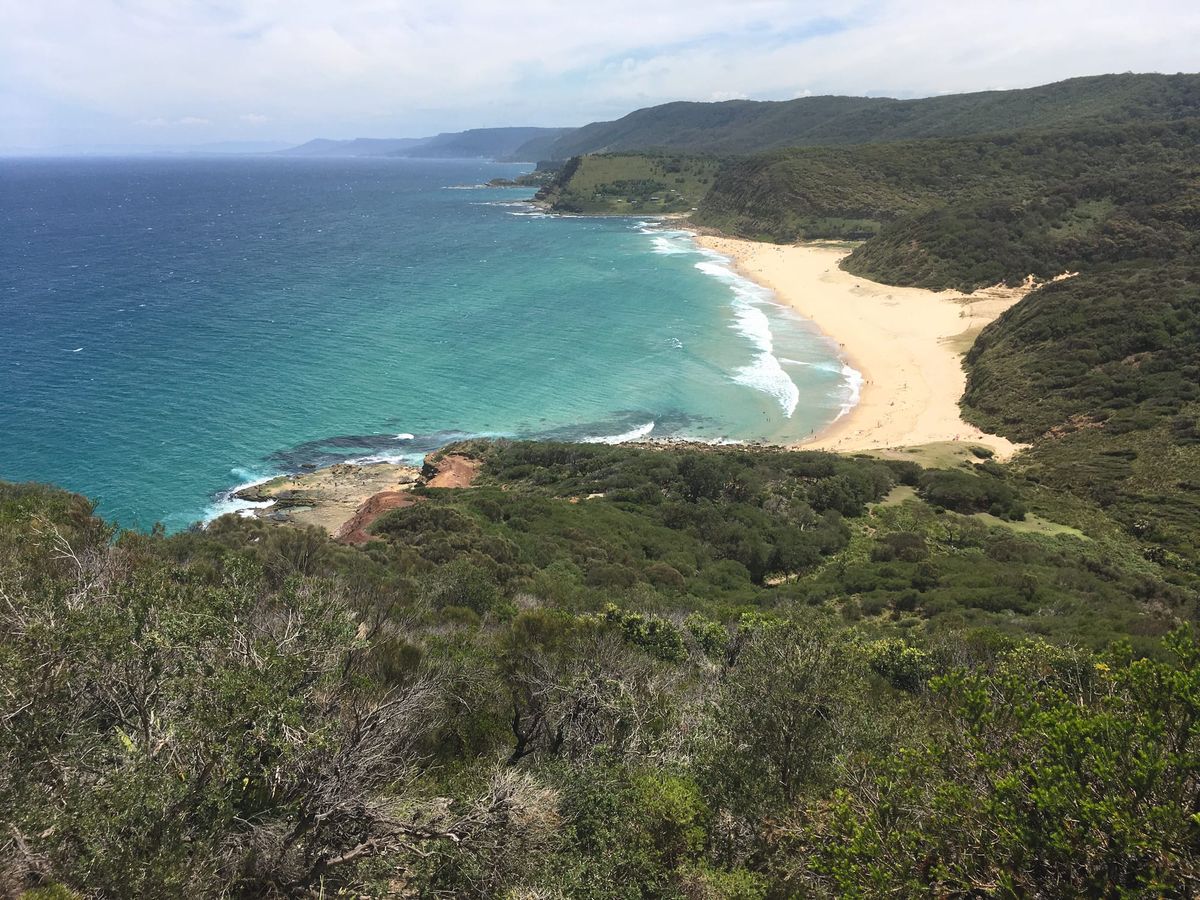

'Sadly, they shouldn't be there': why scientists back deer action
Deer shooting operations in the Royal National Park have ended for the year, with NPWS removing a total of 88 animals

At a time of year when it seems there's deer on every corner, the National Parks and Wildlife Service (NPWS) runs two shooting operations to reduce the herds causing hidden harm within Royal National Park bushland.
Rain hampered efforts in May, when 48 deer were shot. In early August, 40 deer were removed over three days, with a NPWS spokesperson describing the aerial and ground operation as "successful".
"Feral deer pose a significant threat to national parks, neighbouring properties and agricultural land," the spokesperson said. "In Royal National Park, they damage native vegetation, contribute to soil erosion, spread weeds and threaten important ecosystems."
Two scientists – both working to reintroduce native species as part of groundbreaking conservation programs in the Royal – agree.
"I spent a lot of time in the Royal National Park, and some of my favourite ponds have been completely destroyed by deer," Symbio Wildlife Park's conservation manager Jarrad Prangell told the Flame.
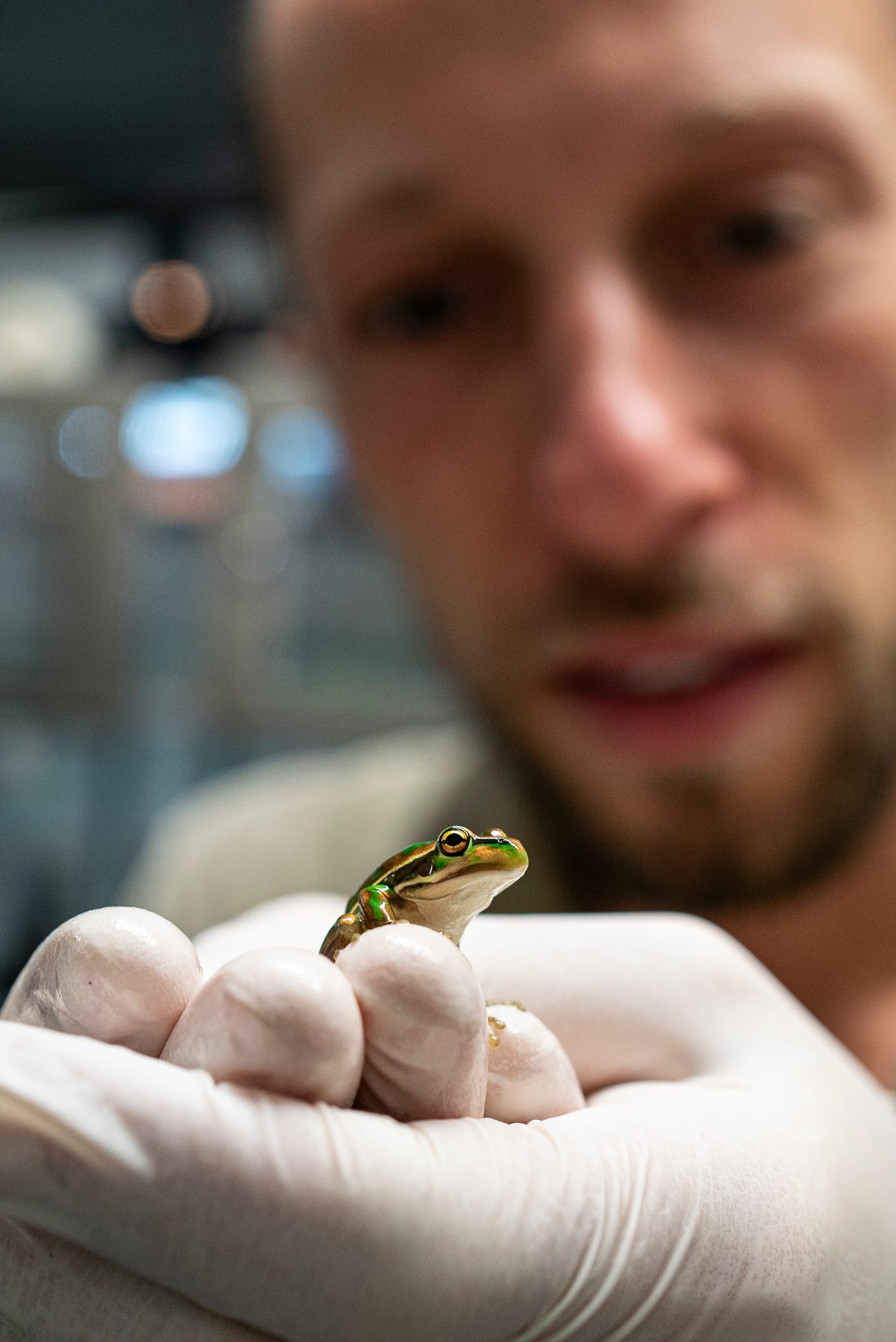
An award-winning zookeeper, Jarrad raises tadpoles as part of Symbio's breed-to-release programs to save the green and golden bell frog and the southern stuttering frog, which declined so severely due to chytrid fungus that it was no longer thought to exist south of Sydney.
"I love deer. But sadly, they shouldn't be there," Jarrad said. "I think it's very important to remove basic threats."
UNSW researcher Dr Gilad Bino – who spoke to the Flame in May about his ongoing platypus reintroduction project – said: “I support any attempt at mitigating any threats to the park.”
Platypus were locally extinct for 50 years but, since May 2023, scientists have reintroduced 17 animals from across NSW to the Royal National Park. At least four juveniles have since been born and one platypus has died.
“It sustained some sort of trauma,” Gilad said. “We don't really know what was the cause – it may have been trampled by a deer or maybe some debris fell on it.”
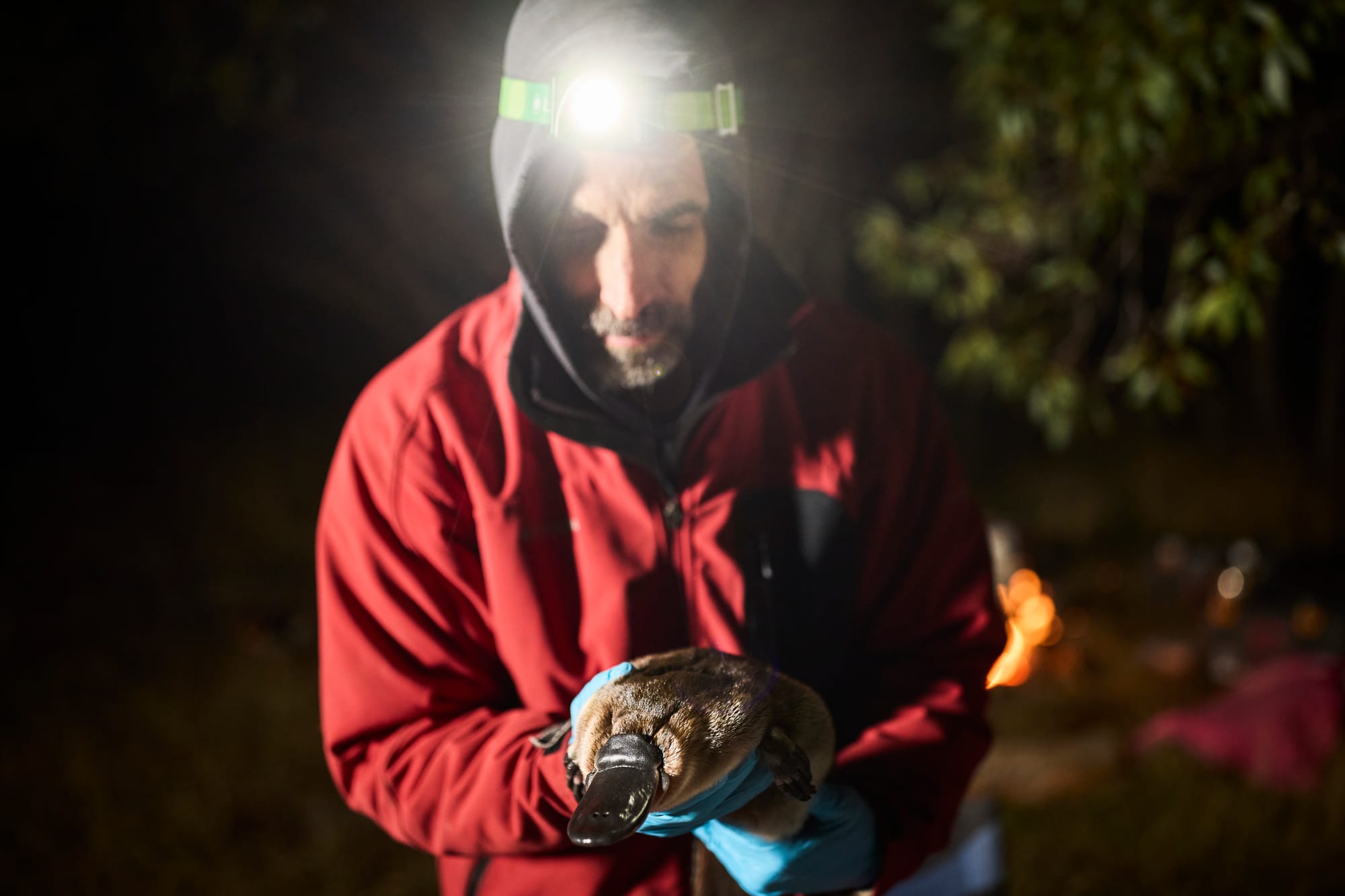
While fox predation poses a direct threat to platypus, deer trampling damages vegetation and creek banks, which has cascading effects on the health of the waterways where native species live, Gilad said.
He supports the removal of feral animals in national parks, including the Royal.
"Deers have had a big impact on the park, and I think that's a worthy conservation management strategy. But beyond that, I think there's more to be done in terms of mitigating upper catchment impacts, in terms of urban run-off, pollution, and siltation that enters the park."
How deer harm frog habitat
The NSW Scientific Committee lists environmental damage by deer as a key threatening process. In the Royal National Park, deer impact the variety and abundance of plant species in two threatened vegetation communities: littoral rainforest and upland swamps.
This has direct and indirect effects on frogs, said Jarrad, who has run Symbio's conservation projects for nearly a decade.
"The green and golden bell frog lives in a wetland," Jarrad said. "So a bunch of deer, which can get into ridiculously high numbers, can get into a wetland, trample all the reeds, turn over a huge amount of sediment and make what would be a nice beautiful wetland into a mud pool."
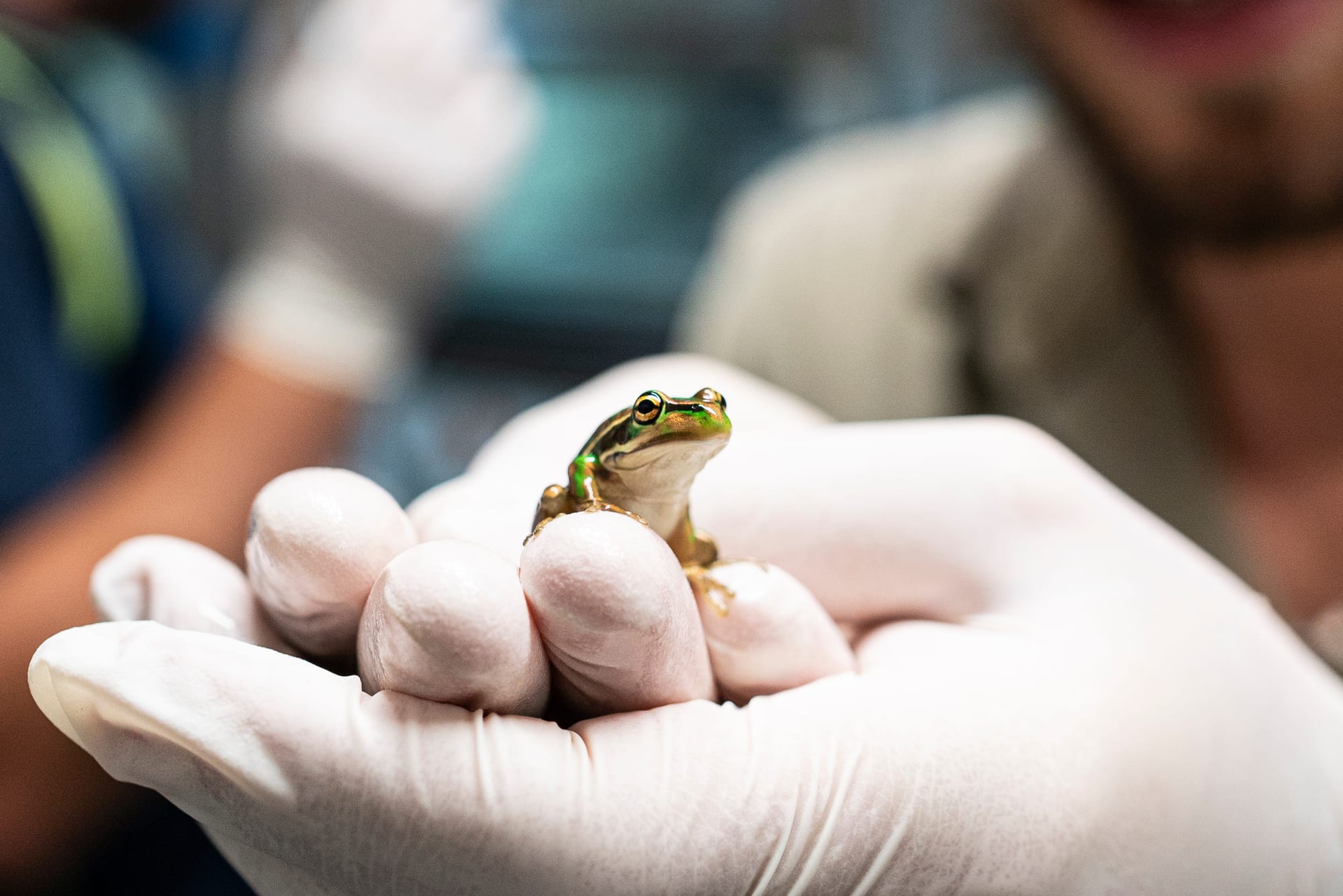
Southern stuttering frogs nest in sandstone creeks, which deer may not necessarily destroy, Jarrad said. However, their trampling does damage landscape and plants that the endangered amphibians use for food and shelter.
"Deer are going to turn soil, they're going to increase sediment flow, they're going to potentially change canopy levels. They're going to sort of change the structure of the lower and new storey vegetation, which is going to change the structure of the invertebrate system in that region.
"They definitely have effects on everything, even from small fairy wrens to macropods like swamp wallabies."
Deer control in the Royal
Wollongong has the region's highest abundance of rusa deer (Rusa timorensis), according to the South East Regional Strategic Pest Animal Management Plan for 2024-2028.
NPWS runs two feral deer control programs in the Royal National Park each year, generally in May and August.
"These operations are planned to avoid public and school holidays wherever possible to minimise disruption to the community while protecting the park's unique environment," the NPWS spokesperson said.
The recent shooting targeted over 10,000 hectares, more than 60% of the Royal National Park, as part of statewide control programs that remove thousands of invasive animals each year.
The number of deer remaining in the Royal is unknown, as the Flame reported in June. NPWS said: "Deer are highly mobile animals that move across large areas of bushland and adjoining tenures, which makes it difficult to determine a precise population figure at any given time."
Feral deer are not native to Australia and NPWS works with the Local Land Services, which manages the Illawarra Wild Deer Management Program.
Read more
 Genevieve Swart