

Thunderstorm 101: dangers, facts and fiction
In part four of a series, Ross McLean sheds lights on dangers, facts and fictions about thunderstorms

The common dangers, facts and fiction associated with thunderstorms are myriad.
Thunderstorm dangers
- Line squalls from sides of thunderstorms.
- Micro-bursts from sides and especially the rear of thunderstorms. (Gusts can be in excess of 160 kph.
- Lightning can strike up to 37km from the face of a thunderstorm.
- Dangerous hail from supercell thunderstorms.
- Tornados and/or waterspouts from supercell thunderstorms.
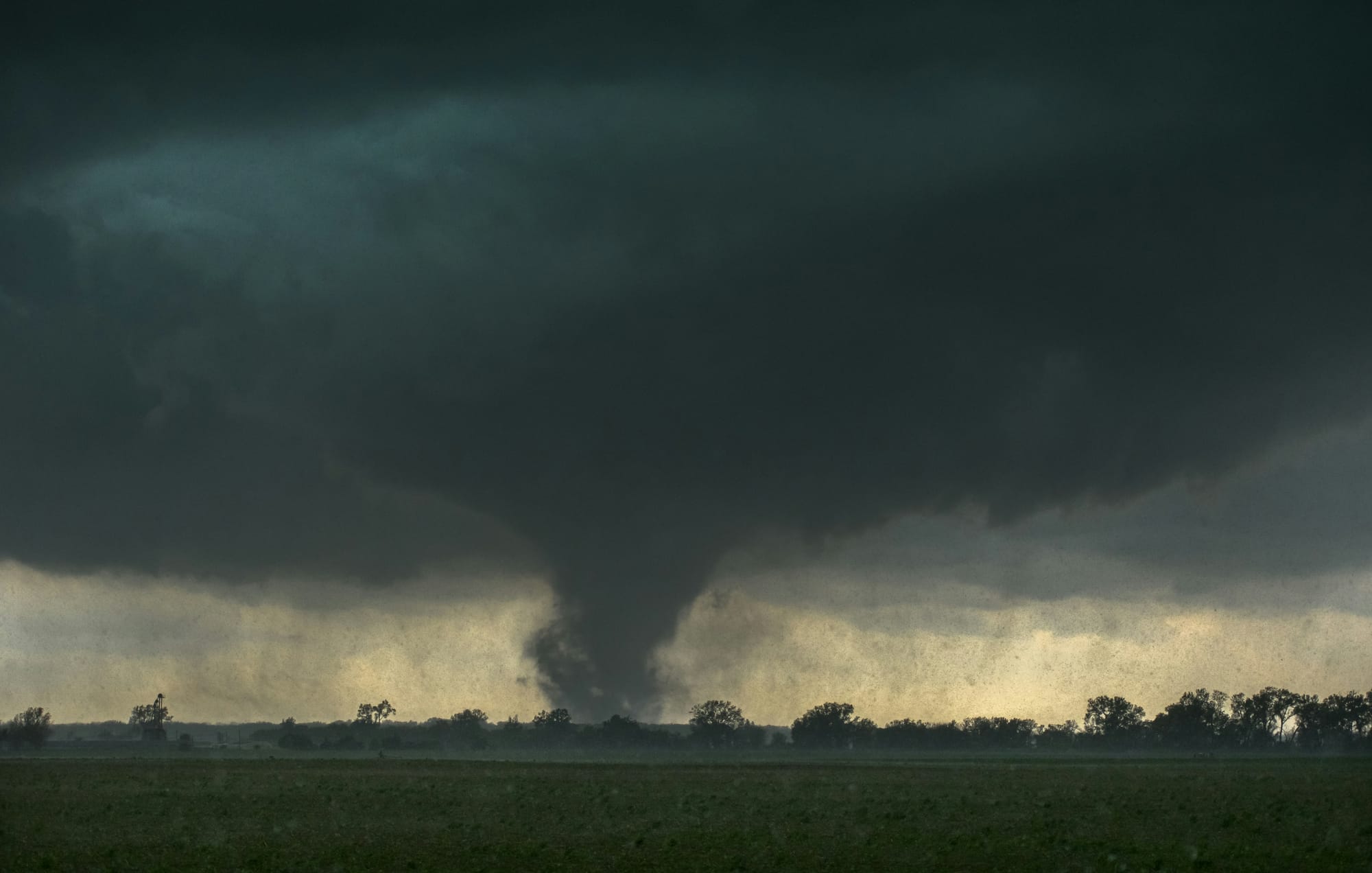
Thunderstorm facts
- Thunderstorms can be 26km in diameter.
- Thunderstorms directly affect you for a minimum of 20-30 minutes unless they form into clusters or supercells.
- Thunderstorms travel at up to 60kph.
- Thunderstorms can be as high as 12.5km and occasionally higher.
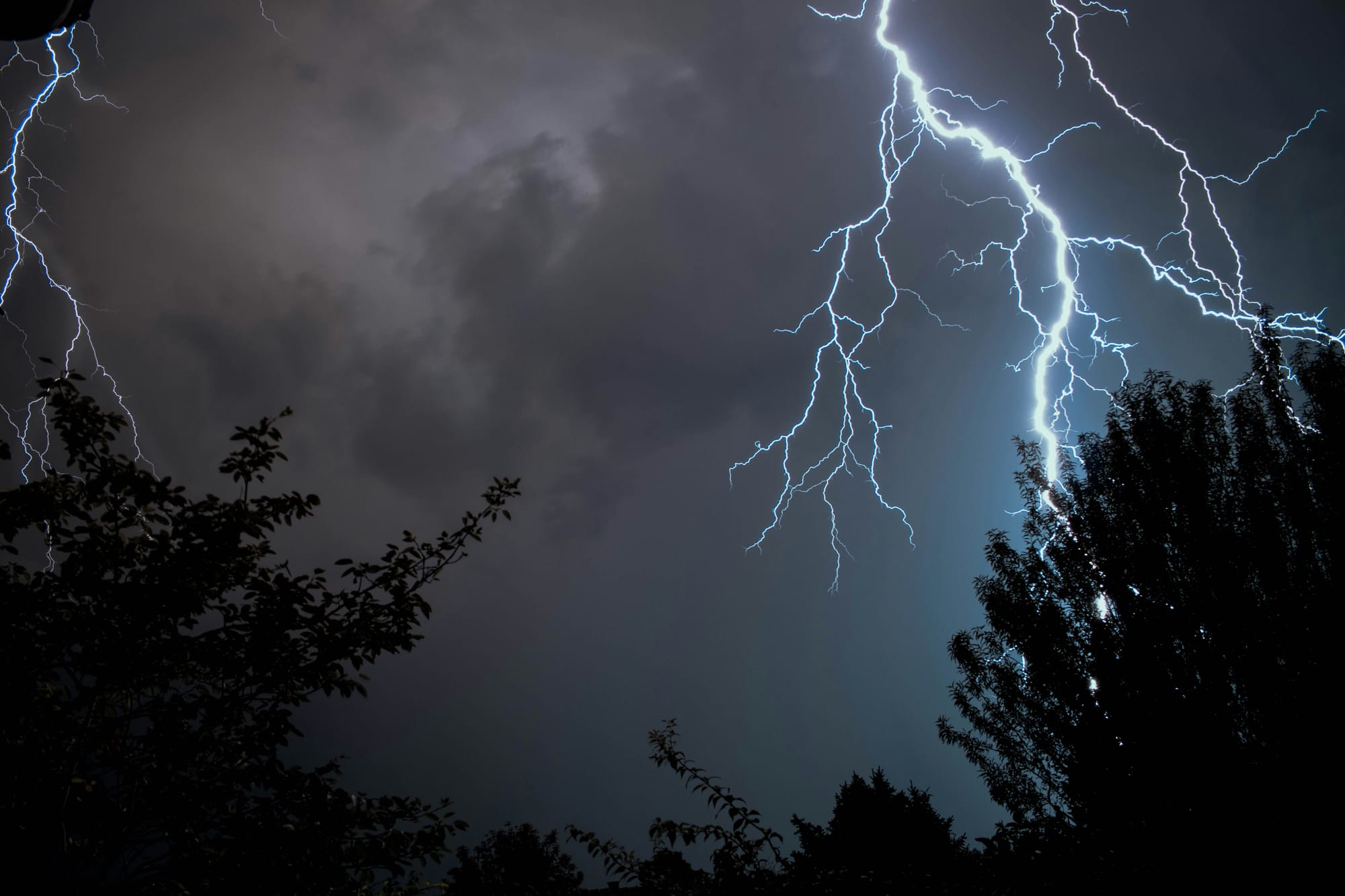
Lightning myths and facts
Myth – If it is not raining, there is no danger from lightning.
Fact – Lightning often strikes outside of heavy rain and may occur as far as 37km, from the face of a thunderstorm.
Myth – The rubber soles of shoes or rubber tires of cars will protect you from lightning.
Fact – Soles of shoes and rubber tires offer no protection from lightning, but the steel frame of a hard-top vehicle provides increased protection, as does the cabin of your boat, if you do not touch the metal.
Myth – People struck by lightning carry an electrical charge and must not be touched.
Fact – Lightning strike victims carry no electrical charge and must be attended to immediately.
Myth – Heat lightning occurs after very hot summer days and poses no threat or danger.
Fact – What is referred to as heat lightning is from a thunderstorm that is too far away for thunder to be heard or the storm to be seen clearly. However, it could be moving towards you, or in the next valley in mountainous areas.
Myth – You can always see a thunderstorm coming.
Fact – In mountainous regions, the thunderstorm may be obscured by an adjacent ridge or forming immediately above you.
Cautionary tale no. 1
Seven spectators were struck by lightning at a PGA Golf event in the US, one of whom died. The thunderstorm was 37km away and the top of the thunderstorm could only just be seen beyond low hills on the horizon.
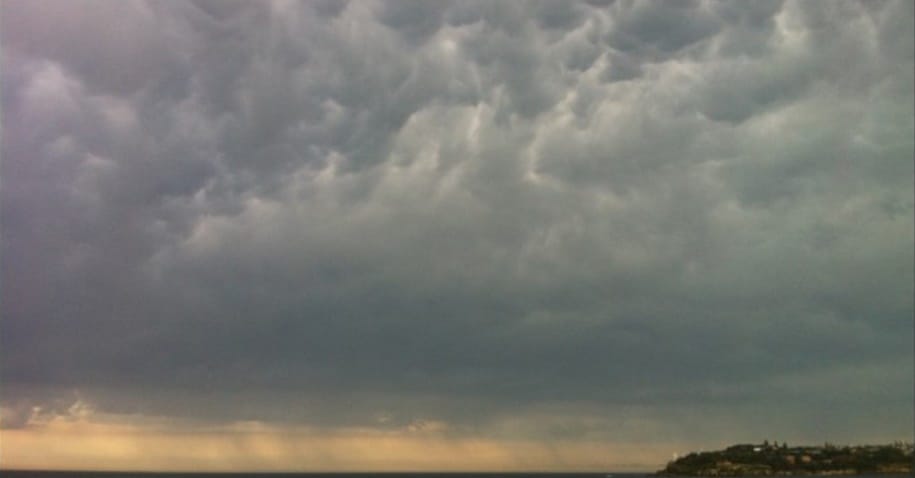
Cautionary tale no. 2
This thunderstorm formed above the author while on Sydney Harbour in a charter boat and the storm travelled northeast from Bradley’s Head. The mammatus formation gave it away. Within 20 minutes, lightning was seen in the cloud above, so it was back to the barn for us.
Are you in the thunderstorm's strike zone?
- Wind increases as thunderstorm gets closer.
- Intervals between lightning and thunder decreases – Seek shelter if possible.
- Wind will drop and may die away completely – Lull before the storm.
- You may experience ‘St Elmo’s Fire’ on your VHF aerial or nearby antennas indicating extreme electrical activity overhead. (St Elmo’s Fire is electrical build-up on communications aerials, masts or rigging causing a greenish glow).
- You may observe the ‘Light at the end of the tunnel’ effect of a pre-dawn glow ahead of you as you near the rear or side of the thunderstorm. (This would indicate what I call a 'Blasting Beacon’ because when you reach it, a micro-burst or squall is likely to occur).
- Wind returns with a vengeance – often coming from the opposite direction to previous and with dramatically increased strength. The best option for sailing vessels is to run with it, as attempting to heave too may cause you to broach onto your beam end, (side).
- Severe drop in temperature may accompany the new wind.
NB: Duration can be as little as 20 to 30 minutes, so seek shelter and wait it out.

Who is most likely to be struck by lightning
Lightning isn’t particular, so you do have to be fairly unlucky, or foolish.
On a scale of 1 to 10, the list holds some very interesting facts, however, sailors and those walking or climbing tend to swap about from year to year as to which of the two groups is struck the most.
Golfers top the list every year at 10 on the lightning strike scale. Next, we have two groups: sailors (outdoor water sports) and hikers/bushwalkers; rock climbers; mountaineers, who are at about 6 on the lightning strike scale.
Lastly everyone else, you and me going about our daily activities, are at 1 on the lightning strike scale.
Nationality plays no part in it, just pick a country and it is about the same, but the US holds the record to date.
Round up
Thunderstorms can be very serious things to encounter indeed, but knowing what we have read here, will give you a decent chance of avoiding injury or death. We are often outdoors when these beasties come trundling along, so knowing some facts and science, should give you peace of mind to a certain extent.
On the water, when sailing and observing the rules of the road, we say: ‘When in doubt, go about.’ The same applies to thunderstorms.

Ross McLean sailing in Tahiti. Right: Ross's son.
A cautionary tale no.3
My son was hiking in the US, in rugged and tall mountains, when he heard the rumble of thunder, and suggested the group seek shelter where they were until the storm, invisible to them on the other side of a mountain, had passed by. The expedition leader (an experienced mountaineer) said they needed to cross the meadow in the valley in front of them, where they could seek shelter in the woods on the other side. No sooner had they reached the stream in the middle of the meadow, than lightning struck the ground about halfway between the woods they had left and the stream. Needless to say, they ran as fast as they could to the next tree line in front of them, with lightning striking the ground behind them or flashing overhead. No one was looking to confirm either. When they reached the tree line, my son suggested they all seek shelter low down and under fallen trees, not granite outcrops. This they did and the storm passed by. It also did not rain.
When the mountaineer asked my son about his knowledge of thunderstorms, he explained what he could remember, adding: 'If you hear it – fear it; if you see it – flee it!' The Golden Rule for Lightning.
Do the same and have a great day out …
Well, that’s all folks – any questions? Email coastwise_nav@yahoo.com
Read more
Part 1: The Science of Storms Explained
Part 2: Thunderstorm 101: Danger signs
Part 3: Big bang theory: How well do you know your thunderstorms?
Part 4: Thunderstorm 101: dangers, facts and fiction
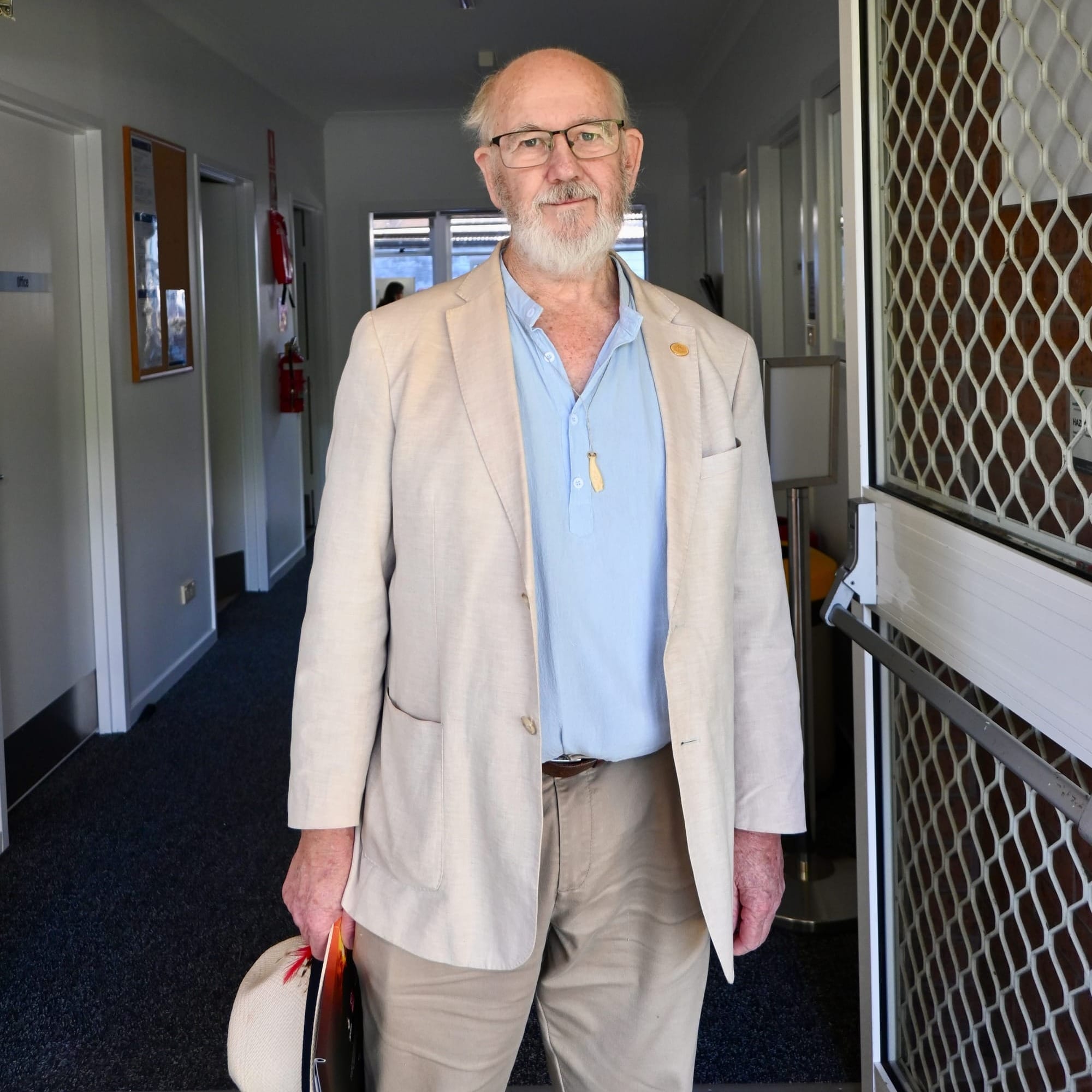
About the writer
Ross McLean has spent more than 40 years observing and recording thunderstorms everywhere from Australia to Africa and America. He travelled the world in a tall ship and been a sailing instructor in the US. Ross is a master class 4 captain with a square rig endorsement, and a former president of the Wooden Boat Association NSW. While engineering is his full-time profession, he is happiest at the helm of a tall ship or watching the vagaries of weather.


